







City of Arts and Sciences (Ciudad de las Artes y las Ciencias)
- Where
- Valencia, Valencia
- Directions
- Directions
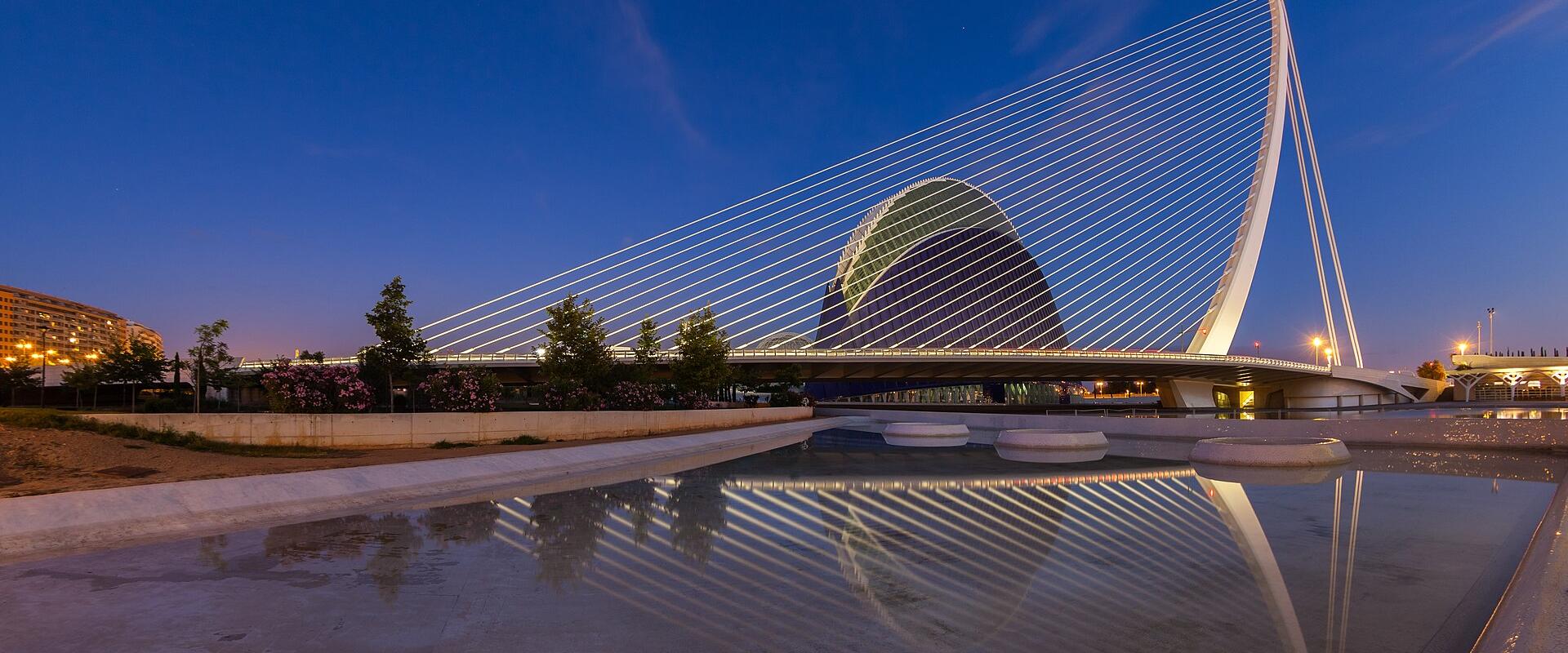
The City of Arts and Sciences occupies the end of the old Turia riverbed in Valencia. After a catastrophic flood in 1957 the river was diverted south of the city, and the dry channel became a nine-kilometre green belt, the Jardín del Turia. At its eastern end, a cluster of futuristic white buildings opened in stages from 1998. Most were designed by the Valencian architect Santiago Calatrava, with the Oceanogràfic designed by Félix Candela, and the whole group sits among shallow turquoise pools and walkways that reflect the structures like a mirror.
Each building has its own role. L'Hemisfèric, shaped like a giant eye with a movable lid, houses a planetarium and a large-format cinema with a domed screen. The Museu de les Ciències Príncipe Felipe is a hands-on science museum, built like a skeleton of long white ribs, with exhibits that invite visitors to touch and experiment. L'Umbracle is a landscaped walkway and garden, framed by a long arched structure, with sculptures along it and a view across the complex. The Palau de les Arts Reina Sofía is the opera house, and the Àgora is a covered events hall.
L'Oceanogràfic is the largest aquarium in Europe, with different zones representing marine environments from the Mediterranean to the polar seas, plus dolphin and sea lion presentations and a long underwater tunnel. It is a place where families can easily spend most of a day. Children also enjoy the science museum, whose interactive displays suit different ages.
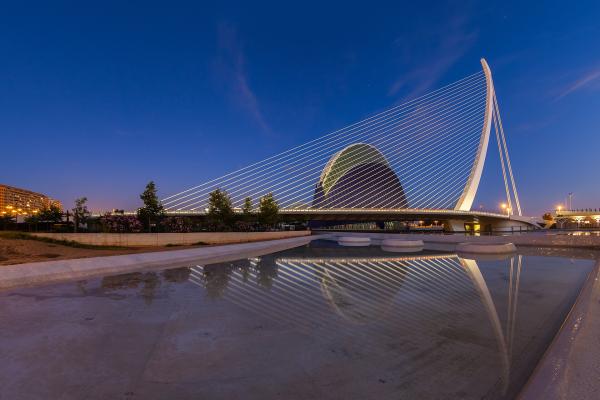
Many visitors come for the architecture alone, and you can wander freely around the pools and the outdoor spaces without entering any building. The curves, white concrete and glass are most striking in the late afternoon and at night, when lighting reflects off the water. Because the complex is large, with long distances between buildings, comfortable shoes and a plan help: pick the one or two indoor attractions that interest you most rather than trying to see everything.
It suits families with children, architecture and photography enthusiasts, and curious travellers who want a contrast to Valencia's medieval centre around the cathedral, the Lonja de la Seda and Plaza de la Virgen. The Turia Gardens link the complex to the rest of the city by foot or bicycle, so you can arrive on a pleasant green route and carry on to Mercado de Colón or the old town afterward.
More photos coming soon
Nearby Attractions
Other places to visit in Valencia
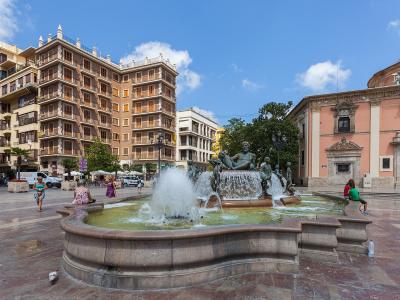
Plaza de la Virgen
Historic Heritage · Urban Exploration
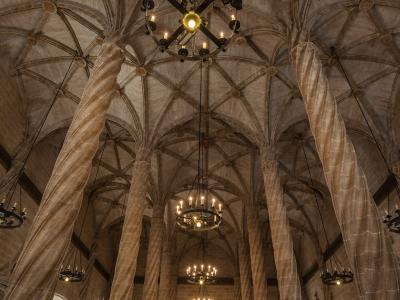
Lonja de la Seda (Silk Exchange)
From €2 Historic Heritage · Architectural Heritage
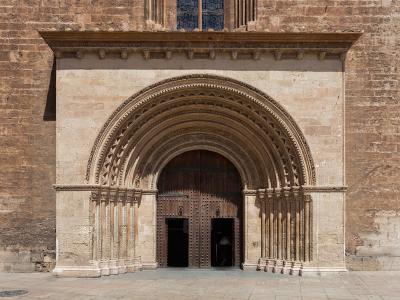
Valencia Cathedral (Catedral de Valencia)
From €6 Architectural Heritage · Cathedrals
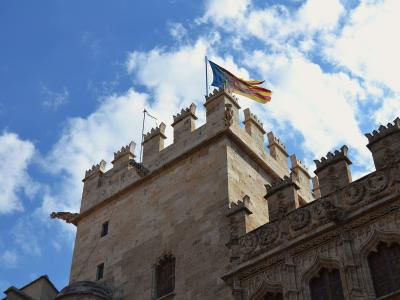
Torre de la Seda (Llotja de la Seda)
From $6.99 Historic Heritage · Architectural Heritage
Questions people ask
Quick Facts
Best Time to Visit
May through October offers warm, sunny weather ideal for beach activities and outdoor exploration.