







- Where
- Logroño, La Rioja
- Directions
- Directions
The Co-Cathedral of Santa María de la Redonda is the main church of Logroño, the capital of La Rioja, and it stands in the old town a few steps from the Plaza del Mercado, between the streets of Portales and Caballerías. The city is on the Camino de Santiago, and pilgrims have long stopped at this church on their way across northern Spain. The name Redonda, the Round, is usually explained by an earlier round church that stood on the site, and the present building began in the fifteenth century, with work continuing into the following centuries. It has been a co-cathedral since the mid-twentieth century, when the bishop of the diocese came to share his seat between Calahorra and Logroño.
The church has a Gothic body and a Baroque exterior, and the combination is its main character. Inside, three naves of equal height, called a hall church, are separated by tall round columns that support star-shaped ribbed vaults, and the effect is of a wide, luminous space with no strong division between the central and side aisles. Chapels line the walls, with altarpieces and sculptures from various periods. The Gothic structure gives a sense of lightness, and the walls and vaults have been carefully restored.
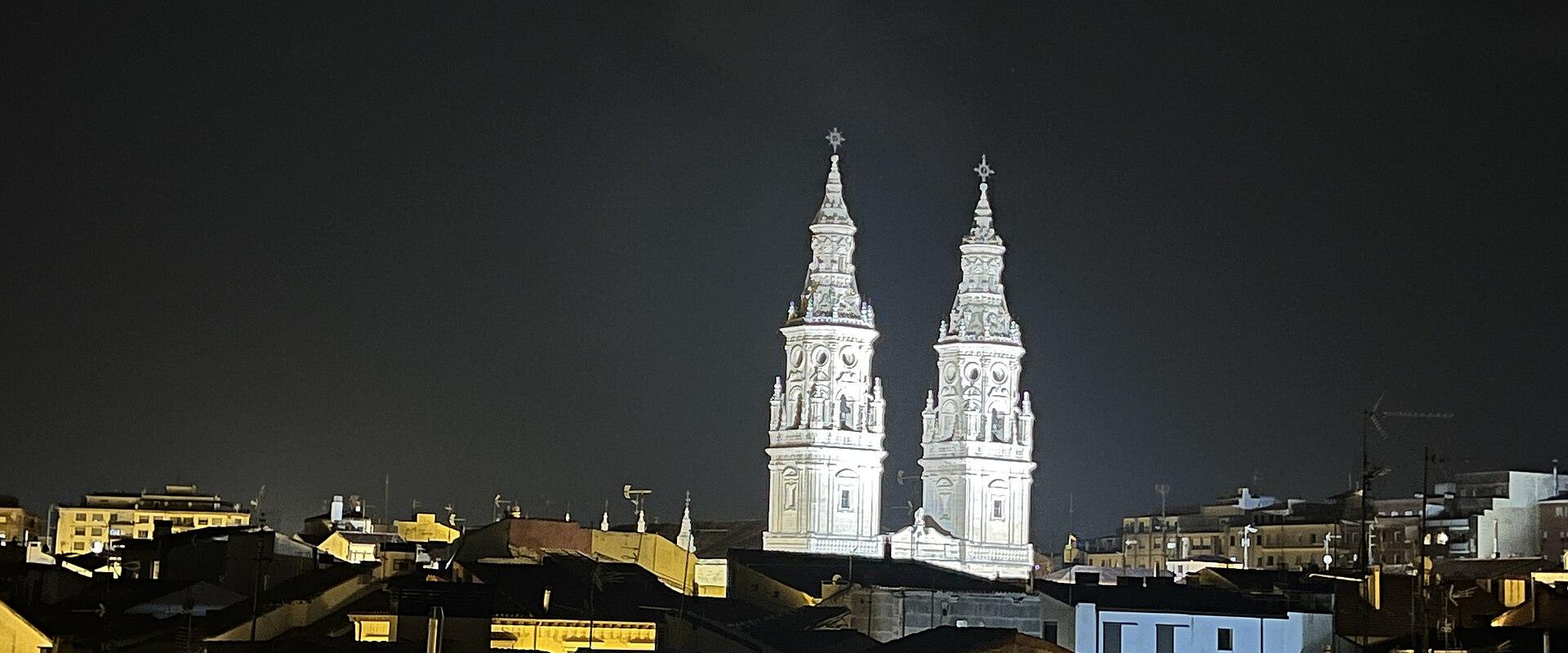
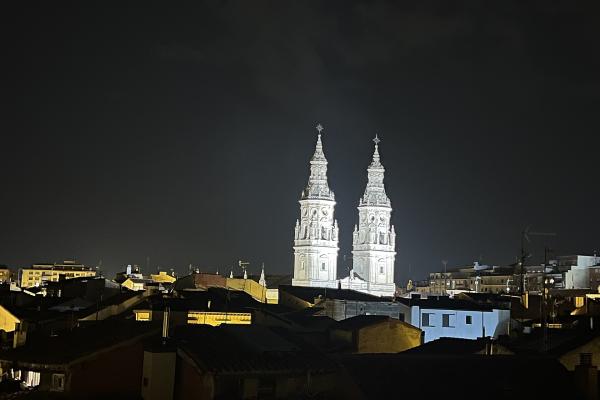
The façade facing the street is the work of the eighteenth century. The Baroque west front, built in the 1740s by the architect Martín de Beratúa, is a tall, richly carved screen of stone, flanked by two slender towers, which are known locally as the Twins, Los Gemelos. They give the church a distinctive profile that can be seen from far away across the roofs of the old town. Statues, columns and a carved relief fill the front, and the clock and the bells in the towers mark the hours of the day for the city.
Among the artworks inside, one painting is much discussed, a Crucifixion attributed to the school of Michelangelo and sometimes to the master himself, though the attribution is debated. The church also holds the tomb of General Baldomero Espartero, the nineteenth-century military leader who served as regent of Spain and who lived in Logroño, whose mausoleum stands in one of the chapels. These pieces give the church a place in the history of the city.
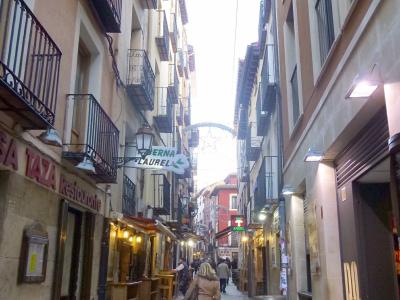
The church is a short walk from the Calle del Laurel, Logroño's famous street of tapas bars, so many visitors combine a visit to the church with a food crawl. Rioja wine country begins outside the city. It suits history, art and architecture lovers, and a visit takes about half an hour. Opening hours depend on services, so check before you go.
More photos coming soon
Nearby Attractions
Other places to visit in Logroño
Questions people ask
Quick Facts
Best Time to Visit
May through September offers warm, dry weather ideal for exploring the region.