







Gothic Quarter (Barri Gòtic)
- Where
- Barcelona, Catalonia
- Directions
- Directions
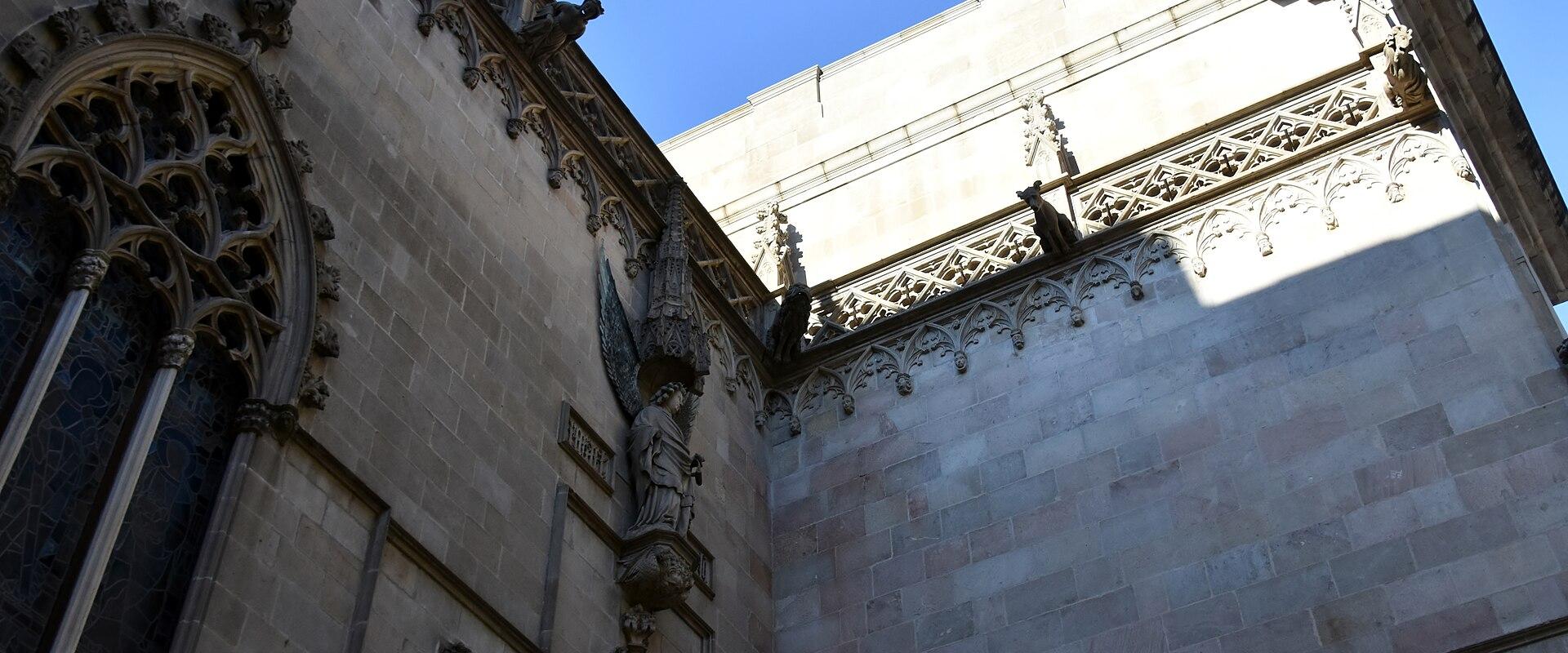
The Barri Gòtic, or Gothic Quarter, is the oldest part of Barcelona and sits around the cathedral on a low hill that was the site of the Roman town of Barcino. Fragments of that settlement are still visible: sections of the Roman walls, towers that were incorporated into later buildings, and four tall columns from a temple dedicated to Augustus, tucked away in a courtyard on Carrer del Paradís. Underneath Plaça del Rei, the Museu d’Història de Barcelona lets you walk through excavated Roman streets, laundries and wine-making installations, which is one of the best ways to understand the city’s age.
The quarter’s medieval character comes from the centuries after the Romans, when Barcelona grew as a Catalan trading power of the Crown of Aragon. Barcelona Cathedral, dedicated to the Holy Cross and Saint Eulàlia, was largely built between the late thirteenth and mid-fifteenth centuries, though its main façade was added in the nineteenth. Its cloister has a garden, a fountain and a flock of white geese, an old tradition. Nearby Plaça Sant Jaume faces the Palau de la Generalitat, the seat of Catalonia’s government, across the square from the city hall. Plaça del Rei is lined with the former royal palace and the chapel of Santa Àgata.
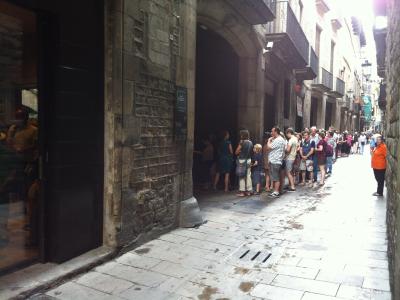
Much of the area also owes its Gothic appearance to early twentieth-century restoration and invention. Some facades were rebuilt, and the neo-Gothic bridge over Carrer del Bisbe dates from 1928, so the look is partly a deliberate recreation. That does not take away from the atmosphere of the narrow lanes, which twist between stone walls and open suddenly into small squares such as Plaça de Sant Felip Neri and Plaça del Pi, where the Gothic church of Santa Maria del Pi has a large rose window.
Shops, small bars and restaurants fill the ground floors, and crafts such as ceramics and hats sit side by side with souvenir stalls. The former Jewish quarter, El Call, lies at the western edge, and Las Ramblas border the area to the south west. Metro stops at Jaume I and Liceu serve it, and it is easy to reach on foot from Plaça de Catalunya.
The quarter suits anyone who likes wandering without a plan. Early morning is the quietest time, and the lanes get busy later in the day, but residents still live in the buildings, so keep noise down in the evening.
Categories
More photos coming soon
Nearby Attractions
Other places to visit in Barcelona
Questions people ask
Quick Facts
Best Time to Visit
May through June offers warm, dry weather ideal for exploring the city.