







Gran Vía
- Where
- Madrid, Madrid
- Directions
- Directions
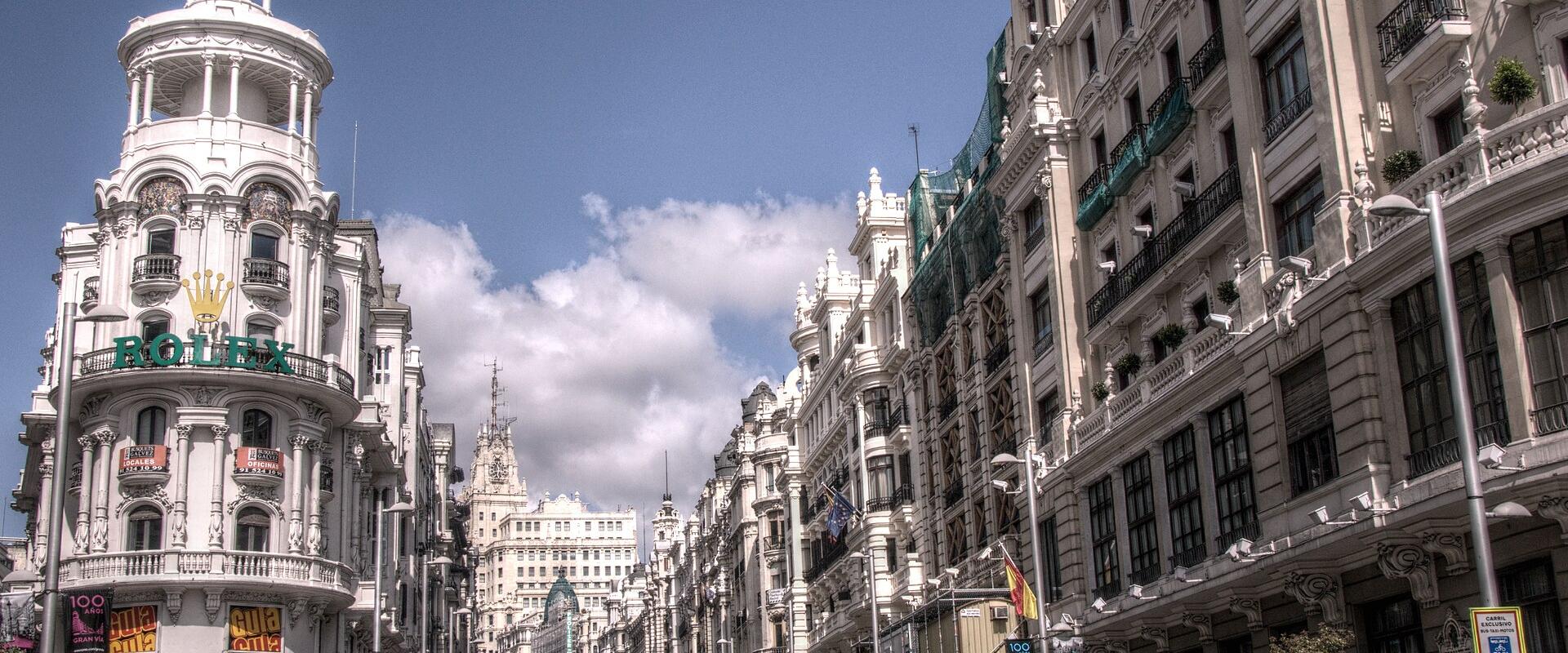
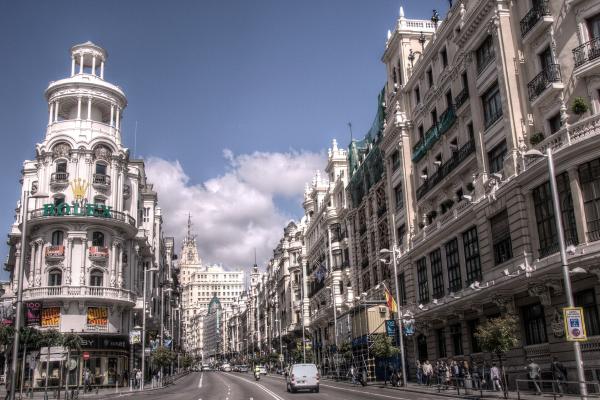
Gran Vía is the avenue that cuts through central Madrid from Calle de Alcalá, near Plaza de Cibeles, to Plaza de España, and it is the closest thing the city has to a Broadway. It was planned in the late nineteenth century to relieve congestion and to bring a modern boulevard into the tangle of narrow streets, and building took place in three phases between 1910 and 1931. Hundreds of old houses were demolished to make room, so the street shows how Madrid wanted to see itself in the early twentieth century: ambitious, cosmopolitan and attentive to Paris, Chicago and New York.
The architecture is the main attraction, and a walk along the street is a quick course in the styles of the period, from French-influenced Beaux-Arts to Art Deco. The Edificio Metrópolis, at the junction with Calle de Alcalá, has a winged figure on a dome and marks the start of the avenue. Further along is the Telefónica Building, finished in 1929 and for years the city’s tallest. It was Madrid’s first skyscraper and was influenced by American models, and its height made it a symbol of modernity. The Edificio Capitol, with its tower, and the Palacio de la Prensa fill other prominent corners. Many buildings carry sculptures, domes and ironwork that repay a look upward.
The street is also Madrid’s main theatre district. The Callao Cinema, an Art Deco building from the 1920s, and playhouses like the Teatro Lope de Vega put on large musicals, giving the area its nickname as the capital’s Broadway. The Gran Vía Theatre and other venues sit alongside them, and the largest concentration of theatres and cinemas in Spain is found here, which gives the avenue a busy atmosphere in the evenings. Shops, cafes and restaurants fill the ground floors. The route also shows how the planners had to adapt to the city: the church of San José, an eighteenth-century church near the start of the avenue, stood in the way and still influences the layout.
Gran Vía is a good place to see the changing mood of the city across the day. In the morning it is a working commercial street, in the afternoon it fills with shoppers, and at night the theatre signs and lit façades take over. Metro stations at Gran Vía, Callao and Plaza de España make it easy to reach, and the Plaza de España end is close to the Royal Palace.
The avenue is best explored on foot, with pauses to look up. It is one of Europe’s busiest commercial streets, so expect crowds at weekends, and allow an hour or two for a stroll.
Categories
More photos coming soon
Nearby Attractions
Other places to visit in Madrid
Questions people ask
Quick Facts
Best Time to Visit
April to June and September to October offer mild, pleasant weather ideal for visiting.