







- Admission
- Free for EU citizens
- Nominal fee for other visa
- Hours
- Tuesday to Sunday; closed Mondays. Hours vary by season.
- Where
- Almeria, Andalusia
- Directions
- Directions
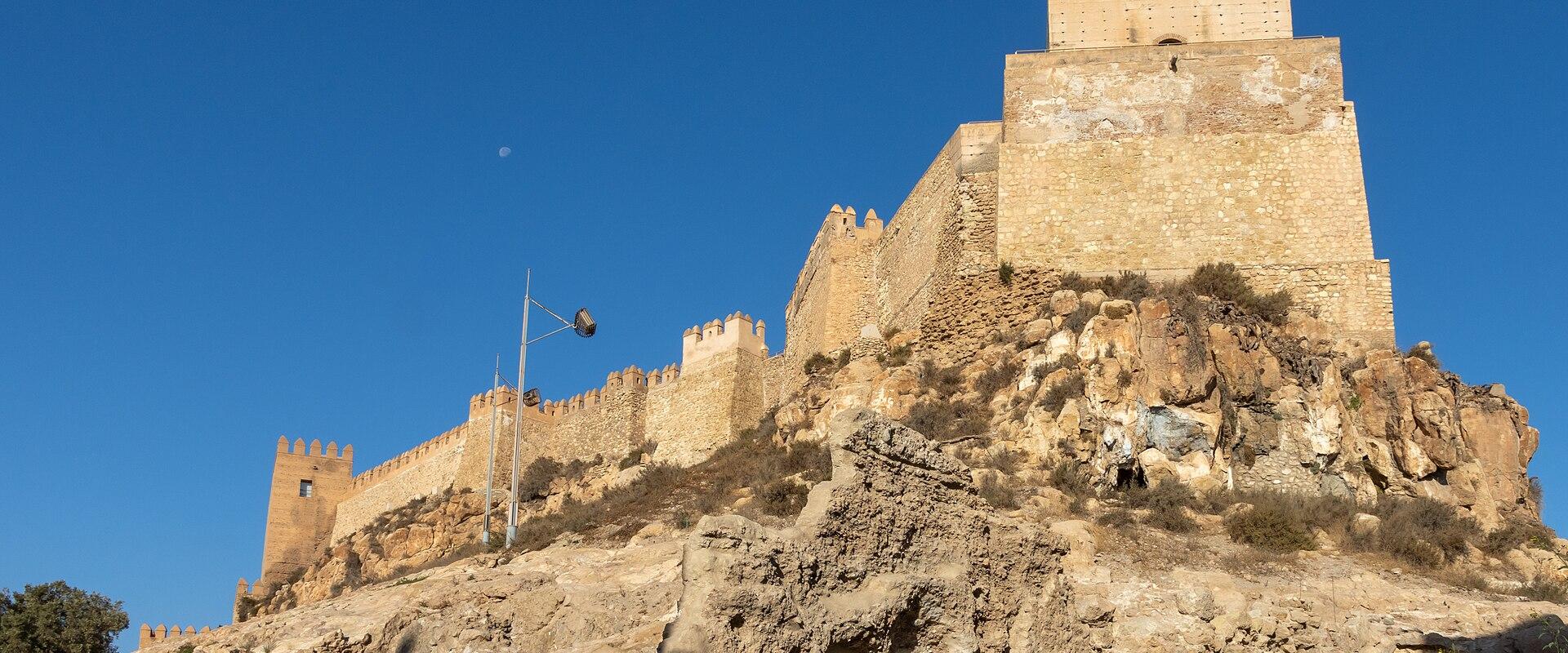
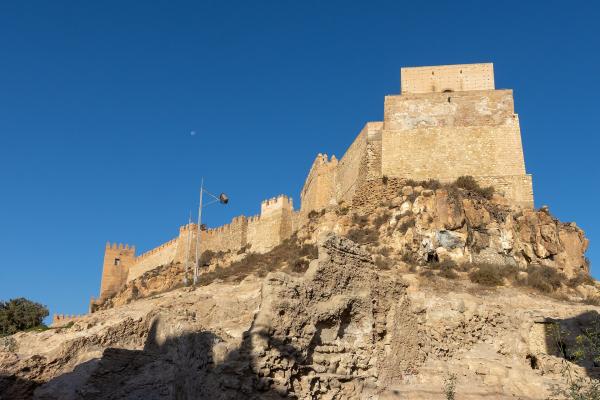
The Alcazaba of Almería is one of the largest Moorish fortresses in Spain, in Andalusia, and the main monument of the city, a long stretch of walls and towers climbing the hill above the old town and the port. Almería was founded in the year 955 by Abd al-Rahman III, the caliph of Córdoba, who wanted a naval base and a trading port on the south-eastern coast, and the Alcazaba was built at the same time to defend it. The name Almería comes from the Arabic al-Mariyya, meaning the watchtower or the mirror of the sea. In the eleventh century, when the caliphate broke apart and the city became the capital of an independent Taifa kingdom, the fortress was greatly expanded, and later the Nasrid rulers of Granada added to it.
The complex is divided into three enclosures, each at a different level. The first, the lowest, was the military area, where the garrison lived and where cisterns stored water, and it is now planted with gardens, fountains and pools, with orange trees, palms and bougainvillea, in the Islamic style that links water and shade. The second enclosure held the palace of the Taifa rulers and the residential quarters, along with a mosque that was later converted to a chapel, the Hermitage of San Juan, and visitors can see the remains of baths and living quarters. The third and highest enclosure is a Christian citadel, built by the Catholic Monarchs after the city was conquered in 1489, with a keep and walls designed to resist artillery.
One of the most striking sights is the Muralla de Jayrán, the Jairan Wall, which runs from the Alcazaba down the slope and up the neighbouring hill of San Cristóbal. It was built in the eleventh century to enclose the old city, and its long line of towers and crenellated wall is seen from many parts of Almería. A serious earthquake in 1522 damaged the fortress and the city, and later centuries brought neglect, but a long restoration in the twentieth century recovered much of its original form.
The walk through the Alcazaba is a pleasant climb on paved paths, ramps and steps, past gardens, with views opening over the old town, the cathedral, the port and the sea, and, to the other side, the dry mountains of the interior. Comfortable shoes are advisable, since the surfaces are uneven. The fortress is open from Tuesday to Sunday, with different hours in summer and winter, and it is closed on Mondays. Admission has been free for citizens of the European Union and modest for others, but conditions change, so check.
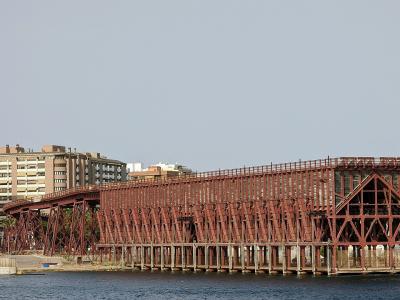
The Alcazaba is in the old centre, and the Cable Inglés, an iron pier built in the early twentieth century for loading ore onto ships, stands on the seafront nearby. Almería’s climate is dry and sunny, with very hot summers, so visit early or late in the day.
Categories
More photos coming soon
Hours & Fees
- Open
- Tuesday to Sunday; closed Mondays. Hours vary by season.
- Admission
- Free for EU citizens; nominal fee for other visa.
Hours and prices change, especially out of season. Check with the venue before you go.
Nearby Attractions
Other places to visit in Almeria
Questions people ask
Quick Facts
Best Time to Visit
May through October offers warm, dry weather ideal for exploring the region.