







Alcazaba of Málaga
- Where
- Málaga, Andalusia
- Directions
- Directions
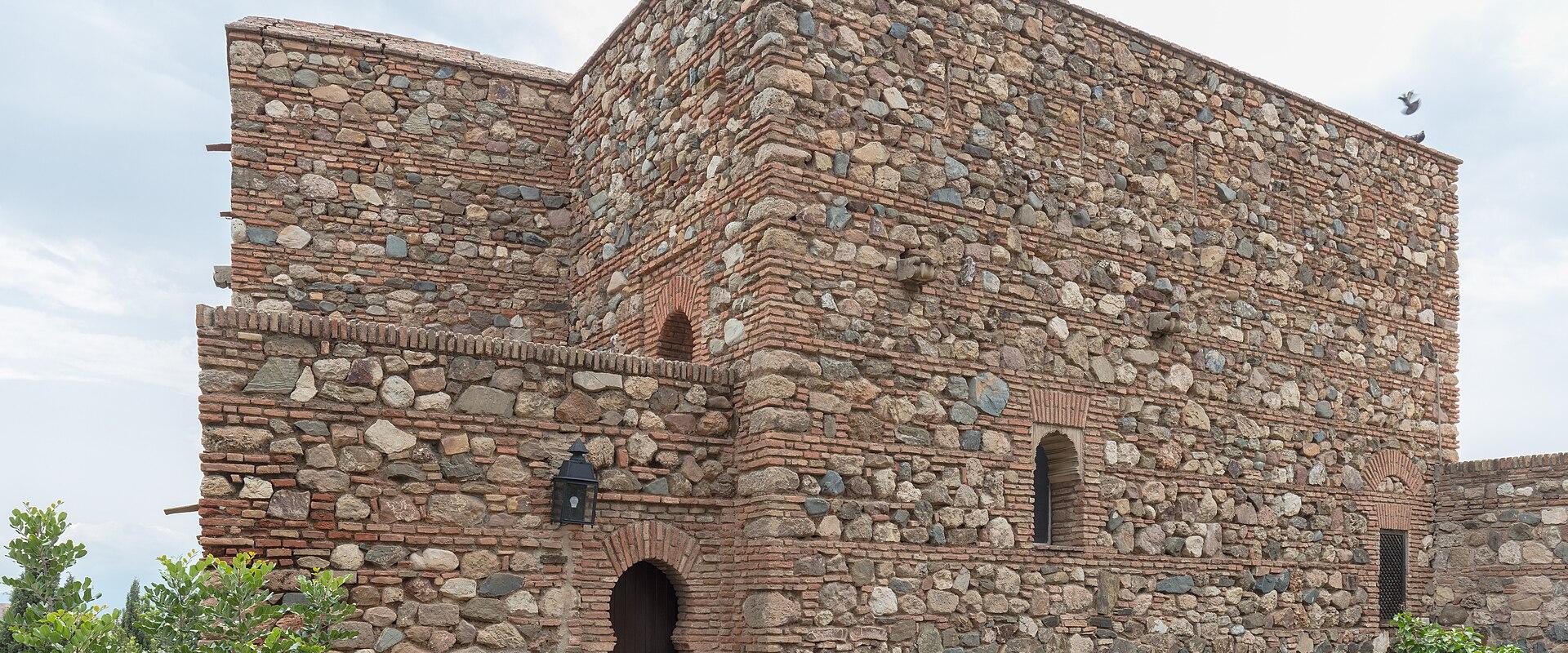
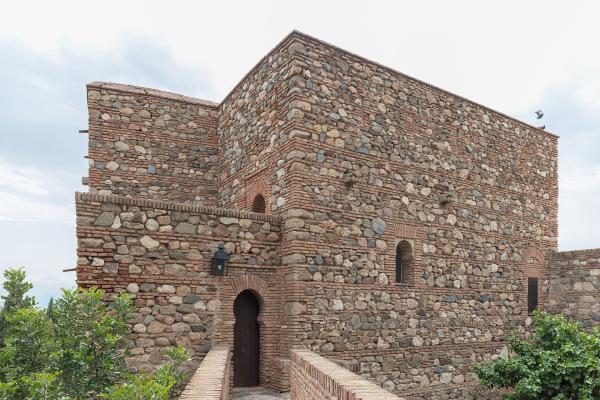
The Alcazaba of Málaga is a Moorish palace-fortress on the hill above the port, and it is the best preserved of its type in Spain. The site was fortified before the Islamic period, but the complex seen today dates mainly from the eleventh century, when the city belonged to the Taifa kingdoms that formed after the Caliphate of Córdoba broke apart. The Zirid ruler Badis of Granada is credited with building much of it in the 1050s, and the Nasrid rulers of Granada added to it in the fourteenth century. After the Christian conquest in 1487 it fell into decay, and houses grew up inside the walls. Restoration in the twentieth century, led by the architect Leopoldo Torres Balbás from the 1930s, cleared the buildings and rebuilt the walls and gardens.
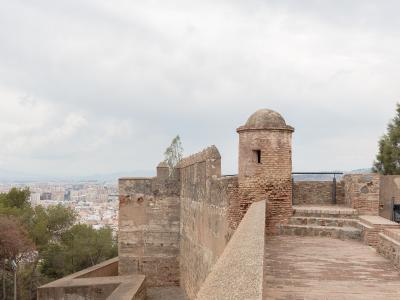
The defences are layered. Three rings of walls and a series of gates and towers guard the approach, with the lower walls designed so that attackers were forced into narrow turns beneath the guards above. A walled passage, the Coracha, once linked the Alcazaba to the higher castle of Gibralfaro, which can also be visited and is reached by a steep path. The route through the Alcazaba itself climbs by ramps and steps, past arches of horseshoe shape, fountains and gardens planted with orange trees, jasmine and bougainvillea, so the walk is as much a garden stroll as a historical visit.
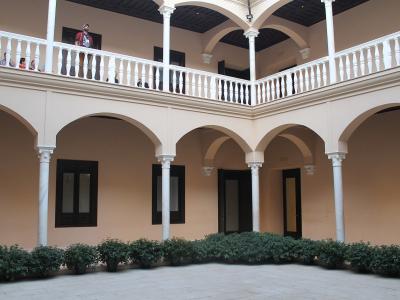
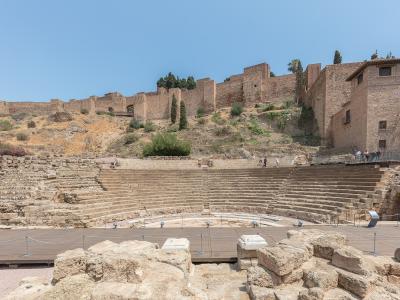
At the top, the palace quarters give a sense of how the rulers lived. The Cuartos de Granada, a series of rooms built around courtyards with pools, have arcades and carved plasterwork, and they show the refinement of Nasrid design. Reused Roman columns and capitals appear in several gateways, because the builders took stone from the Roman Theatre at the foot of the hill, which was rediscovered in the twentieth century and has been excavated beside the entrance. A small museum in the palace displays ceramics and other objects found at the site.
The upper terraces give some of the best views in the city, over the port, the cathedral, the bullring and the Mediterranean, and beyond. At the base of the hill, the Roman Theatre and the Picasso Museum are a few minutes away, and the Calle Larios shopping street and Málaga Cathedral are close by.
Visitors should allow about an hour and a half, wear comfortable shoes for the ramps and steps, and avoid the middle of the day in summer, when the heat is intense. Check current opening hours and ticket arrangements before going.
Categories
More photos coming soon

Questions people ask
Quick Facts
Best Time to Visit
May through September offers warm, sunny weather ideal for beach activities and sightseeing.