







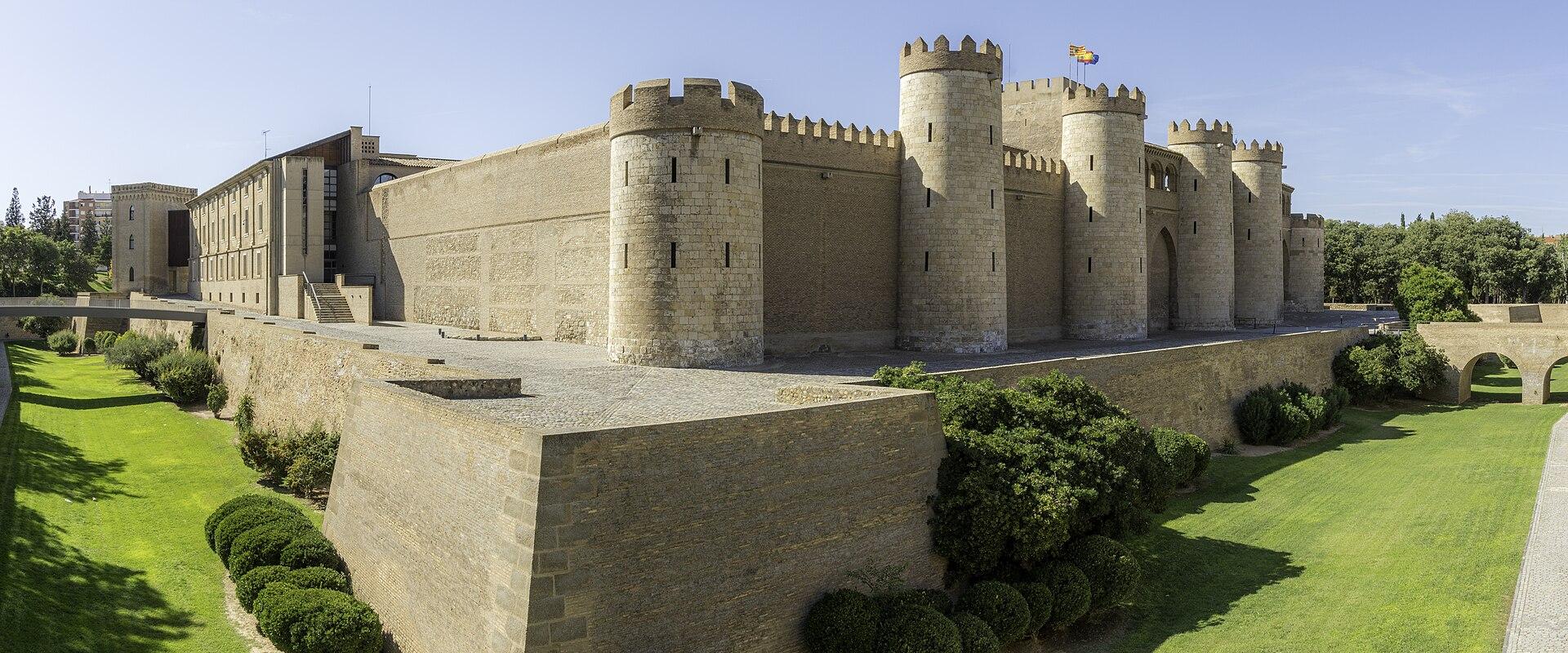
Aljafería Palace
- Where
- Zaragoza, Aragon
- Directions
- Directions
The Aljafería Palace is a fortified palace on the western edge of Zaragoza and the finest surviving example of Islamic architecture of the Taifa period outside Andalusia. It was built in the second half of the eleventh century as a pleasure palace for the Banu Hud dynasty, who ruled the Taifa kingdom of Zaragoza after the Caliphate of Córdoba broke up. The ruler Al-Muqtadir is generally credited with its construction. The Moorish designers, working in the Hispano-Muslim tradition, created a palace of courtyards, arcades and richly carved plasterwork, and it stands comparison with the Alhambra and the Mosque-Cathedral of Córdoba, though it belongs to the period between them.
The oldest surviving structure is generally said to be the Troubadour Tower, a fortified keep that predates the palace and received its name from a nineteenth-century play and the Verdi opera that followed it. Around the central courtyard, called the Patio de Santa Isabel, the Taifa rooms show the Islamic palace at its most refined. Arcades with interlaced and mixed-line arches, carved capitals and delicate plant ornament cover the walls, and the small mosque, an oratory with an octagonal plan and a decorated mihrab, is among the most elegant pieces. The Golden Hall, a room with a coffered ceiling, belongs to the later Christian additions.
After Zaragoza fell to Christian forces in the early twelfth century, the palace became a royal residence of the kings of Aragon. The Gothic and Mudéjar rooms built by later rulers, including a throne room with a magnificent wooden ceiling added under the Catholic Monarchs, Ferdinand and Isabella, show the way Christian monarchs adopted Islamic craft traditions. Later it was used as a barracks and, in earlier periods, as a seat of the Inquisition. The building was restored in the twentieth century and now houses the Cortes of Aragon, the regional parliament, so parts remain closed during sessions. The Aljafería is part of the UNESCO World Heritage Site listing for the Mudéjar Architecture of Aragon, and Gothic and Renaissance elements from later centuries add to the mix.
The palace is a short distance from the centre of Zaragoza, and a visit usually takes about an hour. Guided visits are recommended because the guides explain the layers of history and the details of the carving, and they also have access to the rooms that are reserved. Opening times and arrangements change, so check the official site before going.
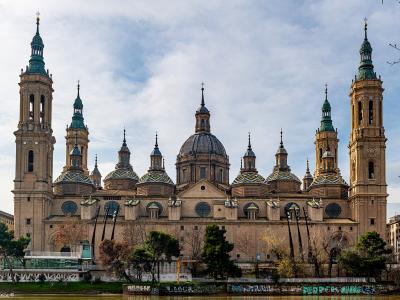
The palace is within reach of the Basilica del Pilar and La Seo, and the nearby Parque del Agua Luis Buñuel offers a green contrast. The Aljafería suits anyone with an interest in medieval architecture and the shared history of Islamic and Christian Spain, and the Spanish tradition of shared craft.
Categories
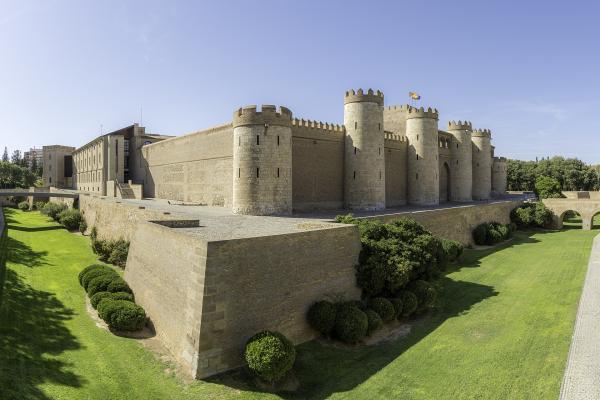
More photos coming soon
Nearby Attractions
Other places to visit in Zaragoza
Questions people ask
Quick Facts
Best Time to Visit
May through June and September offer mild weather, ideal for exploring the city.