







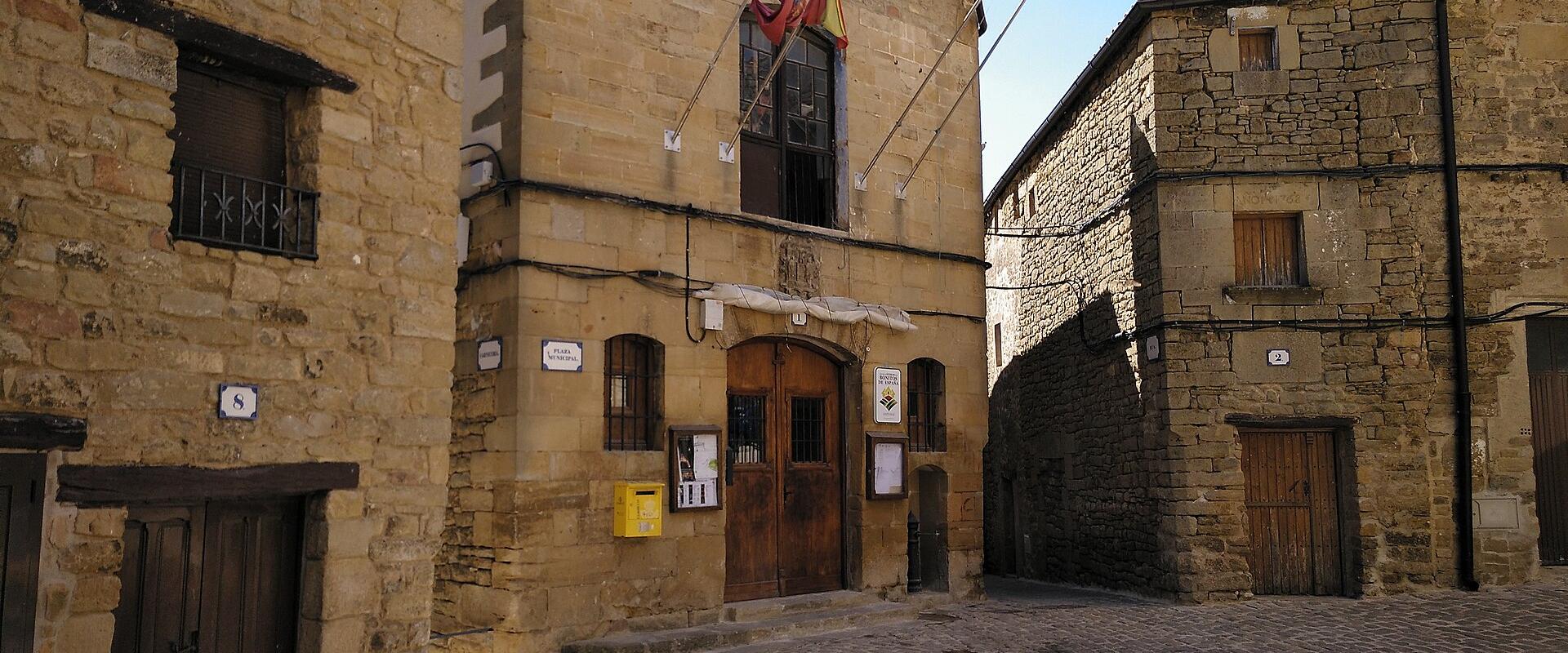
Casco Antiguo (Old Town)
- Where
- Ujué, Navarre
- Directions
- Directions
Ujué, written Uxue in Basque, is a village of narrow lanes and stone houses that clings to a hilltop in the south of Navarre, at a height of around 800 metres, and its old town is one of the best-preserved in the region. Its name is said to come from the Basque word for dove, and a local legend tells how a shepherd followed a dove to a hollow in the rock where he found a statue of the Virgin Mary, which led to the founding of a sanctuary on the spot. That story, together with the strong walls and the steep setting, gives the village an atmosphere that mixes pilgrimage and fortification.
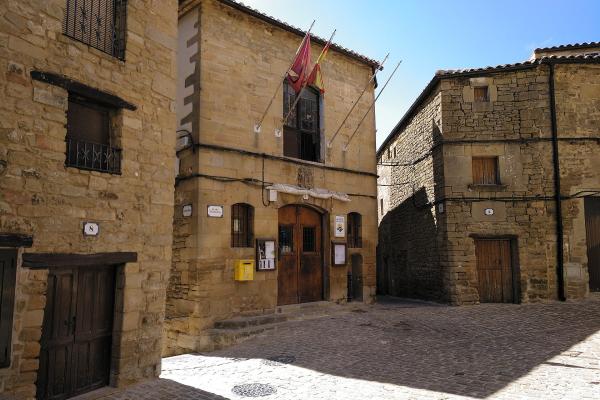
The road that climbs to the village passes a stone cross, the Cruz del Saludo, from where pilgrims traditionally had their first view of the sanctuary. Inside the old town, the streets are steep, paved with cobbles and lined with houses of stone with wooden eaves and small balconies, some of them bearing coats of arms. The lanes bend and climb in ways that reflect their medieval origin, and the plan is that of a small defended settlement gathered around its church. Two small squares, the Plaza de San Martín and the Plaza de la Cuesta, offer spaces to rest, and fields of cereals, almond trees and vines fall away in terraces below the walls.
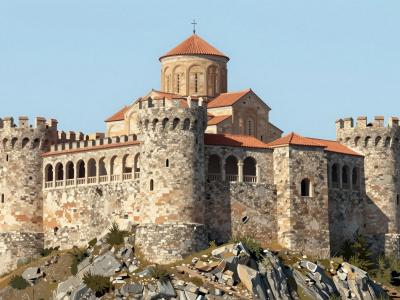
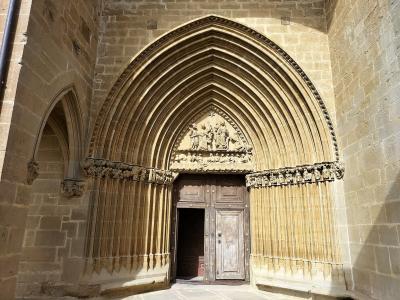
The church of Santa María, at the highest point of the village, is the focus of the whole village. It began in the Romanesque period and was fortified in the fourteenth century, with battlements, a walkway round the roof and a strong tower, so that it looks like a castle as much as a church. It holds a Romanesque image of the Virgin of Ujué, a dark, seated figure that is the centre of local devotion. The church is also tied to the history of the kingdom of Navarre, since King Charles II of Navarre, known as Charles the Bad, who died in 1387, is said to have left his own heart to be kept here.
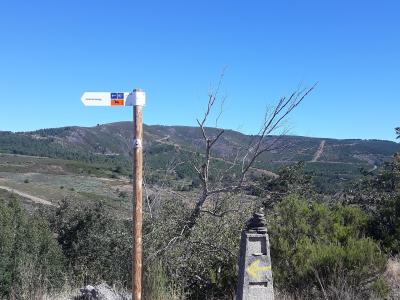
Every year, in spring, on the Sunday after Saint Mark's day, hundreds of pilgrims walk from the town of Tafalla to Ujué, many barefoot, in a pilgrimage that has been celebrated for centuries and ends with a procession to the church. The village also lies on a branch of the Camino de Santiago, and walkers sometimes pass through. The Castillo de Ujué, the remains of the castle, stands nearby.
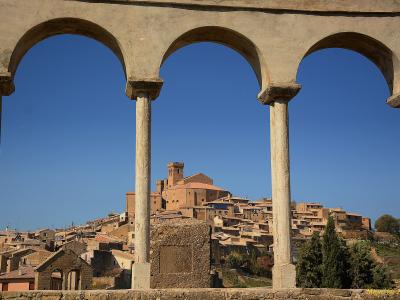
The views from the walls and the churchyard are among the best in Navarre. On clear days, you can see across the plains toward the Bardenas desert and, far away, the Pyrenees. Local restaurants serve hearty food, including lamb and the shepherds' dish known as migas. Visitors should wear sturdy shoes for the steep lanes, and the village is quietest in the early morning and the late afternoon. It suits walkers, history lovers and photographers.
Categories
More photos coming soon
Questions people ask
Quick Facts
Best Time to Visit
May through September offers mild weather ideal for exploring the medieval village.