







- Admission
- Elevator: 2.70€
- Where
- Alicante, Valencia
- Directions
- Directions
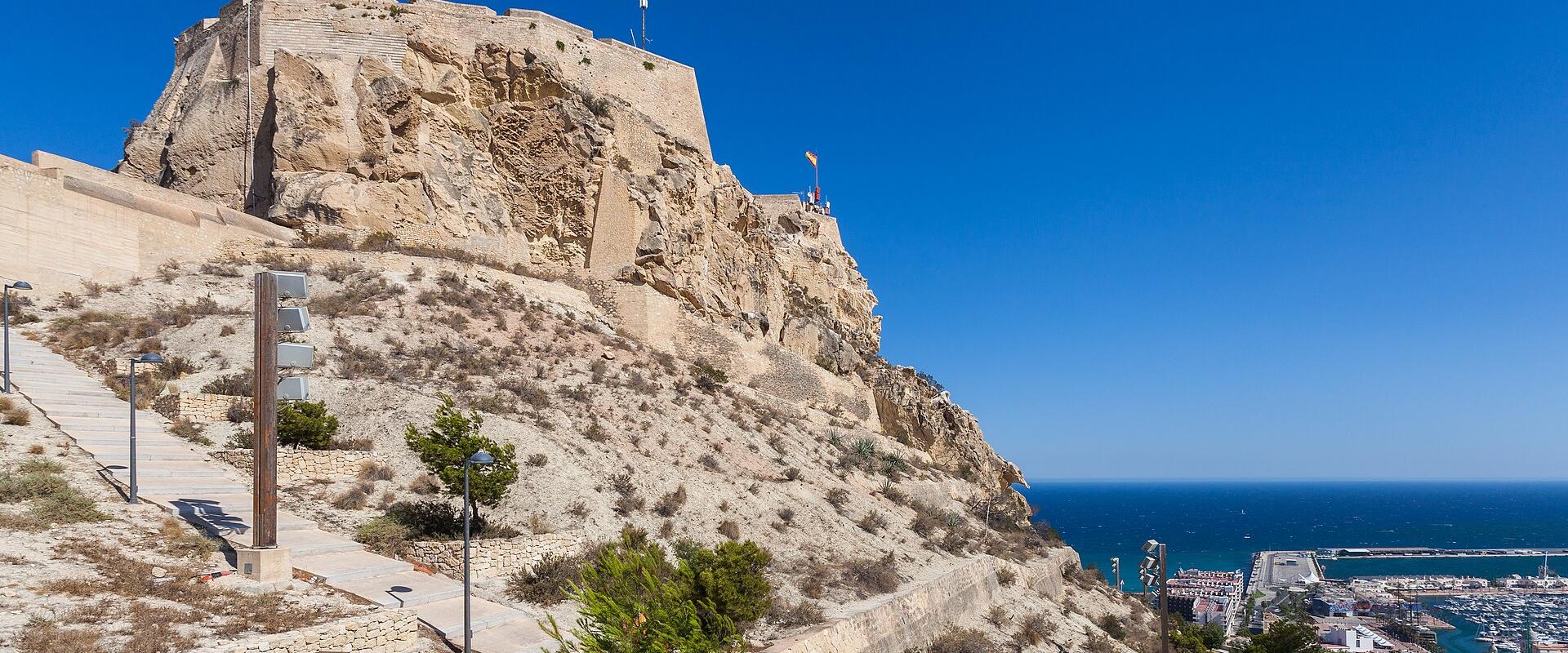
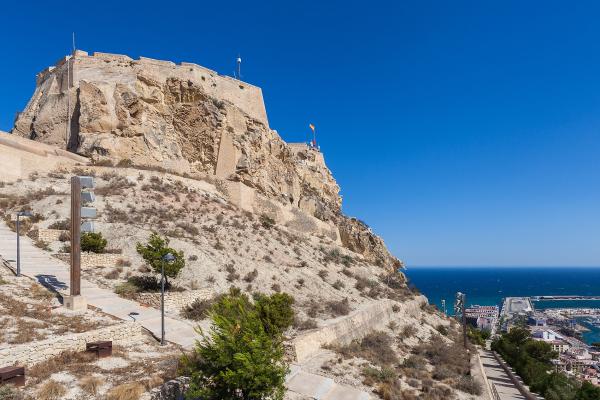
The Castle of Santa Bárbara crowns Mount Benacantil, the rocky hill that rises 166 metres above the centre of Alicante, and it is the main landmark of Alicante’s skyline. The mountain has a distinctive profile, which the local people have long seen as the face of a Moor in profile, the Cara del Moro, lying with his head back, and the castle sits on the brow, the Face of the Moor. From the walls the view is wide, covering the whole city, the port, the long curve of the bay, the island of Tabarca on a clear day, and the mountains of the interior. It is easily the best place to understand the geography of Alicante.
The hill has been occupied since antiquity. Archaeologists have found traces of settlement from the Bronze Age, and Iberian and Roman remains on the slopes, but the fortress that survives mostly dates from the Muslim period, beginning in the ninth century, when Alicante, then called Laqant, was part of Al-Andalus. The castle was taken by Christian forces from Castile in 1248 under Alfonso X, the Wise, and tradition says that the capture took place on the feast of Saint Barbara, on 4 December, which gave the castle its name. Later periods brought additions and modifications. In the sixteenth century, under Philip II, the fortifications were rebuilt in the Renaissance style, with bastions and walls to resist artillery, and the Salón de Felipe II, the Salon Felipe II Hall, a large vaulted hall, dates from that time. The castle was used as a military post and a prison until the twentieth century.
The structure is arranged on three levels. The upper part contains La Torreta, a tower with remains from the fourteenth century, and the Patio de Armas, the parade ground, with a chapel and an old guardroom, the Cuerpo de Guardia. Cisterns, ramparts, ravelins and passages link the levels, and cannons stand on the walls. The Museu de la Ciutat d’Alacant, MUSA, located in some of the rooms, explains the history of the city from the Middle Ages to the present, with displays, models and audiovisual material. A cafeteria with a terrace offers refreshments with a view.
There are two ways to reach the castle. The first is on foot, by a path that climbs from the old quarter through Ereta Park, a garden on the slope, and along the old walls, which takes about half an hour and is steep. The second is by lift, from Paseo Ramiro near Postiguet Beach, which carries visitors up through the rock to the castle in a short ride. A road also leads to the top by car and bus.
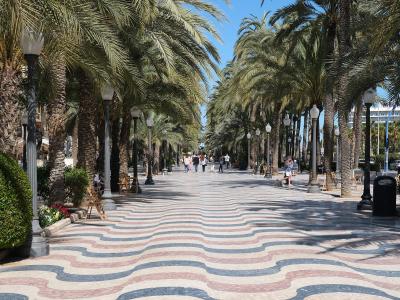
Entry to the castle has been free or charged only for the lift, but conditions change, so check the current arrangements. The castle is open daily, with longer hours in summer. A visit takes about two hours, and the best time is in the late afternoon. Take water and a hat, since the hill is exposed. The Explanade of Spain, the palm-lined promenade, lies below.
Categories
More photos coming soon
Admission Fees
- Admission
- Elevator: 2.70€
Hours and prices change, especially out of season. Check with the venue before you go.
Nearby Attractions
Other places to visit in Alicante
Questions people ask
Quick Facts
Best Time to Visit
May through October offers warm, dry weather ideal for coastal activities.