







- Where
- Palma de Mallorca, Balearic Islands
- Directions
- Directions
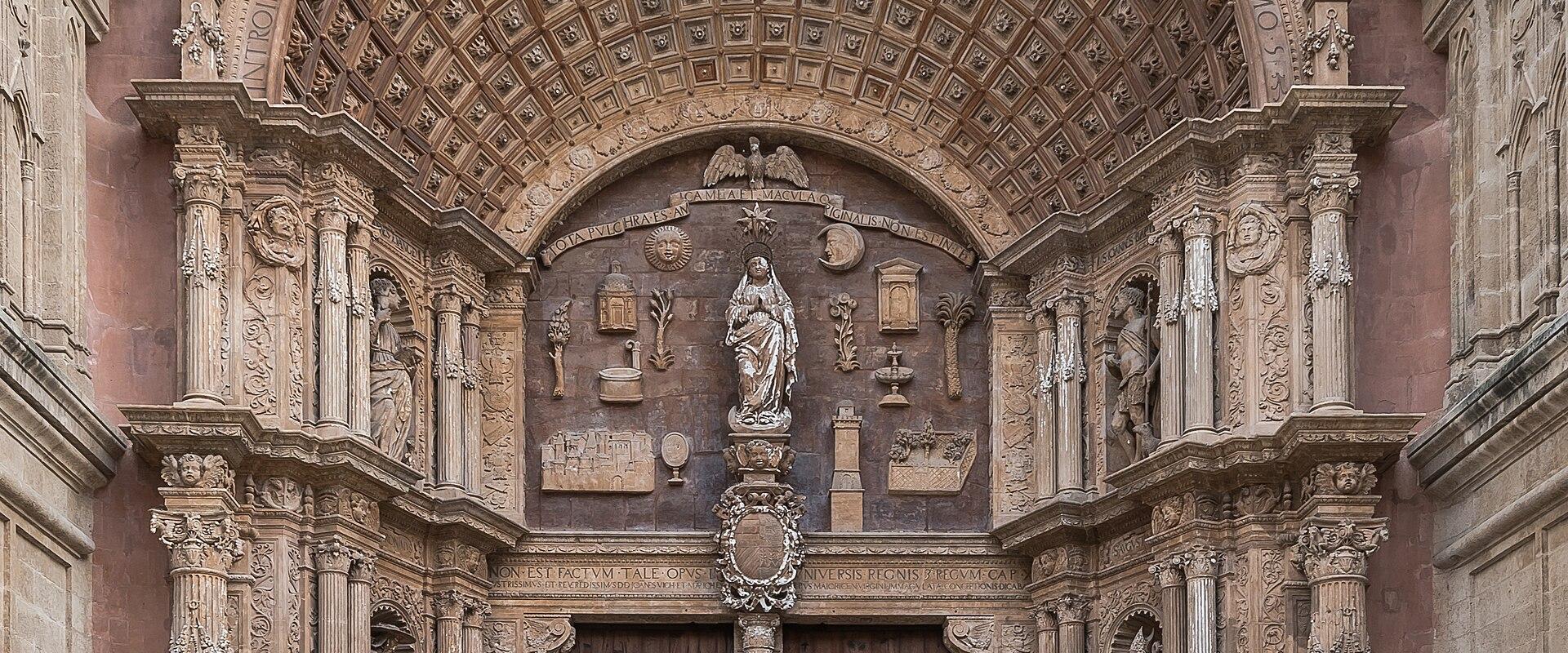
La Seu, the cathedral of Palma, is one of the great Gothic buildings of the Mediterranean, and it rises in a long golden mass beside the seafront of the Bay of Palma, between the Royal Palace of La Almudaina and the Parc de la Mar, a park with a lake. Its position, with the sea in front and the old town behind, makes it the dominant feature of the city’s skyline, and the sight of the church mirrored in the water of the park is one of the best-known views in Mallorca. The building is also called the Catedral de Palma or the Cathedral of Santa María of Palma.
King James I of Aragon led the Christian conquest of the island from its Muslim rulers in 1229 and promised to build a church to the Virgin if he survived a storm on the crossing, according to tradition, and work began that year on the site of the main mosque. The building progressed slowly through the following centuries in the Catalan Gothic style, and the main structure was finished in the early seventeenth century. Several architects worked on it, and a number of later alterations changed its details. The cathedral is built of local sandstone, which gives it a warm colour.
The scale of the interior is overwhelming. The nave is about forty-four metres high, supported on remarkably slender octagonal columns, which makes it one of the tallest Gothic naves in the world, and its width and light give it a sense of space and lightness that is unusual in Gothic churches. The cathedral also has one of the largest rose windows of the Gothic period, known as the Gothic Eye, almost fourteen metres across, on the east end above the Royal Chapel, and on certain mornings in winter, the sun shines through it and projects a bright pattern of light on the opposite wall, an effect that draws crowds. The Royal Chapel, or Chapel of the Holy Trinity, one of the oldest parts of the building, contains the tombs of kings of Mallorca.
In the early twentieth century, the bishop invited the architect Antoni Gaudí to renew the interior, and he worked on the cathedral between 1904 and 1914. He moved the choir stalls from the centre of the nave to bring in more light and designed a huge wrought-iron canopy over the main altar, which hangs from the ceiling and is decorated with lamps, a distinctive and unusual piece. In 2007, the Mallorcan artist Miquel Barceló completed a large ceramic mural covering the walls of the Chapel of Saint Peter, a modern work in striking contrast with the Gothic surroundings. These later additions make the cathedral a place where medieval and modern art meet.
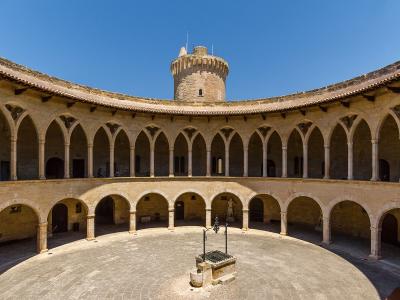
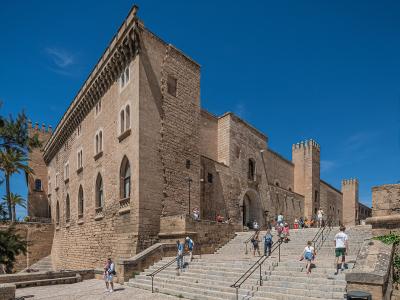
Visitors enter for a fee, with an audio guide, and a museum displays treasures, and the roof terrace can be visited on special tours. Opening hours vary by season and the cathedral is closed to tourists during services, so check the official site. A visit takes about an hour and a half. The Royal Palace of La Almudaina and Bellver Castle are within reach.
Categories
More photos coming soon
Nearby Attractions
Other places to visit in Palma de Mallorca
Questions people ask
Quick Facts
Best Time to Visit
May through September offers warm, sunny weather ideal for beach activities.