







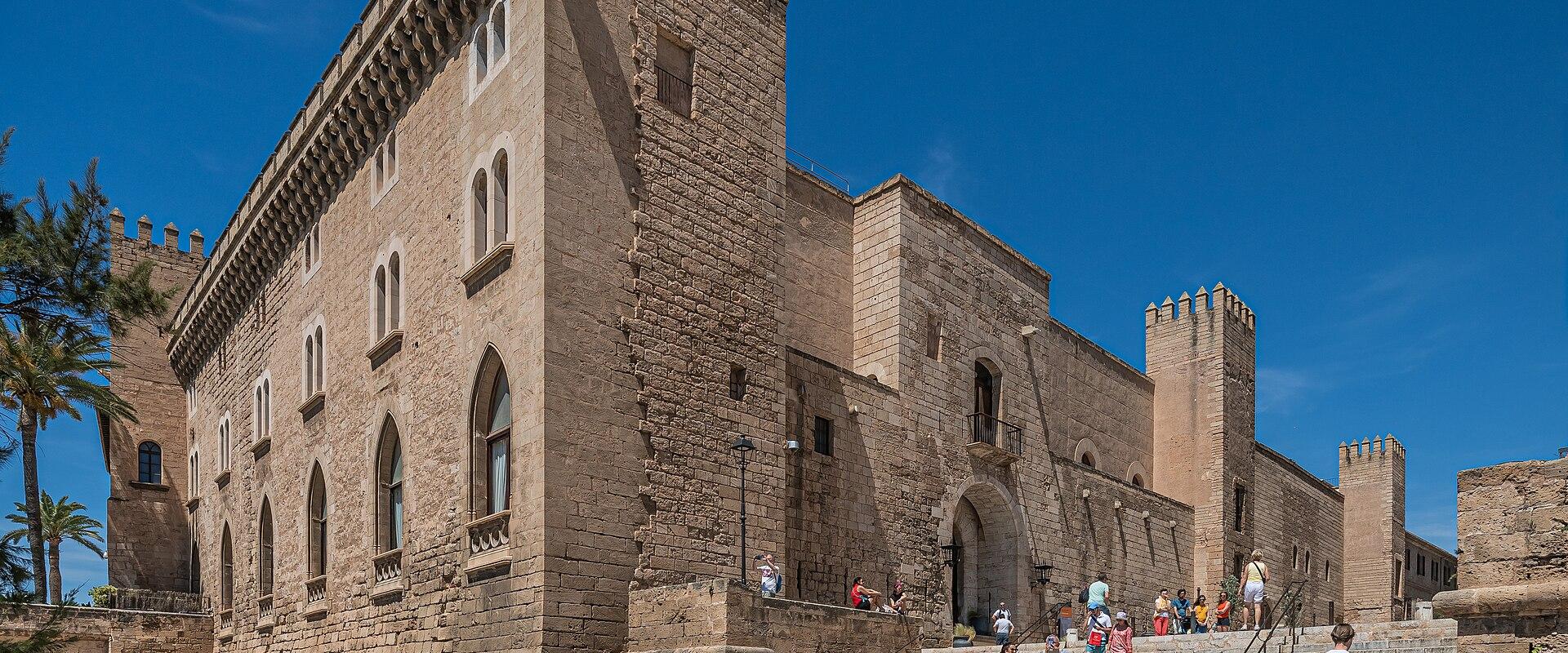
Royal Palace of La Almudaina
Historic royal palace adjacent to Palma's cathedral
- Admission
- €8
- Where
- Palma de Mallorca, Balearic Islands
- Directions
- Directions
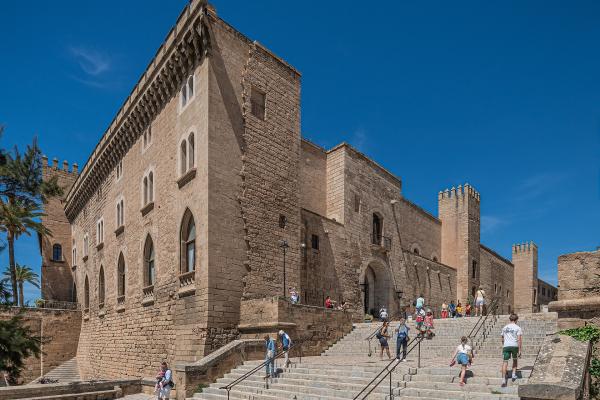
The Royal Palace of La Almudaina stands beside the cathedral in Palma, on a rise overlooking the bay, and it is one of the oldest buildings in Mallorca. The name comes from the Arabic al-Mudayna, meaning the citadel, and recalls its origin as the fortress of the Muslim governors of the island. After the Christian conquest of Mallorca by King James I of Aragon in 1229, the Islamic alcázar became a royal residence. In the following century, the kings of the independent kingdom of Mallorca, in particular James II and Sancho, rebuilt much of it in the Gothic style, converting the fortress into a palace with a courtyard, halls and a chapel. The result is one of the best examples of civil Gothic architecture in the Balearic Islands, set within walls and towers that preserve traces of the earlier Muslim fortification.
The palace is arranged around a large courtyard, the Patio de Armas, the parade ground, in which the main buildings are grouped on different sides. The structure is divided between the King’s Palace and the Queen’s Palace, which contained the royal apartments, and the complex also includes the Chapel of Saint Anne, a small church with a Romanesque doorway, which is the oldest surviving part of the palace. The most impressive interior is the Great Hall, the Sala del Tinell, a large Gothic hall with high pointed arches, used for royal receptions and ceremonies. The rooms were refurbished over the centuries, and later periods added Renaissance and Baroque elements, so the building shows a variety of styles. The palace was damaged and altered over time, and it has been restored several times.
Today the palace is owned by the Spanish state and is run by the national heritage agency, Patrimonio Nacional, and it is used by the Spanish royal family for official functions in Mallorca, such as receptions, while the family’s summer residence is at the Marivent Palace, a few kilometres away. When not in use for official events, the palace is open to the public as a museum. Visitors tour the rooms, which are furnished with tapestries, paintings, furniture and objects from different periods, and a display of Gothic sculpture and architectural fragments, and they can see the terraces, which have a view of the port and the sea.
The palace is open from Tuesday to Sunday, with hours that vary between winter and summer, and it is closed on Mondays. Admission is charged at a modest price, and booking online can save time at busy periods. A visit takes about an hour to an hour and a half. The royal gardens, S’Hort del Rei, which lie below the palace and are free to enter, with fountains and orange trees, make a pleasant place to rest afterwards.
The palace stands next to the Cathedral of Mallorca, La Seu, so it is easy to visit both on the same day, and the old town of Palma, with its narrow streets and courtyards, is within reach on foot. The palace is a quieter and less crowded attraction than the cathedral and gives a good picture of the royal history of the island.
Categories
More photos coming soon
Admission Fees
- Admission
- €8
Hours and prices change, especially out of season. Check with the venue before you go.
Nearby Attractions
Other places to visit in Palma de Mallorca
Questions people ask
Quick Facts
Best Time to Visit
May through September offers warm, sunny weather ideal for beach activities.