







Iglesia de San Julián de los Prados
- Where
- Oviedo, Asturias
- Directions
- Directions
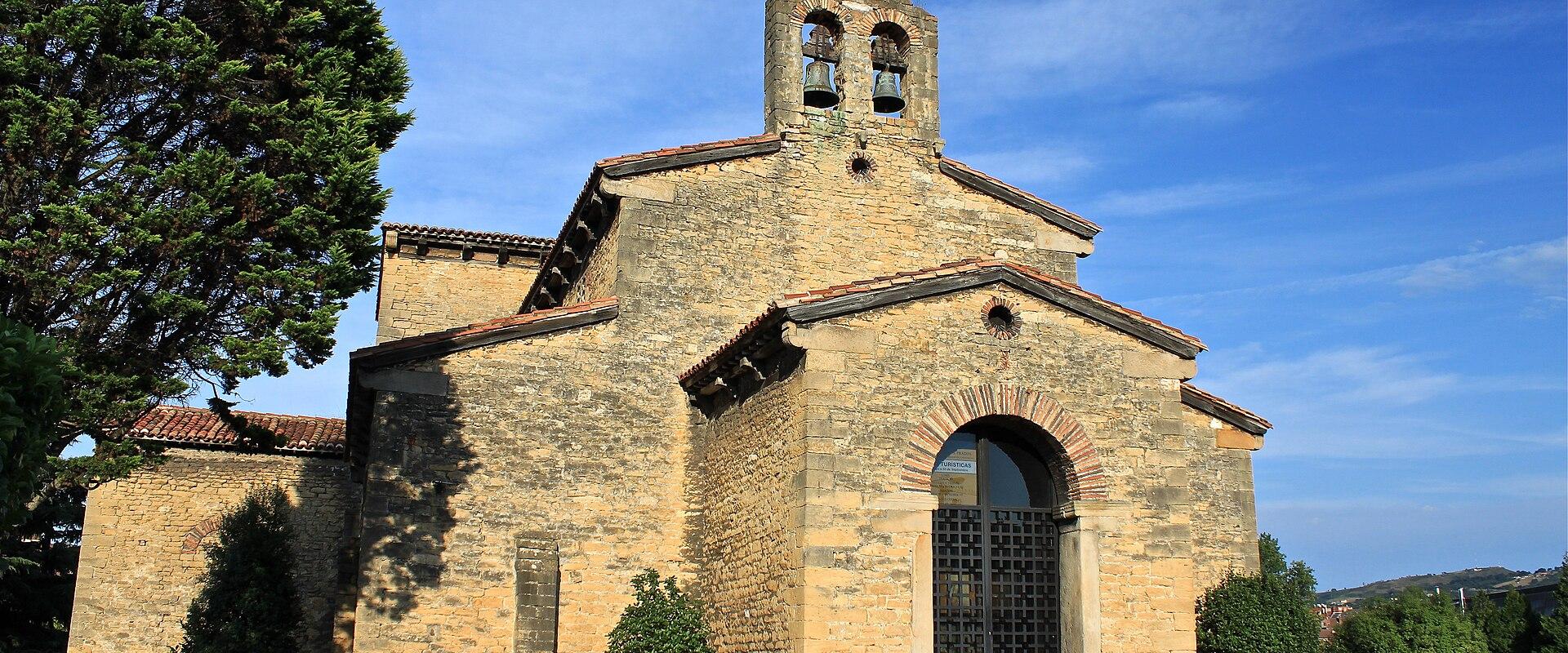
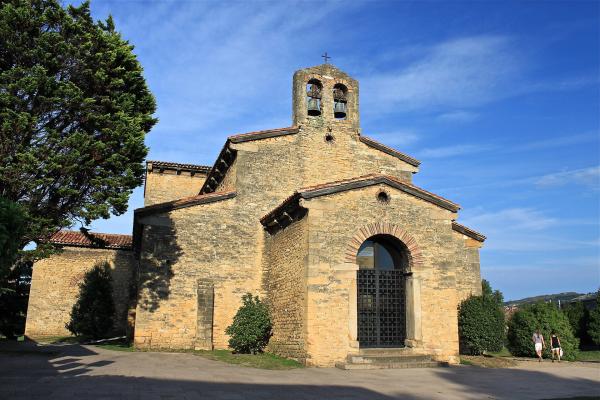
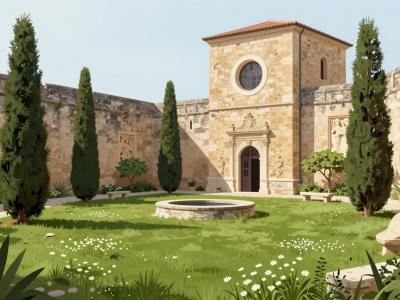
The Iglesia de San Julián de los Prados, known locally as Santullano, is the largest surviving church of the Asturian pre-Romanesque, the early medieval style that developed in the kingdom of Asturias in the eighth and ninth centuries. It stands on the edge of Oviedo, in the district of Pumarín, in what were once meadows, the prados of its name, outside the early royal city. King Alfonso II, the Chaste, ordered it built in the early ninth century, between 812 and 842, and the chronicles say that his court architect, Tioda, supervised the work on royal buildings in Oviedo. The church is dedicated to Saint Julian and his wife, Saint Basilissa, who were martyrs in the early Christian era.
The building is a basilica with a nave and two aisles, divided by arches resting on pillars, and a high transept that crosses the nave. At the east end are three small square-ended apses covered with barrel vaults. The proportions are lofty and strong, and it was the biggest Christian church in Spain at the time it was built. Walls of rubble stone and brick are plain on the outside, with small windows filled with carved stone lattices, which let in a soft light. The simplicity of the exterior hides the richness within.
What makes Santullano famous is the interior decoration. The walls are covered with mural paintings of the ninth century, among the best-preserved in Europe from this period. They are not scenes with figures, but an imaginary architecture in the Roman manner, with columns, arches, curtains, roofs and geometric patterns painted in red, ochre, yellow and white, as though the walls were hung with the facades of buildings and decorated with marble. Their style shows the knowledge of Late Antique Roman painting that the Asturian court had inherited, and which it mixed with the influences of the Visigothic and Carolingian worlds. The effect is bright and surprising.
Santullano forms part of the group of monuments known as the Monuments of Oviedo and the Kingdom of the Asturias, which UNESCO listed in 1985 and extended later, along with the churches of Santa María del Naranco and San Miguel de Lillo on Mount Naranco. It was declared a national monument early in the twentieth century. A visit allows you to understand the origins of the kingdom and the ambition of its rulers.
The church is a short bus ride or a walk of about twenty minutes from the old town, near the Catedral de San Salvador and the Jardín de Pelayo. It suits history and art lovers, and a visit takes half an hour. Opening arrangements vary by season and visits may be in timed groups, so check ahead.
More photos coming soon
Questions people ask
Quick Facts
Best Time to Visit
May through September offers mild, pleasant weather ideal for exploring the city.