







- Where
- Murcia, Murcia
- Directions
- Directions
Murcia Cathedral, dedicated to Saint Mary, stands on the Plaza del Cardenal Belluga, the main square of the old city, and it is one of the most spectacular churches of south-eastern Spain. Building began in 1394, on the site of the city's former main mosque, and went on for four centuries, so the cathedral combines a Gothic body with Renaissance and Baroque additions in a way that is typical of great Spanish cathedrals. The result is a building that looks different from each side, and the contrast between its parts is part of its charm. The square it faces is closed by the Episcopal Palace, a Baroque building, and the effect is of a splendid stage set.
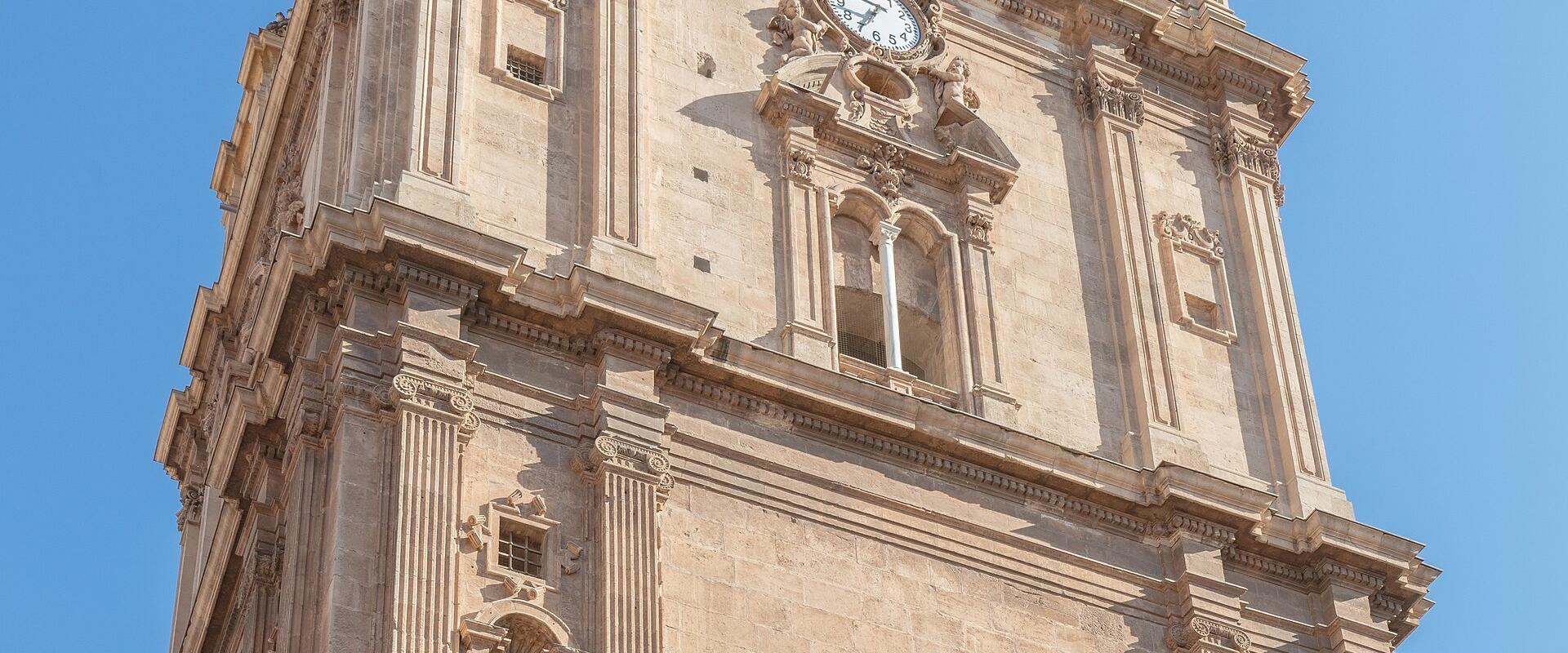
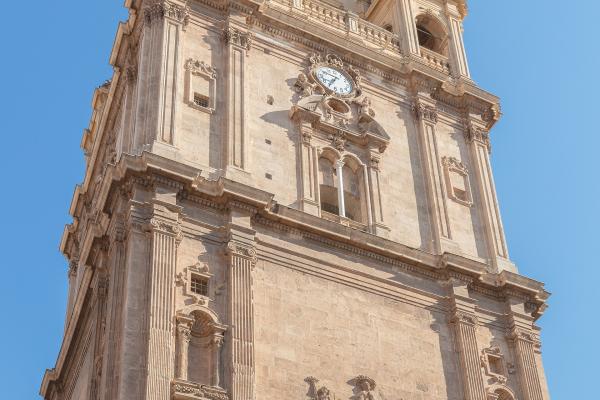
The most striking part from the outside is the west façade, which is a masterpiece of Spanish Baroque, built in the eighteenth century by the architect Jaime Bort. It rises in curved tiers of sculpture, columns and niches, and its carving of figures, scrolls and balconies makes the stone seem to flow. The effect, particularly in the evening light, is dazzling. Beside it rises the bell tower, one of the tallest in Spain at over ninety metres, begun in the sixteenth century and completed in the eighteenth. It combines Renaissance, Baroque and Neoclassical elements in successive stages, and visitors can climb it by a series of ramps and then steps, a long ascent that brings you to a viewing level with a panorama of the city, the river Segura and the surrounding orchards, known as the huerta.
The interior has the Gothic structure of a tall, wide nave with ribbed vaults, surrounded by chapels, and the contrast with the exuberant façade is considerable. Two of the chapels are particularly famous. The Capilla de los Vélez, built in the early sixteenth century, is a rich mixture of late Gothic and Plateresque, with an elaborately carved dome, and the Capilla del Junterón is a Renaissance chapel with fine sculpture. The high altar and the choir hold carved wooden work, and the cathedral has a notable organ. Francisco Salzillo, the great eighteenth-century sculptor of Murcia, whose processional figures are the pride of the city's Holy Week, is represented in the region, and the cathedral museum holds treasures including goldwork, vestments and paintings.
The cathedral has a special link to the history of Castile. The heart and entrails of King Alfonso X the Wise, who loved Murcia, are said to be preserved here, in accordance with his wish. The cathedral therefore holds a place in the history of the Reconquista.
Entry to the main church is usually free, though the museum and the tower need tickets. Opening times follow services, and the building closes in the afternoon on some days. The Real Casino de Murcia, a lavish nineteenth-century club, is a short walk away. It suits architecture lovers and those with an interest in history.
Categories
More photos coming soon
Nearby Attractions
Other places to visit in Murcia
Questions people ask
Quick Facts
Best Time to Visit
May through September offers warm, dry weather ideal for exploring the city.