







Plaça de Catalunya
- Admission
- Free entry
- Hours
- Open all day
- Where
- Barcelona, Catalonia
- Directions
- Directions
Plaça de Catalunya is the main square of Barcelona, and the point where the old city and the nineteenth-century grid of the Eixample meet. It covers about five hectares and sits at the top of La Rambla, at the start of Passeig de Gràcia, and at the end of the pedestrian shopping street Portal de l’Àngel. In the middle of the nineteenth century the medieval walls that enclosed the Ciutat Vella were demolished, and the open ground outside them was left as a gap between the old town and the new districts. Over the following decades the space was planned as a square, and its present form was settled in the 1920s, ahead of the 1929 International Exposition, when the architect Francesc Nebot gave it its formal plan.
The square is laid out with fountains, paved areas, tall palm and plane trees and a number of sculptures, many of them in the restrained, classical Noucentisme style of the early twentieth century. Statues of female figures stand around the edges, among them La Deessa, by the sculptor Josep Clarà, and there is a modern monument to Francesc Macià, the Catalan political leader, by Josep Maria Subirachs, who also worked on the Sagrada Família. Flocks of pigeons gather around the fountains, and for decades visitors have fed them, though the city now discourages it. Large stone benches around the fountains make a good place to sit, and the open space gives a break from the dense streets of the old town.
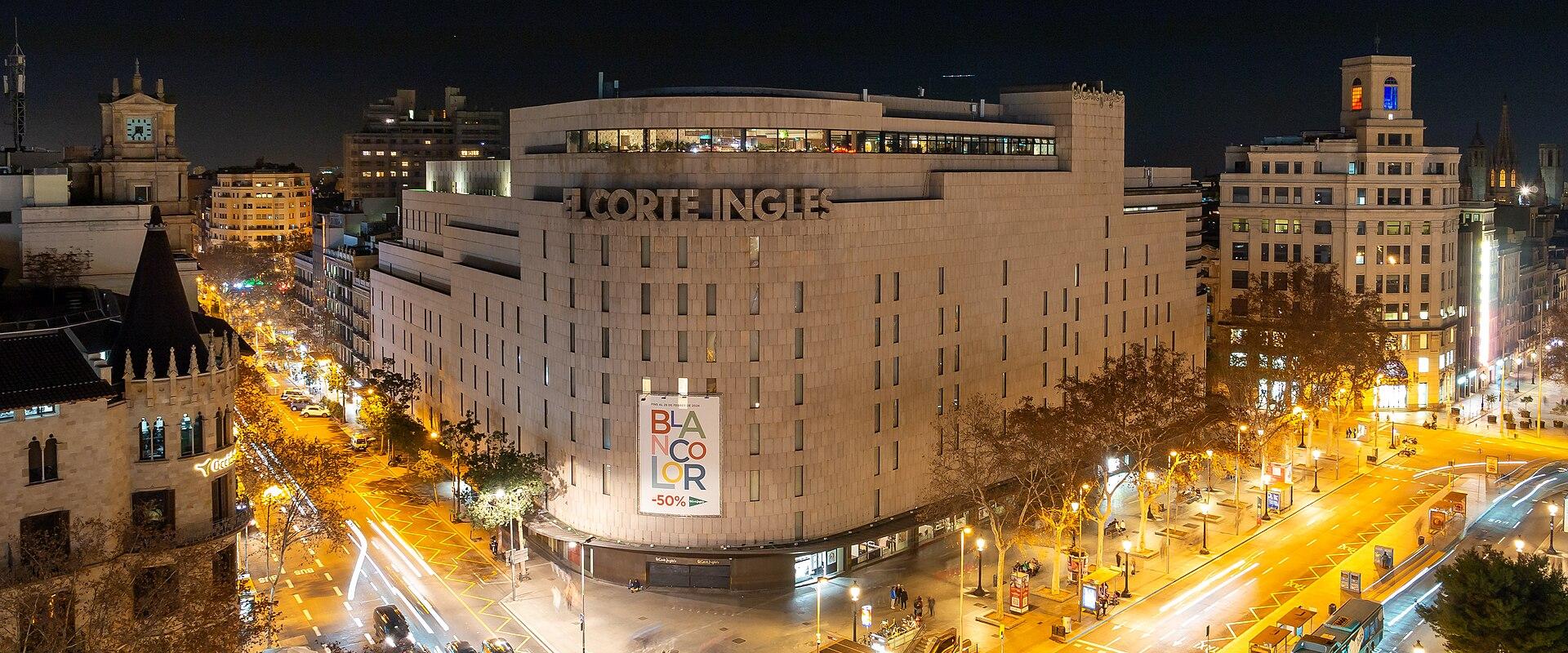
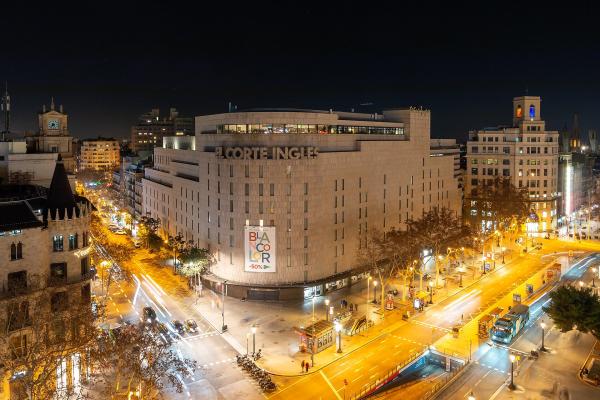
The buildings around the square include the Banco de España, the telephone company’s tower, and the department store El Corte Inglés, as well as hotels, cafes and shops. On the side facing the Rambla, the square opens into the Ciutat Vella, and on the opposite side it leads to the Eixample and the elegant Passeig de Gràcia, where Casa Batlló stands a short walk away. Rambla de Catalunya, a quieter boulevard lined with shops and terraces, runs parallel to Passeig de Gràcia.
The square is the main transport hub of the city centre. Several metro lines and suburban trains meet under it, and the airport bus, the Aerobús, stops here, as do many city buses, so it is where many visitors arrive. It is also the traditional place for demonstrations, celebrations and public gatherings. At New Year and during festivals, the square fills with people.
A visit can be short, around half an hour, or can be part of a longer walk down La Rambla to the Gothic Quarter and La Boqueria Market. It is free and open at all times, but pickpockets operate in crowded spots, so keep bags closed. Early morning is the calmest time.
Categories
More photos coming soon
Hours & Fees
- Open
- Open all day
- Admission
- Free entry
Hours and prices change, especially out of season. Check with the venue before you go.
Nearby Attractions
Other places to visit in Barcelona
Questions people ask
Quick Facts
Best Time to Visit
May through June offers warm, dry weather ideal for exploring the city.