
- Where
- Almagro, Castile-La Mancha
- Directions
- Directions
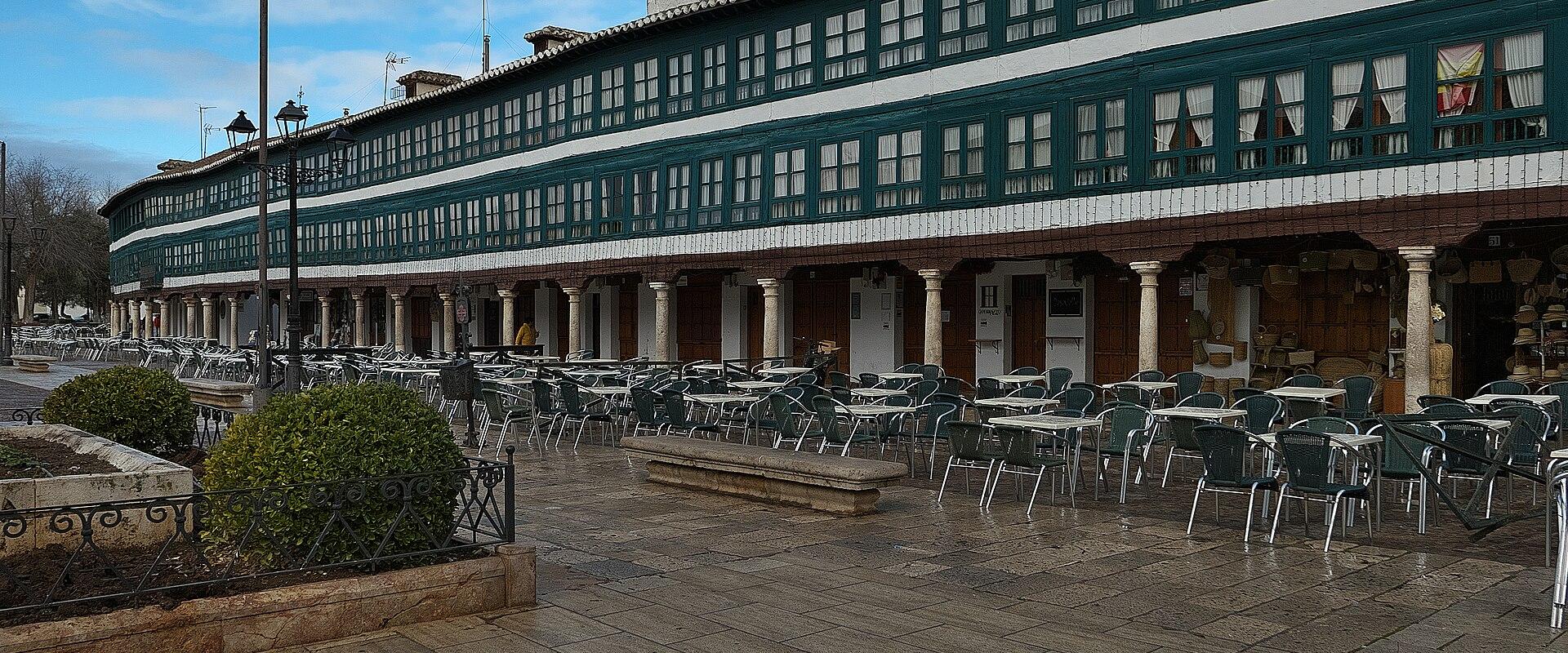
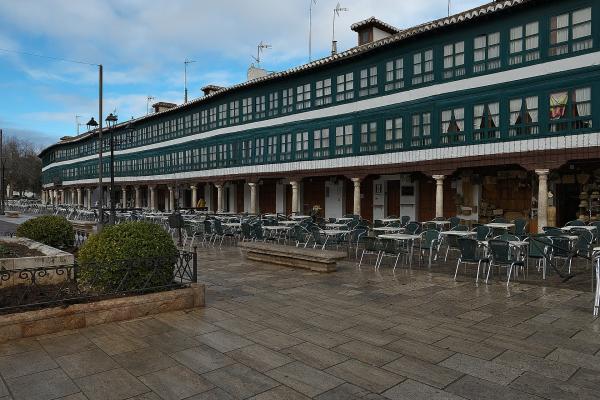
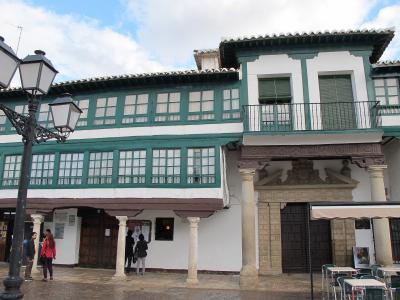
The Plaza Mayor of Almagro is one of the most original squares in Spain, a long rectangle of stone arcades and green-painted wooden galleries at the centre of a small town in the La Mancha region, in the province of Ciudad Real. Almagro was once the headquarters of the Order of Calatrava, a military and religious order, and in the sixteenth century it grew rich, which accounts for its fine palaces, convents and churches. The square dates from this period and was developed in the following century. Its character is unlike the stately stone squares of Castile, and the shape, lined with two-storey glazed wooden galleries called corredores, gives it a cheerful, intimate look, as though it were an open-air courtyard.
The ground floor is a continuous arcade of stone columns of the Tuscan order, under which shops, cafes and restaurants serve the visitors, and above it rise the galleries, with their windows framed in green wood, repeating along both of the long sides. The stone pavement, the regular rhythm of the columns and the flowers on the balconies give the square a unity that is rare. At one end stands the town hall, and the square is closed at the other by the Church of the Madre de Dios. In the evening, when the light turns warm and lanterns come on, the plaza is at its best, and the terraces fill with people.
The square is central to Almagro's identity as a theatre town. A short walk away is the Corral de Comedias, an open-air theatre of the seventeenth century that is the only one of its kind to survive almost intact in Spain, and it still hosts performances. Every July, the town holds the International Classical Theatre Festival, one of the most important in the Spanish-speaking world, when the squares and the old buildings become stages and the plaza fills with actors, audiences and street entertainers. The National Theatre Museum is also in the town.
The development of the square owed much to the Fugger family, the German banking dynasty, who held the right to exploit the mercury mines of nearby Almadén and used the money to build a large house in the town. In Spanish, their name became Fúcares, and the Patio de los Fúcares, a courtyard with arcaded galleries, is now a venue for performances and a restaurant. Their presence brought Northern European influences into the town, and the plaza's galleries are sometimes said to reflect this.
The town is also known for its pickled aubergines, berenjenas de Almagro, flavoured with paprika and vinegar, and for its lace. The Hospital de San Juan and the Dominican cloister are among other places to visit. It suits culture lovers and families, and the square is free and open at any hour.
Categories
More photos coming soon
Nearby Attractions
Other places to visit in Almagro
Questions people ask
Quick Facts
Best Time to Visit
April to June and September to October offer mild, pleasant weather ideal for exploring.