







Puente Romano
- Admission
- Free entry
- Hours
- Open all day
- Where
- Salamanca, Castile and León
- Directions
- Directions
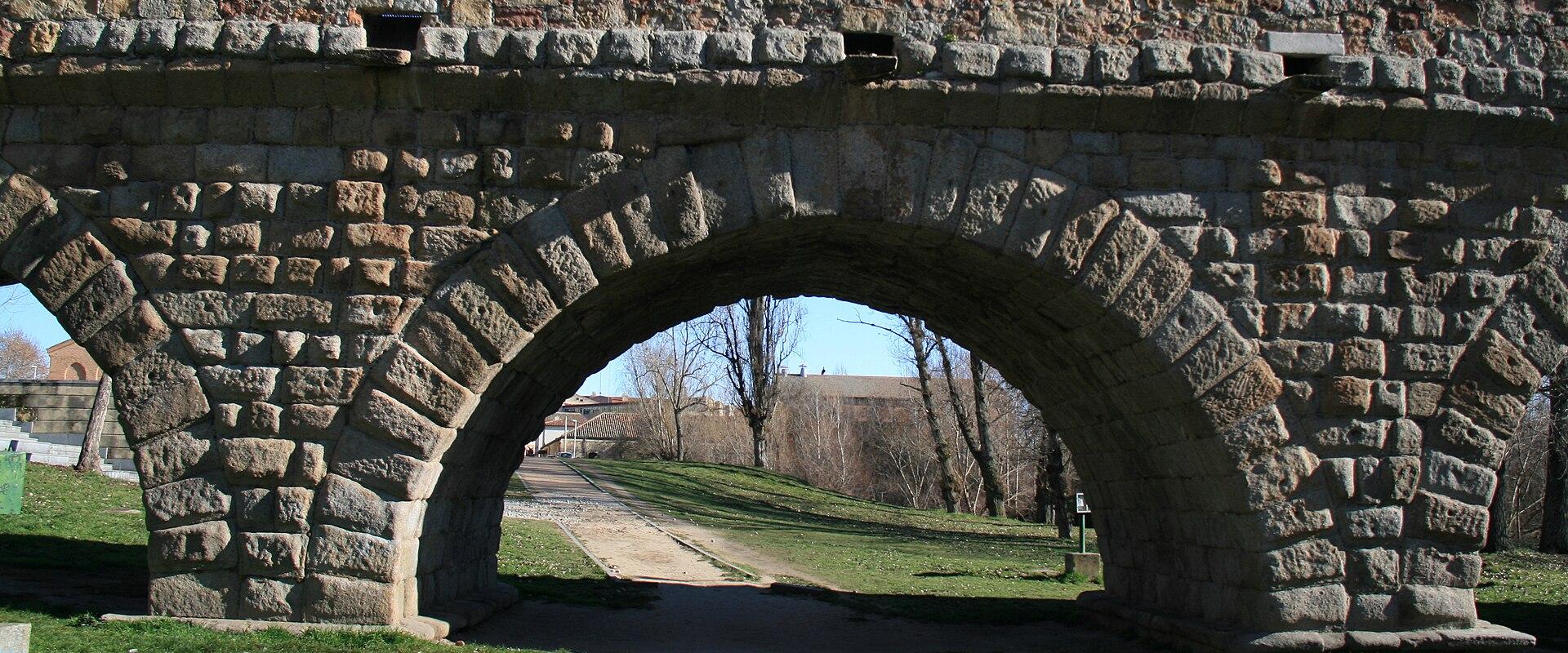
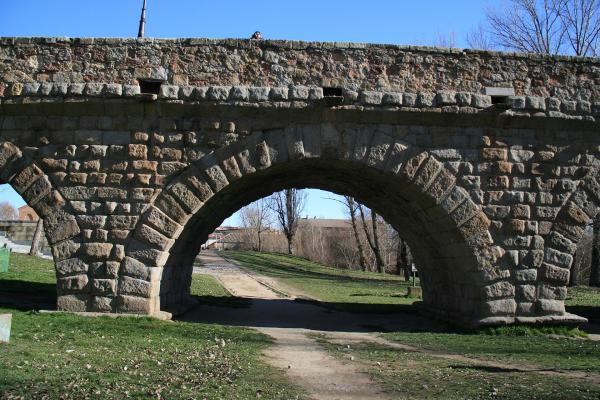
The Puente Romano, the Roman Bridge, is the oldest structure in Salamanca and the traditional way into the old city from the south. It crosses the Tormes river on a long line of granite arches, and it was built in the first century AD as part of the Roman road known as the Vía de la Plata, which ran north from Mérida through the western part of the peninsula. The bridge is about 170 metres long and was originally made up of more than two dozen arches, of which fifteen are still of Roman origin, while the others were rebuilt after floods damaged the structure in later centuries, with the work in a similar style.
The bridge is a strong, simple structure, without decoration. Its piers have triangular cutwaters that face the current, and the arches are of different spans, which gives the whole a slight irregularity that adds to its charm. Looking along the parapet, you can see where the Roman stones end and the later repairs begin, in slightly different colours of granite. For almost two thousand years, travellers, merchants and armies crossed here, and the bridge remained in use for road traffic until the twentieth century. Today it is closed to vehicles and used by pedestrians.
At one end of the bridge stands a stone figure of a bull, the Toro Ibérico, a prehistoric carving of the kind called a verraco, which is a type of sculpture found across the plateau of western Spain, left by the pre-Roman peoples of the area. It is a good reminder that the site had value long before the Romans, and the bull is the subject of the opening scenes of the picaresque novel Lazarillo de Tormes, in which the young hero has his head knocked against it by his master. The scene is a famous episode in Spanish literature.
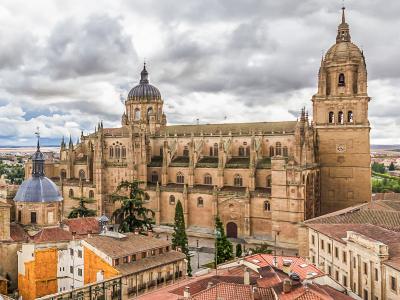
The bridge is also a good viewpoint. From the far bank, you see the whole profile of the old town, with the domes and towers of the New Cathedral and Old Cathedral rising above the golden stone of the university and the old walls. In the evening, the bridge and the skyline are lit, and the reflection in the river makes the walk especially atmospheric. It is also the spot where many people go to take photographs of the city at sunset.
The Puente Romano is free and open at all hours, and it is the natural start of a walk up into the old town toward the Plaza Mayor. It suits everyone, and a stroll takes twenty to forty minutes with time to stop. Nearby are the Casa de las Conchas, the Convento de San Esteban and the University of Salamanca.
More photos coming soon
Hours & Fees
- Open
- Open all day
- Admission
- Free entry
Hours and prices change, especially out of season. Check with the venue before you go.
Nearby Attractions
Other places to visit in Salamanca
Questions people ask
Quick Facts
Best Time to Visit
May through September offers warm, sunny weather ideal for exploring the city.