


Synagogue Of Santa María La Blanca
12th-century Mudéjar synagogue in Toledo's Jewish quarter
- Where
- Toledo, Castile-La Mancha
- Directions
- Directions
The Synagogue of Santa María la Blanca is one of the two medieval synagogues that survive in Toledo, and it is among the oldest synagogue buildings still standing in Europe. It stands in the old Jewish quarter, the Judería, in the western part of the old town, on Calle de los Reyes Católicos, close to the Monastery of San Juan de los Reyes and not far from the other surviving synagogue, El Tránsito. Toledo was home to one of the largest and most important Jewish communities in medieval Spain, and the quarter once held several synagogues, but most disappeared after the community was attacked in 1391 and finally expelled from Spain in 1492.
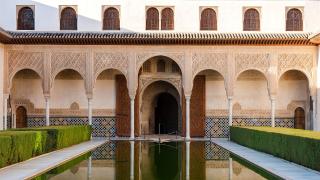
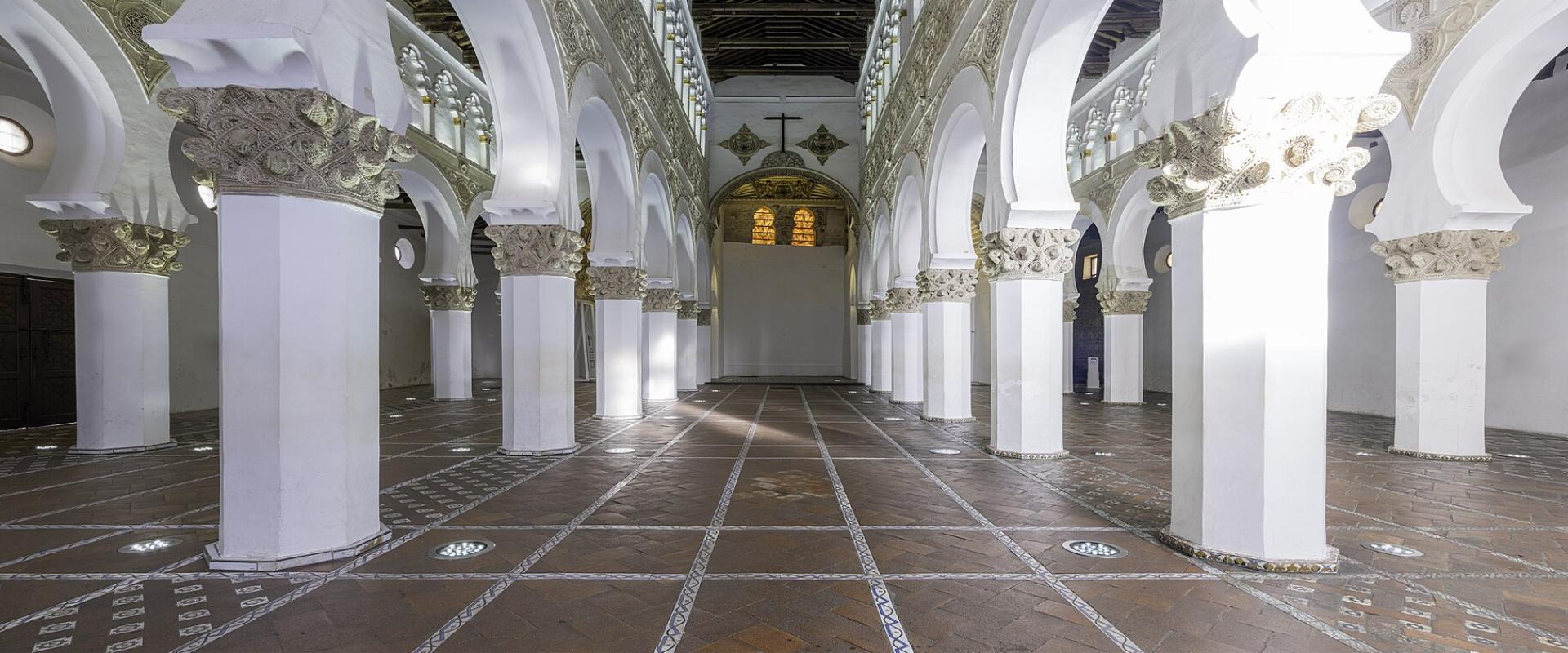
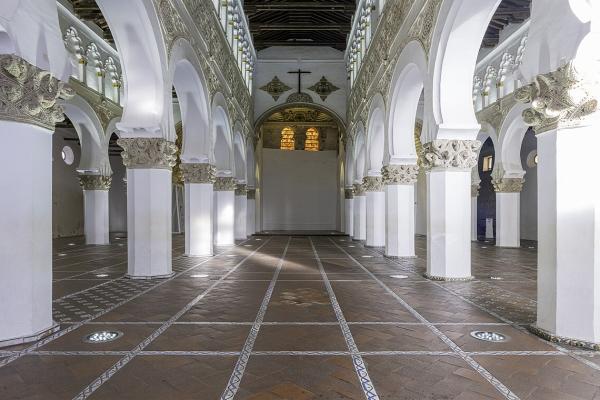
The building is generally dated to the late twelfth or early thirteenth century, and its style is the Mudéjar, the architecture produced by Muslim craftsmen working for Christian and Jewish patrons. This is a striking fact, since the synagogue was built in the manner of the Almohad dynasty, who ruled southern Spain and North Africa, and its design owes a lot to the Islamic style of mosques. The interior is a bright, white hall divided into five aisles by rows of octagonal brick piers, supporting horseshoe-shaped arches, and the arches and capitals are decorated with plasterwork in geometric and plant patterns, with delicate carving that is among the finest of the period. The capitals, carved in intricate designs, number around thirty, and no two are quite alike. The overall effect is of an airy, peaceful space with a rhythm of repeated arches, and it has often been compared to a mosque, which shows how much the cultures shared.
The building’s later history reflects the fortunes of Toledo’s Jews. After the violence of 1391 and the preaching of the Dominican friar Vincent Ferrer, the synagogue was converted into a church in the early fifteenth century, and it took the name of Santa María la Blanca, Saint Mary the White. In later centuries, it was used as a convent, a barracks and a warehouse, before being restored in the nineteenth and twentieth centuries and opened as a monument. Today it has no religious use, and it is managed as a historic site and museum.
Outside, a small garden with old cypress trees provides a quiet place to sit, and the whitewashed walls and narrow lanes of the quarter surround it. Admission is charged for the interior, and opening hours vary by season, so check before going. The visit is short, about twenty minutes, but it leaves a strong impression.
The synagogue fits neatly into a walk through the Jewish quarter. The El Tránsito synagogue and the Sephardic Museum, the Monastery of San Juan de los Reyes and the Cathedral of Toledo are all nearby, and Plaza de Zocodover and the Alcázar are a short distance to the east.
Categories
More photos coming soon
Nearby Attractions
Other places to visit in Toledo
Plaza de Zocodover
Historic Heritage · Urban Exploration
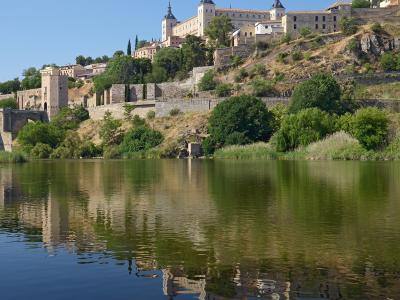
Alcázar Of Toledo
Historic fortress and military museum in Toledo
From €3 Castles · Historic Districts
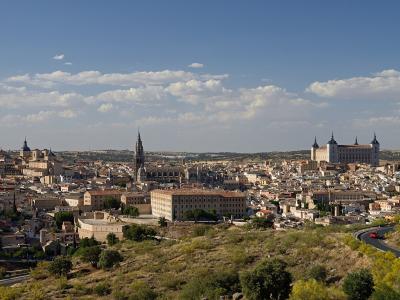
Cathedral Of Toledo
Spain's first Gothic cathedral, a UNESCO site in Toledo.
Historic Heritage · Museums & Culture
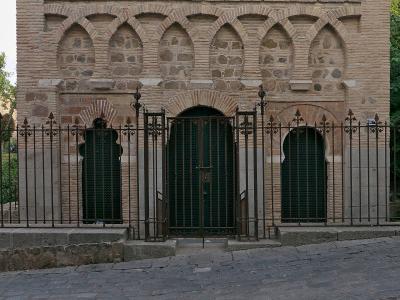
Mezquita Del Cristo De La Luz
999 AD Moorish mosque in Toledo, Spain
Historic Heritage · Architectural Heritage
Questions people ask
Quick Facts
Best Time to Visit
May through September offers warm, dry weather ideal for exploring the historic center.