Two Monuments, One Hillside
At the eastern edge of Málaga's old town, on the slopes of Gibralfaro hill, two monuments from very different periods sit side by side. At the bottom is the Roman Theatre, built in the 1st century AD when the city was the Roman town of Malaca. Directly above it rise the walls of the Alcazaba, a Moorish fortress-palace begun in the early 11th century. Higher still, at the top of the hill, is the Castle of Gibralfaro, connected to the Alcazaba by a walled corridor.
You can see the theatre and the Alcazaba in a single morning, and add Gibralfaro if you have the energy for the climb.
The Roman Theatre
The theatre lay buried for centuries and was only rediscovered in 1951, during work on a cultural building on the site. That building was later removed, and the theatre has since been excavated and restored. Today you can see the semicircular seating, the orchestra and parts of the stage area, and the theatre is used again for occasional performances.
Entry to the theatre is free. A small interpretation centre beside it explains the history of Roman Málaga and displays objects found during the excavations. The site is closed on Mondays, so plan a visit for another day. Even without going in, you can see most of the theatre from the street and from the Alcazaba walls above.
The Alcazaba
The Alcazaba was begun by the Hammudid dynasty in the early 11th century and extended over the following centuries. It is built as two walled enclosures, one inside the other, each defended by towers, with a sequence of gates and ramps that twist as they climb. The design was meant to slow attackers down, and it still makes the visit feel like a gradual ascent.
Inside the upper enclosure are the remains of a Nasrid palace arranged around courtyards with pools and fountains, including the Patio de los Naranjos and the Patio de la Alberca. Much of what you see was restored in the 20th century, starting in 1933 under the architect Leopoldo Torres Balbás. There are views over the port and the city from the walls.
Prices and Opening Hours
These are the current official prices from the Alcazaba and Gibralfaro website:
- Alcazaba: €7
- Combined Alcazaba and Gibralfaro Castle: €10
- Reduced Alcazaba ticket: €3, for European Youth Card holders and EU citizens over 65, retired or registered unemployed
- Reduced combined ticket: €5
- Free: children under 6, and all visitors on Sundays from 14:00
Opening hours:
- Winter (1 November to 31 March): 9:00 to 18:00, last entry 17:00
- Summer (1 April to 31 October): 9:00 to 20:00, last entry 19:00
The free Sunday afternoon entry is popular, so expect queues at the ticket office then.
Visiting with Children
The Alcazaba is manageable with children but not easy with a pushchair. The route is a series of ramps, steps and uneven cobbled paths, so a baby carrier is more practical for small children. Children under 6 enter free.
Some ways to keep it interesting for younger visitors:
- Point out the zigzag gates and ask why an army would struggle to get through.
- Look for the pools and fountains in the palace courtyards.
- Walk along the battlements for the view of ships in the port.
Shade is limited in the outer areas, so summer visits are best early in the morning, soon after the 9:00 opening. Toilets and water are worth sorting out before you start the climb.
Adding Gibralfaro
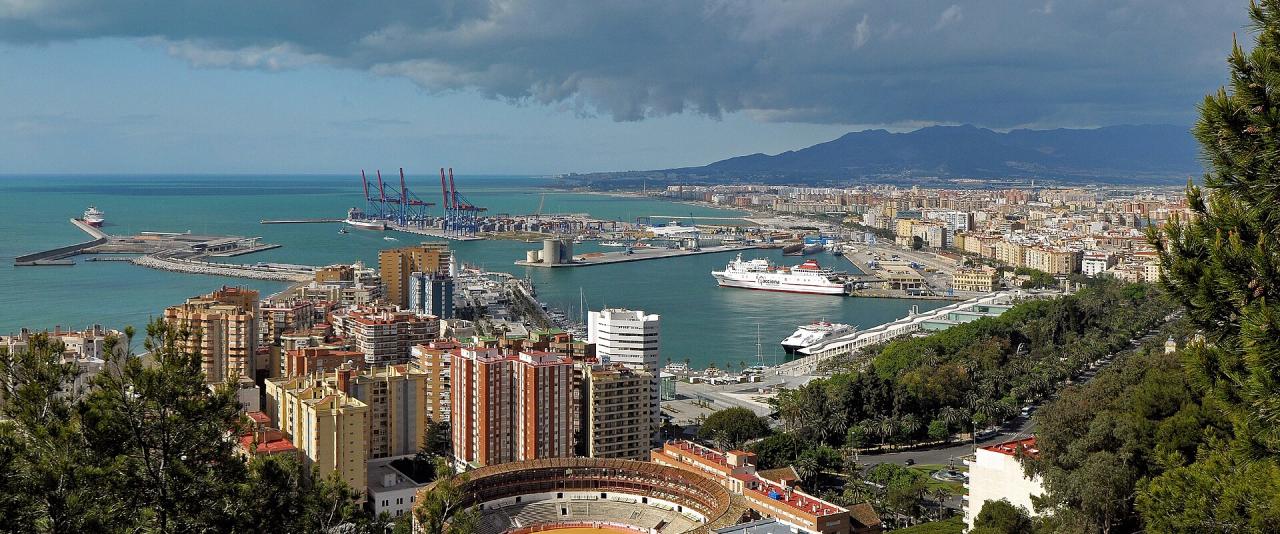
The Castle of Gibralfaro was built in the 14th century by the Nasrid ruler Yusuf I to protect the Alcazaba. It has walkable ramparts with the widest views in the city, over the bullring, the port and the coast. The walk up from the Alcazaba area is steep and exposed, so many visitors take a taxi or city bus to the top and walk down instead. The combined ticket saves money if you plan to see both on the same day.
Getting There
The theatre and the Alcazaba entrance are on Calle Alcazabilla, a pedestrian street a few minutes' walk from Plaza de la Merced and the Picasso Museum. From the Málaga María Zambrano train station or the cruise port, it is a walk of around 20 to 30 minutes through the centre, or a short taxi ride.