One Country, Many Kitchens
There is no single Spanish cuisine. Spain's food changes noticeably from region to region, shaped by climate, coastline and history, and locals are proud of the differences. Tapas, pintxos and paella are the three words most visitors know, but each belongs to a particular way of eating and, in the case of paella, a particular place. Knowing what to order where, and when, makes eating out in Spain far easier.
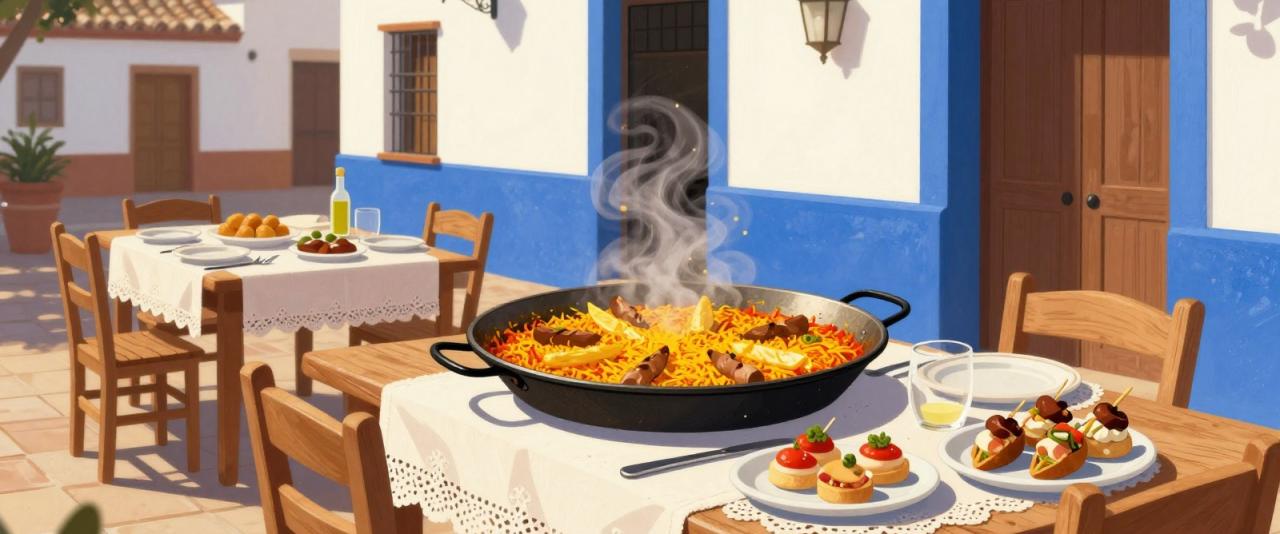
A tapa is a small portion of food served with a drink, and going for tapas (ir de tapas or tapear) means moving from bar to bar, ordering a drink and a plate or two at each. Common classics across the country include tortilla de patatas (potato omelette), patatas bravas with a spicy sauce, croquetas, jamón ibérico, gambas al ajillo (prawns in garlic) and marinated anchovies (boquerones en vinagre).
Most bars also offer larger portions: a ración is a full sharing plate and a media ración half of one. Ordering a few raciones for the table is how many Spaniards make a meal of tapas.
Where Tapas Come Free
In much of Spain you pay for each tapa. In a handful of cities, though, a small tapa still comes free with every drink, and it often changes with each round. Granada is the best known, along with Jaén, Almería and León. In these places a few drinks can add up to a light dinner, and the quality of the free tapa is a point of pride between bars.
Seville, often assumed to be a free-tapas city, generally is not: you order and pay for tapas there, but the bars around the Alfalfa, Santa Cruz and Triana districts are some of the best places in the country to eat this way. In Madrid, the streets around Cava Baja in La Latina are packed with tapas bars, and a bocadillo de calamares (fried squid sandwich) near Plaza Mayor is a local classic.
Pintxos: The Basque Version
In the Basque Country, and in neighbouring Navarre, the small plate becomes the pintxo (spelled pincho in Spanish). Many are served on a slice of bread and held together with a toothpick, and bar counters are lined with them. Some bars also cook hot pintxos to order from a menu on the blackboard, and these are often the best things on offer.
San Sebastián's Parte Vieja (Old Town) and Bilbao's Casco Viejo, especially Plaza Nueva, are the places to try them. The custom is to order one pintxo and a small drink, such as a zurito (small beer) or txakoli, the local slightly sparkling white wine, then move on to the next bar. In some bars you help yourself and staff count your toothpicks or plates at the end; in others you ask; when in doubt, watch the locals.
Paella: A Valencian Lunch
Paella comes from Valencia, on the east coast, and specifically from the rice-growing land around the Albufera lagoon just south of the city. The traditional paella valenciana contains chicken, rabbit, flat green beans and garrofó (a large white bean), cooked with saffron in a wide, shallow pan. It does not contain seafood or chorizo; seafood rice (paella de marisco) and black rice (arroz negro) are separate dishes in the Valencian repertoire.
For the real thing, go to Valencia itself: restaurants in El Palmar village in the Albufera, and along the Malvarrosa beachfront, are traditional choices. Paella is a lunchtime dish in Spain, and good restaurants cook it to order, often for a minimum of two people, so expect to wait 20 minutes or more. Be wary of picture menus advertising paella all day in tourist areas, which usually means it was not made fresh.
Other Regional Dishes Worth Ordering
- Galicia: pulpo a la gallega (octopus with paprika and olive oil) and fresh shellfish.
- Asturias: fabada asturiana, a rich bean stew, with cider poured from a height.
- Andalusia: gazpacho and salmorejo in summer, and fried fish (pescaíto frito) on the coast.
- Castile: roast suckling pig or lamb, especially in Segovia.
- Catalonia: pa amb tomàquet (bread rubbed with tomato) and crema catalana.
- Madrid: cocido madrileño, a chickpea and meat stew, mostly eaten in the cooler months.
When and How to Eat in Spain
Spanish meal times run late. Lunch, the main meal for many people, is usually served from about 1:30 or 2 pm until 4 pm, and dinner rarely starts before 8:30 or 9 pm. Restaurants that are open at 6 pm are often aimed at tourists; for an early evening snack, a tapas bar is the better choice.
On weekdays, look for a menú del día at lunchtime: a fixed-price set meal with a starter, main course, dessert or coffee and a drink, offered by many neighbourhood restaurants and usually the best value in Spain. Tipping is modest; rounding up or leaving a few euros for good service is normal, and nobody expects a fixed percentage. Finally, ask what is local and in season. Spaniards eat regionally, and the dish the bar is known for is usually the one to order.