







- Where
- Granada, Andalusia
- Directions
- Directions
The Alhambra is the great palace-city of the Nasrid sultans of Granada, built on the Sabika hill above the city, with the snow-capped Sierra Nevada rising behind it, and it is the most visited monument in Spain. The name comes from the Arabic for the red one, from the colour of its walls, which glow in the setting sun. It was begun in the thirteenth century by Muhammad I, the founder of the Nasrid dynasty, who made Granada the capital of the last Muslim kingdom in the Iberian peninsula, and it was extended by his successors, above all Yusuf I and Muhammad V in the fourteenth century, who built its most celebrated palaces. In 1492, the last sultan surrendered the city to the Catholic Monarchs, and the Alhambra passed into Christian hands. UNESCO listed it as a World Heritage Site in 1984, together with the Generalife and the neighbouring Albaicín quarter.
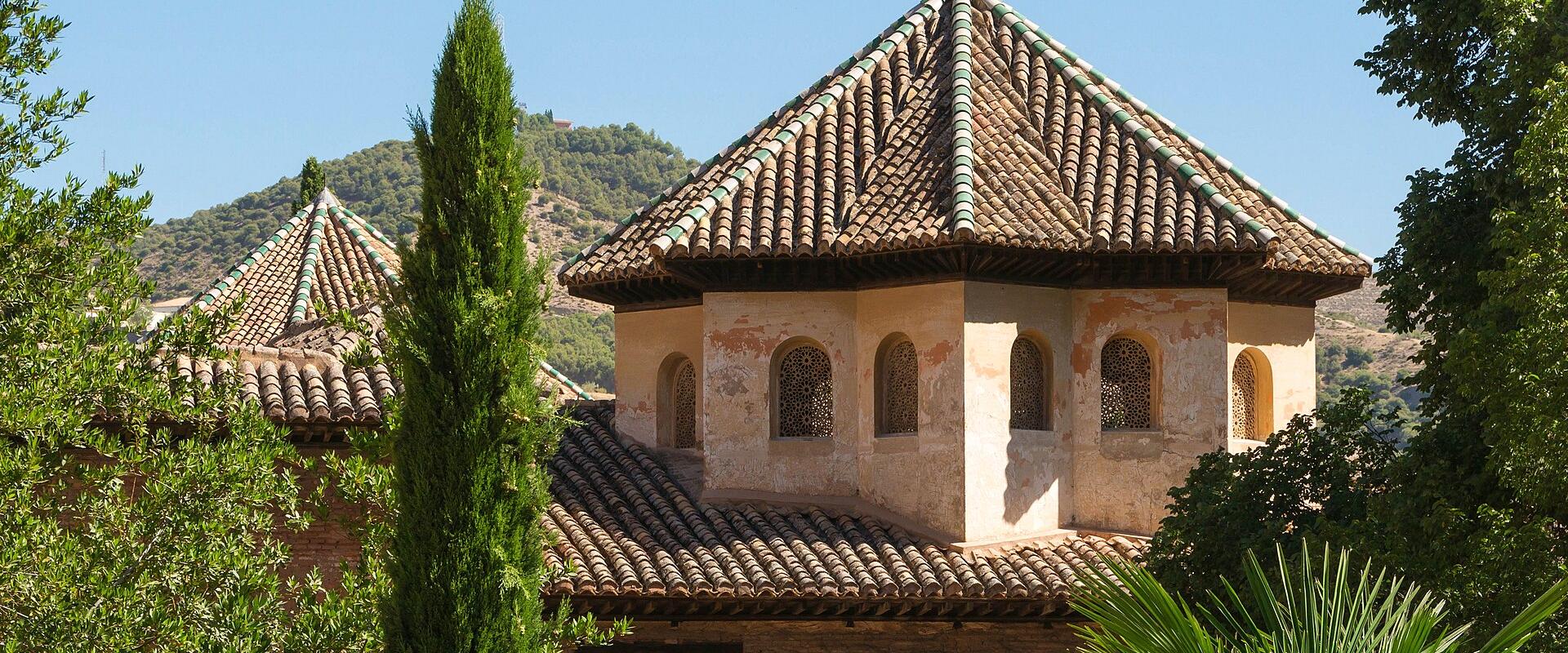
The complex has several parts. The Alcazaba is the oldest section, a military fortress with towers and walls that look down on the city. The Nasrid Palaces are the core of the visit: a series of halls, courtyards and rooms that were the residence and court of the sultans. The Court of the Myrtles has a long reflecting pool framed by arcades, and the Court of the Lions, with its fountain supported by twelve stone lions, is the most famous space, surrounded by a forest of slender columns and carved arches. Every surface is covered with decoration: lace-like stucco, glazed tiles in geometric patterns, carved wooden ceilings and inscriptions of poetry in Arabic, which praise the sultans and the beauty of the building. The designers used light, water and shadow to create an atmosphere of calm and luxury.
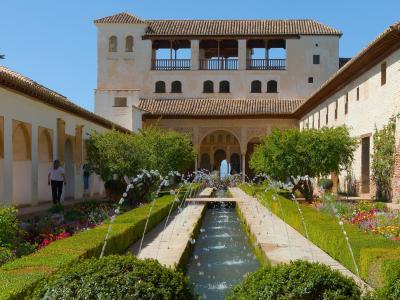
Beyond the palaces, the Generalife was the summer retreat of the sultans, a villa surrounded by terraced gardens with fountains, pools, cypress trees, roses and orange trees, and its Water Gardens are among the most beautiful in Spain. The Palace of Charles V, a heavy Renaissance building begun in 1527 with a circular courtyard, stands among the Moorish buildings and offers a sharp contrast. A hotel called the Alhambra Palace, built in 1910 in a Moorish style, stands on the hillside nearby, and it should not be confused with the monument itself. The American writer Washington Irving lived in the Alhambra in the 1820s and wrote his Tales of the Alhambra, which helped to make it famous in the English-speaking world.
Access is strictly regulated. The number of visitors is limited, tickets must be booked well in advance, particularly in spring and summer, and entry to the Nasrid Palaces is at a specific timed slot, so it is essential to arrive on time. Allow at least three hours for the whole site. Opening times change by season and evening visits are sometimes available. Comfortable shoes are needed, since the site is large and involves slopes and stairs.
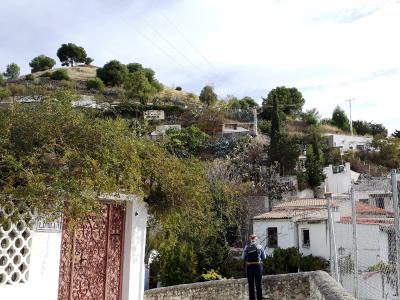
The Alhambra suits everyone, and the combination with a walk in the Albaicín and Sacromonte neighbourhoods across the valley gives a fuller picture of Granada.
Categories
More photos coming soon
Questions people ask
Quick Facts
Best Time to Visit
Spring and autumn offer mild temperatures, ideal for exploring the city comfortably.