







- Admission
- Free admission
- Where
- Ibiza, Balearic Islands
- Directions
- Directions
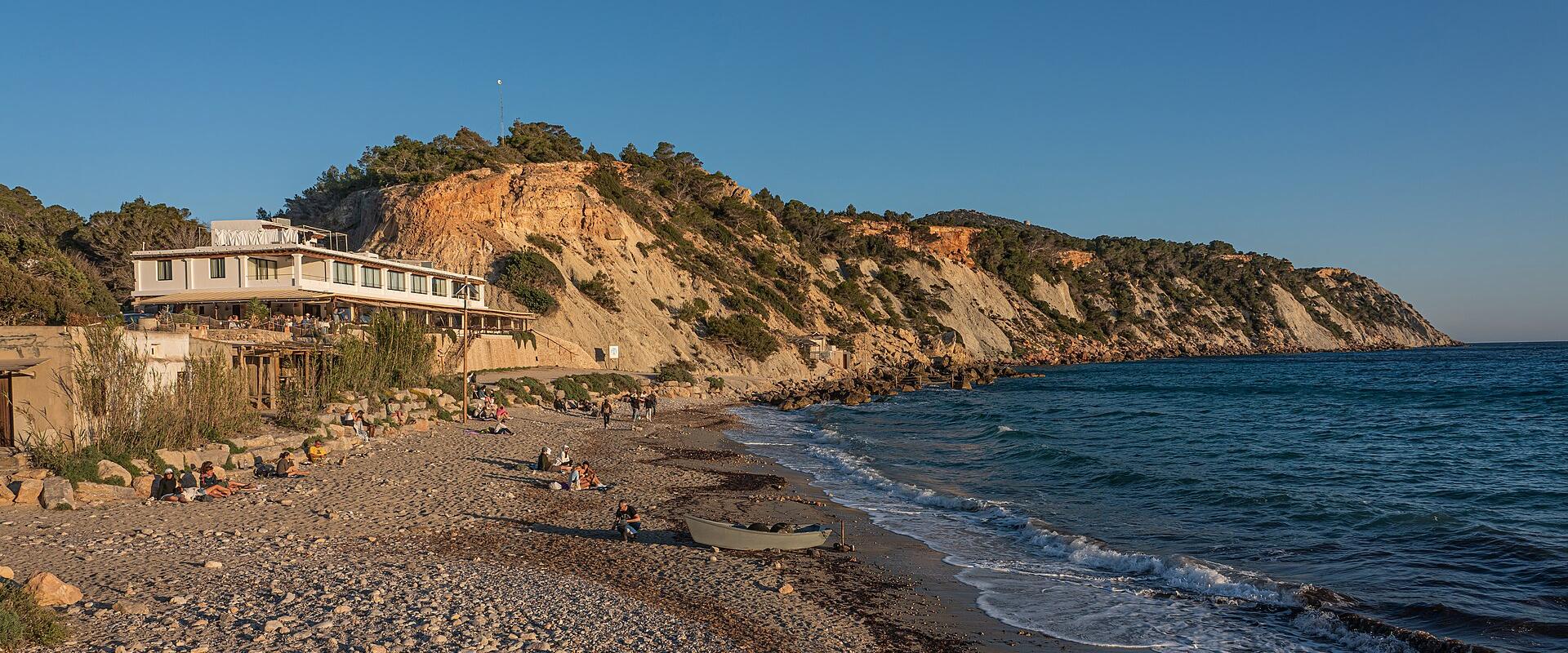
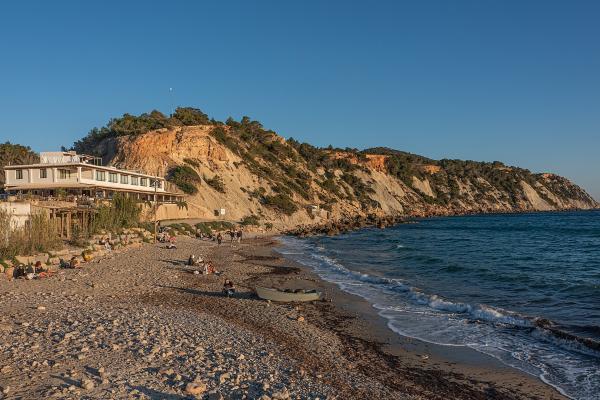
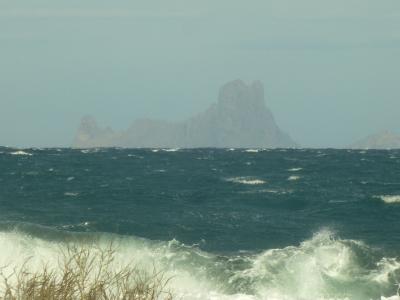
Cala d'Hort is a small, pebbly and sandy cove on the southwest coast of Ibiza, in the municipality of Sant Josep de sa Talaia, and it has one of the most celebrated views on the island. Facing the beach, a few hundred metres offshore, the jagged limestone rock of Es Vedrà rises steeply from the sea to a height of about four hundred metres, with its smaller companion Es Vedranell beside it, and together they form an extraordinary silhouette, especially at sunset, when the sky turns orange and red behind them. The rocks are uninhabited, except for a population of wild goats and rare birds, and are protected as part of a natural reserve.
Es Vedrà has long been shrouded in legend. Some say it was the island of the Sirens that tempted Odysseus, others that it is a place of strong magnetism, where compasses go astray and strange lights are seen, and there are stories that it was a source of energy for mystics and a landing place for aliens. None of these claims has any scientific basis, but they give the rock an aura of mystery, and many visitors come to take in its atmosphere. Some traditions also link the rock with Tanit, the goddess worshipped by the Phoenician settlers of Ibiza, and it has long drawn the curious.
The beach itself is modest in size, with a mix of fine sand, pebbles and rock platforms, and the water is clear and deep blue. A few simple restaurants serve fresh fish and grilled seafood, and fishermen's huts line the shore, giving the cove the feel of a traditional fishing place. There are no big hotels, and the setting is rural, with pine-covered hills and farmland behind. Footwear that can handle stones is helpful when entering the water, and the sea can have currents, so care is needed. From a path above the beach, a viewpoint offers an elevated outlook over the rocks, and walkers can follow tracks toward a watchtower on the headland, the Torre des Savinar, from where the view is even wider.
The cove has a place in the environmental history of Ibiza. In the late twentieth century, plans for large tourist developments in the area met strong opposition from the local conservation group GEN-GOB, which organised large public protests, and the campaign helped to preserve the character of the southwest coast.
Access is by road, and a car is by far the easiest way to get there, since public transport is limited. Parking near the beach is very restricted and fills quickly, especially around sunset in summer, so arrive early or park farther along and walk down. The final descent is steep. It suits couples, photographers and those who want a quieter beach. Visit in late spring or September to avoid the crowds.
Categories
More photos coming soon
Admission Fees
- Admission
- Free admission
Hours and prices change, especially out of season. Check with the venue before you go.
Nearby Attractions
Other places to visit in Ibiza
Es Vedrà
Coastal Views · Geological Sites
Castell d'Eivissa
Medieval fortress atop Ibiza's UNESCO Old Town
Architectural Heritage · Castles
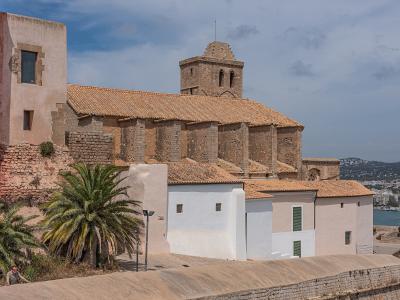
Catedral d'Eivissa
Gothic cathedral in Ibiza's historic Dalt Vila
Cathedrals · Historic Districts
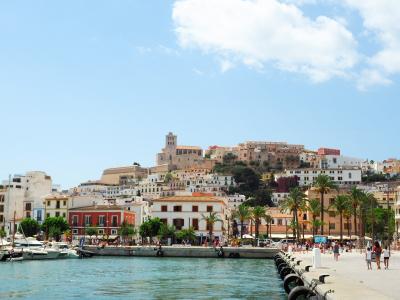
D'Alt Vila
UNESCO-listed historic town on Ibiza's hilltop
Architectural Heritage · Historic Districts
Questions people ask
Quick Facts
Best Time to Visit
May through October offers warm, dry weather ideal for beach activities.