







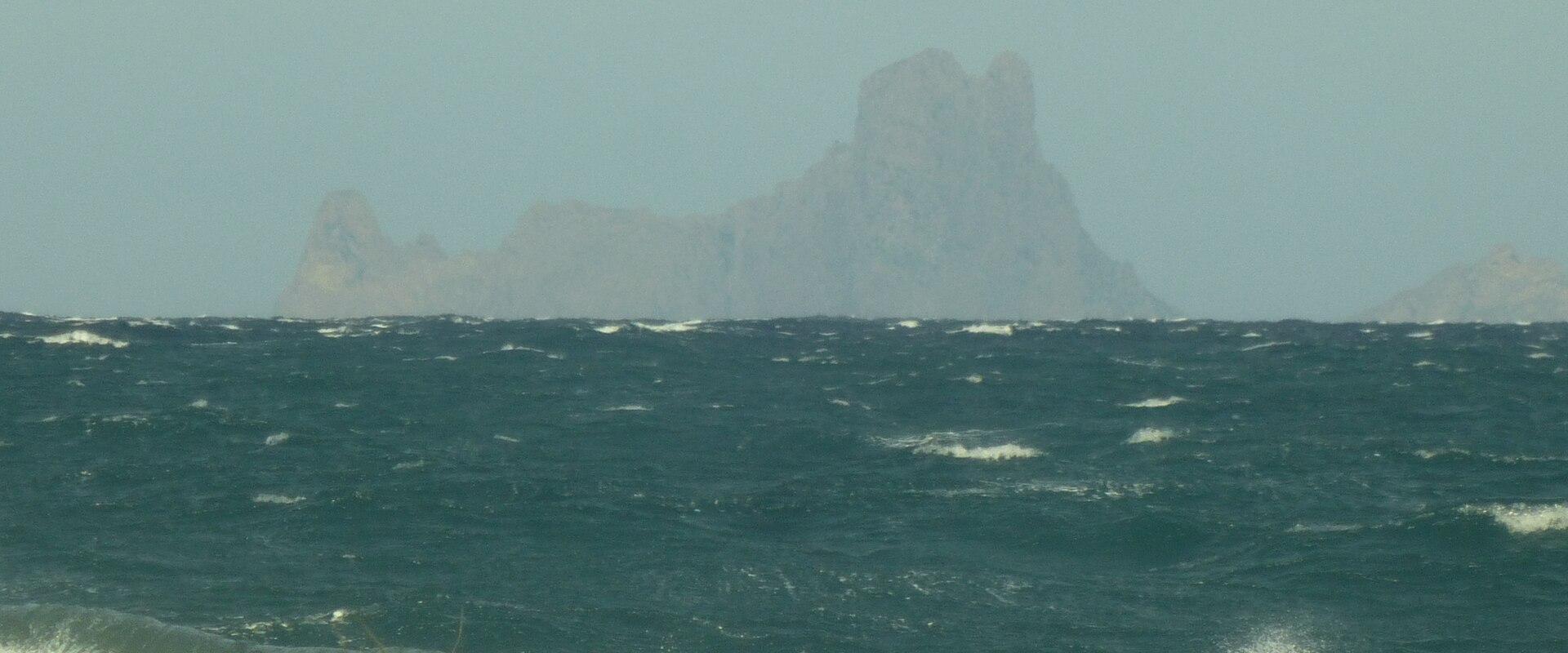
Es Vedrà
- Where
- Ibiza, Balearic Islands
- Directions
- Directions
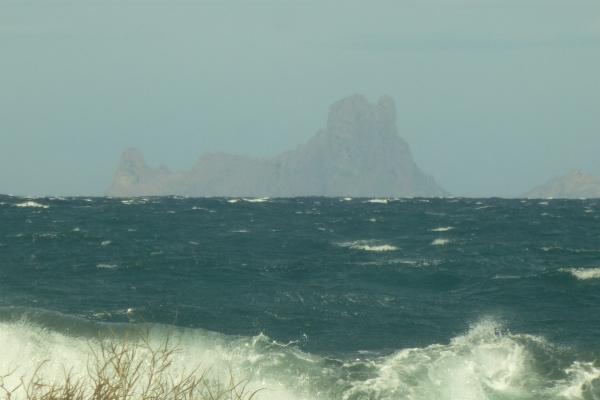
Es Vedrà is one of the most photographed rocks in the Mediterranean Sea, and it lies off the south-west coast of Ibiza, in the Pitiusas group of the Balearic Islands of Spain. It is a steep, uninhabited island that rises about 380 metres from the sea, a dark limestone cone covered with scrub and rock, and beside it a smaller islet, Es Vedranell, makes a pair. Both belong to a protected natural reserve, and landing is not permitted, so the experience is entirely about seeing it from the shore.
The best views are from the coast near Cala d’Hort, a small bay with a pebble beach and a few restaurants, and from the cliff path and the watchtower at Torre des Savinar. From these points the rock looks enormous, rising almost from the water, and at sunset it turns deep red and then black against the sky. Many people come to the viewpoints in the evening for that reason, and the area can be crowded in summer. Sailing boats and excursion boats also pass by, and the water around the rock is very clear.
Because of its shape and isolation, Es Vedrà has gathered a number of legends. Some traditions identify it with the island of the Sirens in Homer’s Odyssey, and others associate it with the Carthaginian goddess Tanit, who was worshipped in Ibiza in ancient times. Modern stories claim that it is a place of magnetic or mystical energy, and that compasses misbehave nearby. There is no scientific basis for this, but the stories have become part of the island’s identity and are a reason that the rock attracts visitors.
The islet is also valuable for wildlife. Birds of prey such as Eleonora’s falcon nest on its cliffs, a distinctive subspecies of the Ibiza wall lizard lives on the rock, and feral goats have lived on its slopes for a long time. The surrounding sea, with meadows of Posidonia seagrass, is part of the protection.
The viewpoints are free, though parking near Cala d’Hort is limited and fills up in the evening. Wear sturdy shoes if you walk the cliff path, and bring water, because there is little shade. Check road conditions and local advice, since the access roads can be narrow and busy. Formentera, with its beaches and salt flats, is a short ferry ride from the same area of the Pitiusas, so many visitors combine the two islands.
Categories
More photos coming soon
Nearby Attractions
Other places to visit in Ibiza
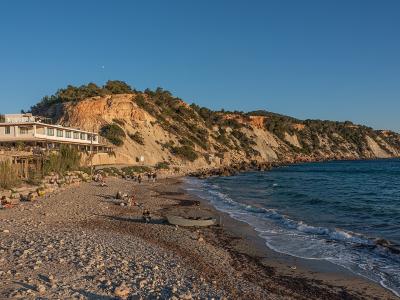
Cala d'Hort
Blue Flag beach with views of Es Vedrà
Free Coastal & Beaches · Nature & Outdoors
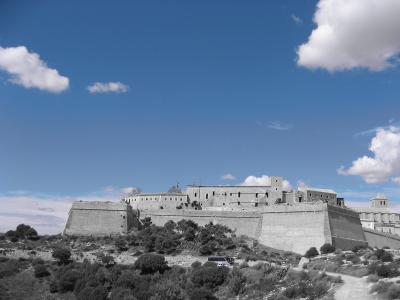
Castell d'Eivissa
Medieval fortress atop Ibiza's UNESCO Old Town
Architectural Heritage · Castles
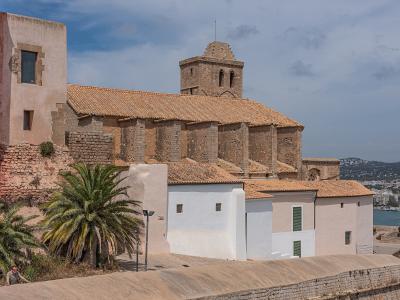
Catedral d'Eivissa
Gothic cathedral in Ibiza's historic Dalt Vila
Cathedrals · Historic Districts
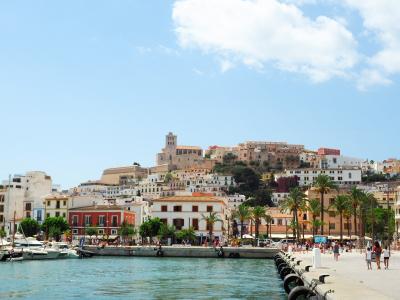
D'Alt Vila
UNESCO-listed historic town on Ibiza's hilltop
Architectural Heritage · Historic Districts
Questions people ask
Quick Facts
Best Time to Visit
May through October offers warm, dry weather ideal for beach activities.