







Cuenca Hanging Houses (Casas Colgadas)
- Where
- Cuenca, Castile-La Mancha
- Directions
- Directions
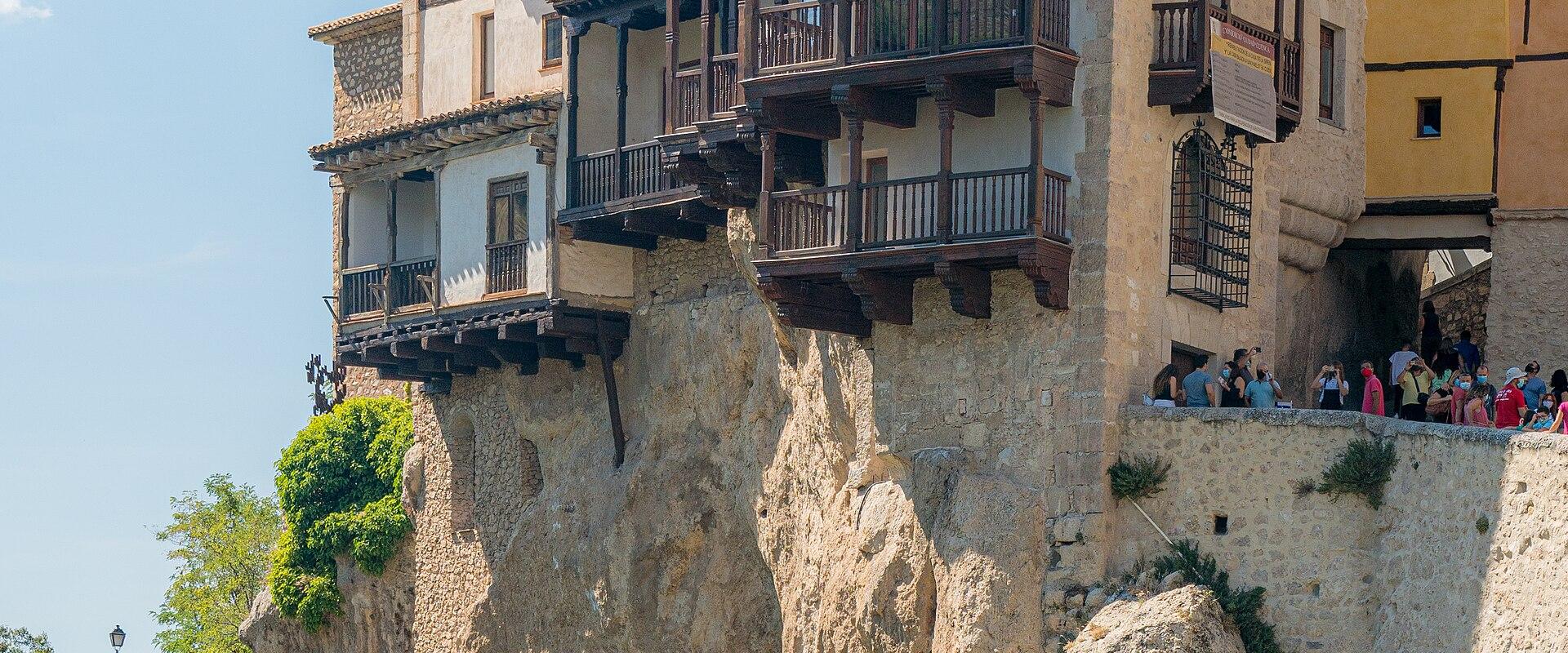
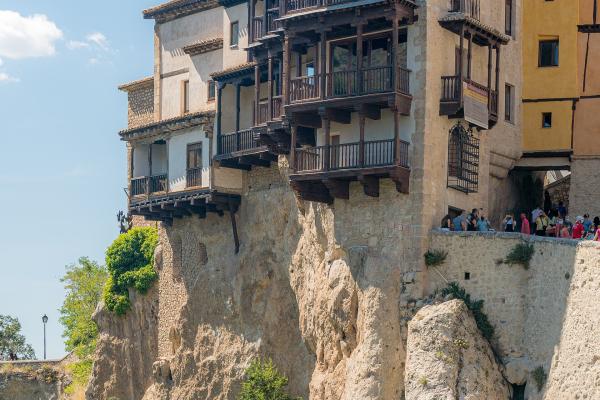
The Casas Colgadas, or Hanging Houses, are the picture that most people have of Cuenca: a row of old houses whose wooden balconies project over the edge of the Huécar River gorge, so that they seem to hang in mid-air. The city sits on a narrow rocky spur between the Huécar and Júcar rivers, and space inside the walls was limited, so buildings were pushed out to the cliff edge. The houses date from the fifteenth century and were once part of a longer row that lined the eastern edge of the old city, and only a few survived. They are often linked with the royal household and have sometimes been called the Houses of the King. The old town of Cuenca was inscribed as a UNESCO World Heritage Site in 1996, and the city’s old town is one of the most distinctive in Spain.
The complex is made up of three buildings, which have been restored several times since the twentieth century. Their style is mainly Gothic, but with the timber balconies and with some Renaissance elements added in later work, and they are made largely of stone, plaster and timber. The façade facing the town is plain, while the side facing the gorge opens out with the long wooden galleries. From the viewpoint across the gorge, on the other side of the footbridge, the contrast between the cliff, the balconies and the river valley is dramatic.
The buildings are in use today. One houses the Museo de Arte Abstracto Español, the Spanish Museum of Abstract Art, which was founded by the painter Fernando Zóbel in the 1960s and exhibits works by Spanish artists of the postwar period. Another, known as the Casa de la Sirena, or Mermaid House, holds a restaurant with views over the gorge. The museum is a good complement to the exteriors, because the galleries are arranged inside the old rooms and some original timber and stone details can be seen.
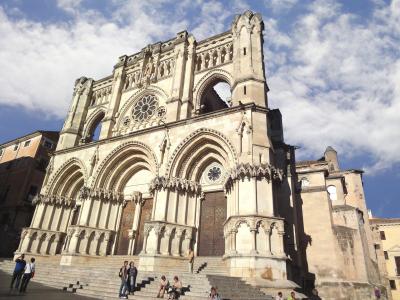
Cuenca’s best-known view is this one. The houses are on Calle Canónigos, close to the Plaza Mayor and the cathedral, so they are easy to reach on foot. The Puente de San Pablo, a pedestrian bridge across the gorge, is the best vantage point for photographs, and the walk over it gives long views down the valley. Cuenca Cathedral and the Mirador de San Pedro are nearby, and the Museo de la Ciudad is also close to the centre.
The exterior views are free. Cuenca is hilly, and the streets are steep, so wear comfortable shoes. Late afternoon, when the light warms the cliffs, is a good time, and the old town is quieter in the evening.
Categories
More photos coming soon
Nearby Attractions
Other places to visit in Cuenca
Questions people ask
Quick Facts
Best Time to Visit
May through September offers warm, sunny weather ideal for exploring the historic center.