







Isla de Lobos
- Where
- Fuerteventura, Canary Islands
- Directions
- Directions
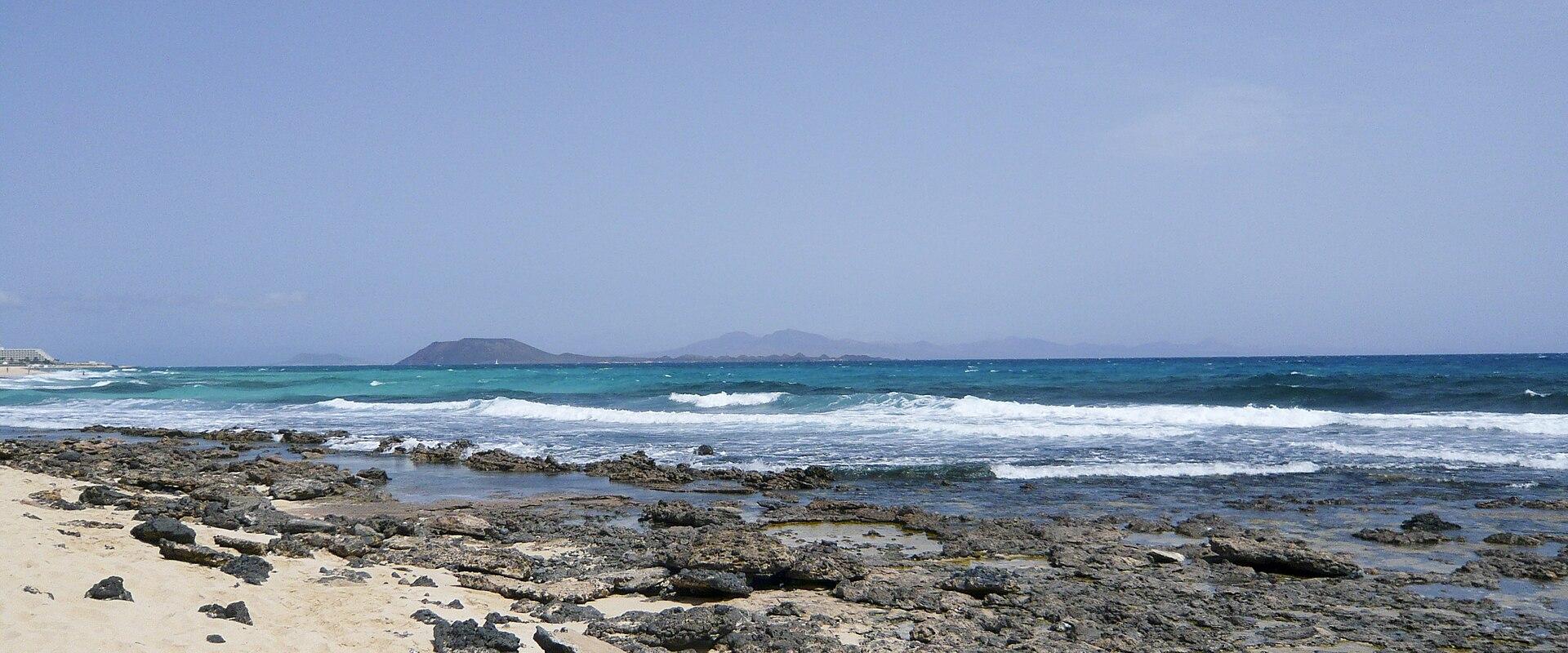
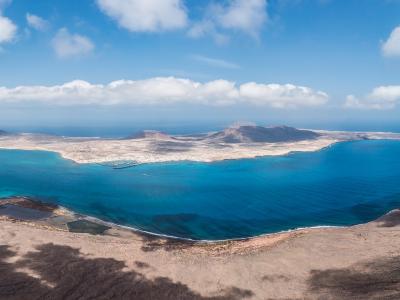
Isla de Lobos is a small island of volcanic rock off the north coast of Fuerteventura, lying only about two kilometres across the El Río strait from the resort of Corralejo. Lanzarote is visible to the north across the Atlantic Ocean on a clear day, and most visitors cross from Corralejo on a short ferry trip of about fifteen to twenty minutes. The island is a natural park, protected since the 1980s, and it has no cars and almost no development.
The name, meaning wolves, refers to the sea wolves, the monk seals that once lived on the island, which were hunted for their skins and oil and disappeared long ago. The island measures only a few square kilometres and is roughly triangular. A single low volcanic cone, La Caldera, rises at its centre, and the rest is flat, with black lava fields, white sand and low, salt-tolerant plants. The landscape is open and treeless, with the sea on every side, and the light is intense, so the island feels more remote than its position suggests.
The main sights are reached on foot along marked trails. The Lobos Lighthouse, the Faro de Martiño, built in the nineteenth century at the northern tip, is the main landmark, and its position gives views across to Lanzarote and La Graciosa. A path leads to the summit of the cone, from which the whole island is visible. The beach of Playa de la Concha, a wide arc of white sand with shallow, clear turquoise water in a lagoon-like cove, is the island’s best-known spot, and the water is calm enough for children to wade and swim. Snorkelling is good in the clear shallows.
At the southern end lies El Puertito, the small settlement of fishermen’s houses, many of them now simple restaurants and bars, where fresh fish and seafood are served on tables looking over the harbour. This is the only place where food and drink are available, so many visitors plan their trip around lunch there. The birdlife includes seabirds and waders, and some of the plants and insects are specific to the island.
There is little shade, so bring a hat, sun protection and water, and wear sturdy shoes for the paths over lava. Camping and fires are not allowed, and visitors are asked to stay on the trails to protect the vegetation. Ferry timetables change with the season, so check the times, especially for the last boat back.
Categories
More photos coming soon
Nearby Attractions
Other places to visit in Fuerteventura
Questions people ask
Quick Facts
Best Time to Visit
June through September offers warm, dry weather ideal for beach activities.