







- Where
- Gijon, Asturias
- Directions
- Directions
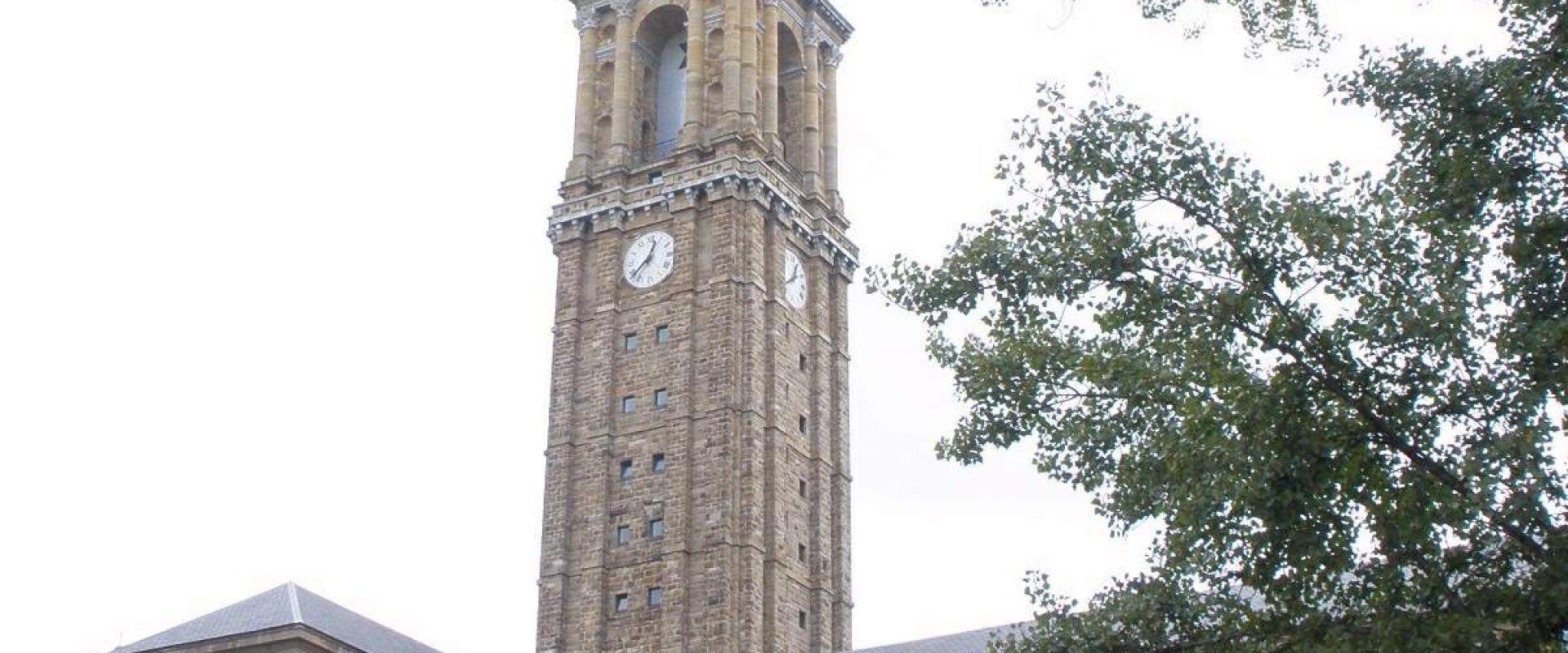
The Laboral Ciudad de la Cultura is a gigantic building on a hillside above Gijón, one of the largest civilian buildings in Spain, and it has an unusual history. It was built between 1946 and 1956 as the Universidad Laboral, the Labour University, a vocational school set up by the Franco regime for the children of workers, particularly the orphans of miners, who were trained in trades and crafts while receiving a basic education, and the complex had its own church, theatre, sports grounds, workshops, farm and dormitories. It was designed by the architect Luis Moya Blanco, who drew on classical Roman and Renaissance models, together with a team of other architects, and it was planned as a self-contained city. Its ideology and its monumental style reflect the time of its construction.
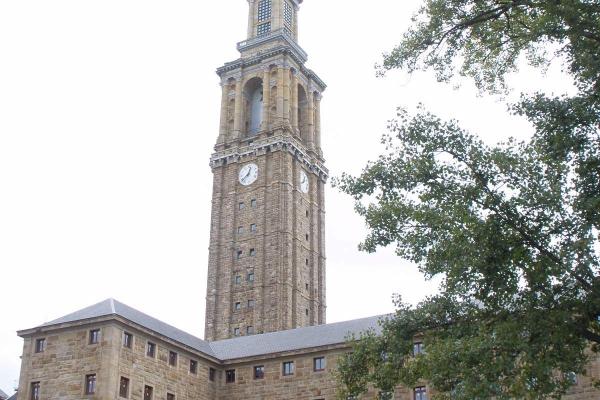
The plan covers a vast area, with courtyards, cloisters and a church with an oval plan and a dome, and a tower about a hundred and thirty metres high that rises above the whole site and can be seen from far away. The entrance is a heavy gateway in the form of a Roman triumphal arch, bearing a shield with an eagle, yoke and arrows, the emblems associated with the regime. Beyond the entrance, the main courtyard is lined with colonnades, and the central space, the Corinthian Courtyard, is surrounded by huge granite columns more than ten metres high, with a perspective designed to create an impression of grandeur and depth. The effect is monumental and a little overwhelming. The stonework and proportions are of high quality, and the building has been compared to a Renaissance palace or an imperial forum, translated into the twentieth century.
The school closed in 1978, and for years the buildings were underused, until the regional government of Asturias decided to give them a new life as a centre for culture and creativity. After extensive restoration, it opened to the public in 2007 as the Laboral Ciudad de la Cultura, a multidisciplinary cultural complex. It now contains an art centre devoted to contemporary art and industrial creation, LABoral, a theatre, an auditorium, an exhibition space, a university campus, and a media centre, and its programme includes exhibitions, concerts, performances, festivals and workshops. The theatre, with its large stage, hosts opera, dance and drama, and the church can be visited.
The complex has a complicated meaning for many Spaniards, as a product of the dictatorship and also as a place with a past of education for working-class children. Guided tours explain the history and the architecture, and the tower offers a view over Gijón, the sea and the mountains of Asturias. The access is from the road in the Cabueñes valley, approached in a way that gives a view of the full façade.
Opening hours and tour times vary, so check the official site, and some events require tickets. It is about three kilometres from the centre of Gijón and reached by bus or car. A visit takes two hours or more, and it combines naturally with the old fishing quarter of Cimavilla and the beach of San Lorenzo.
Categories
More photos coming soon
Nearby Attractions
Other places to visit in Gijon
Questions people ask
Quick Facts
Best Time to Visit
July through September offers the warmest, driest weather ideal for coastal activities.