







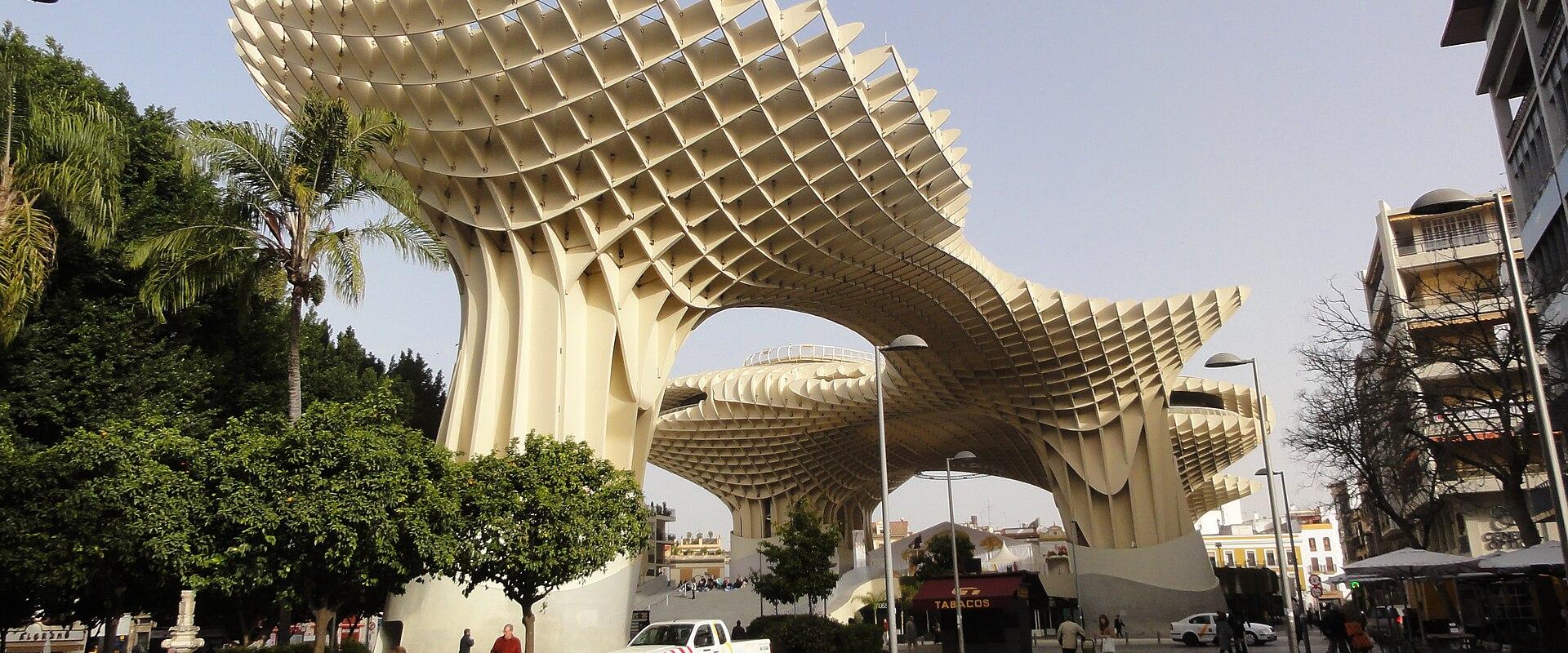
Metropol Parasol (Las Setas)
- Where
- Seville, Andalusia
- Directions
- Directions
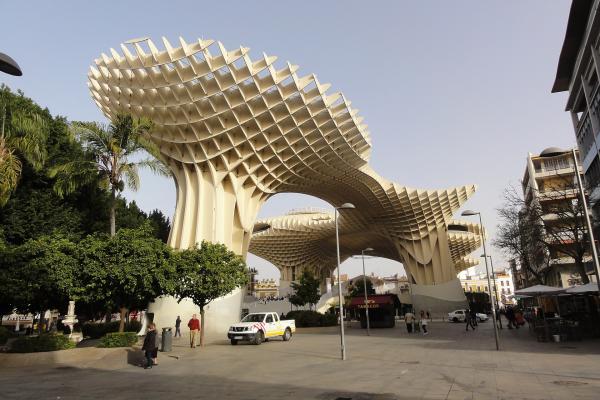
Las Setas, the Metropol Parasol, is the most daring modern structure in Seville's historic centre. It rises over the Plaza de la Encarnación, a square that had been a problem site for decades, left empty after a convent was demolished in the nineteenth century and later used as a car park. The German architect Jürgen Mayer designed the winning entry, and the building opened in 2011. Its six huge canopies of laminated timber, which resemble giant mushrooms, gave it the local nickname that everyone uses. Metropol Parasol is the official name, while "Las Setas" means "the mushrooms".
The structure is built from engineered wood in a honeycomb-like grid, and it is often described as one of the largest wooden structures in the world. The undulating form looks futuristic against the orange trees, church towers and low whitewashed buildings that surround it, which is why it was controversial when it was built. Today most locals accept it as a successful gathering place, a shaded space where people meet, sit and watch the city.
The design combines several uses. At street level, the canopies cast shade over the square, which is useful in Seville's hot summers. Beneath the ground, excavations for the project uncovered Roman and later remains, now shown in the Antiquarium, a small museum of the buried history of the site. A market hall occupies part of the base, selling food, and bars and restaurants in the building give it an everyday life. At the top, a curving walkway winds across the canopies and gives wide views across the old town, including the Giralda and the cathedral.
The walkway is most popular around sunset, when the sky turns orange and the city lights come on, and again after dark, when the structure is lit. The ramps and lift make access easy, though tickets and opening times for the rooftop and the Antiquarium vary, so check before going.
It suits architecture fans, photographers and anyone looking for a different view of Seville from the usual towers. It is also a convenient halfway point on a walk between the Seville Cathedral and the Barrio Santa Cruz in the south and the neighbourhoods of the north. The nearby Plaza de España and Parque de María Luisa are further away, so allow time to reach them.
Categories
More photos coming soon
Questions people ask
Quick Facts
Best Time to Visit
April to June and September to October offer mild, pleasant weather ideal for sightseeing.