







- Where
- Soria, Castile and León
- Directions
- Directions
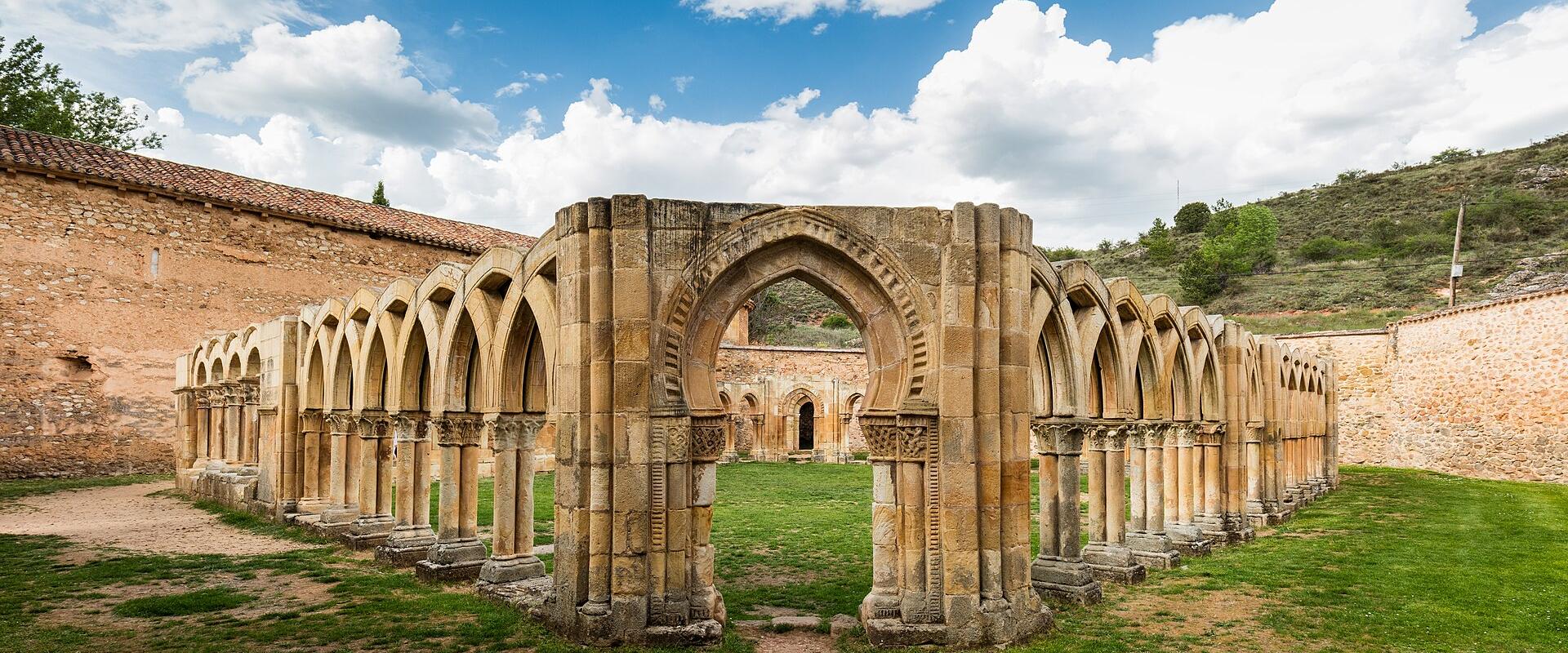
The Monastery of San Juan de Duero stands on the bank of the Duero River just outside the town of Soria, and it is best known for a cloister that has no equal in Spain. The monastery was founded in the twelfth century by the Order of the Hospitallers of Saint John of Jerusalem, one of the military and religious orders that guarded pilgrim routes and frontier lands in the Middle Ages, and the buildings date from the twelfth and thirteenth centuries. The site lies at the foot of El Mirón Hill, in Castile and León, which gives it a protected position in the curve of the river, across from the old stone bridge that leads towards the city. Trees and meadows around it make a quiet, green setting.
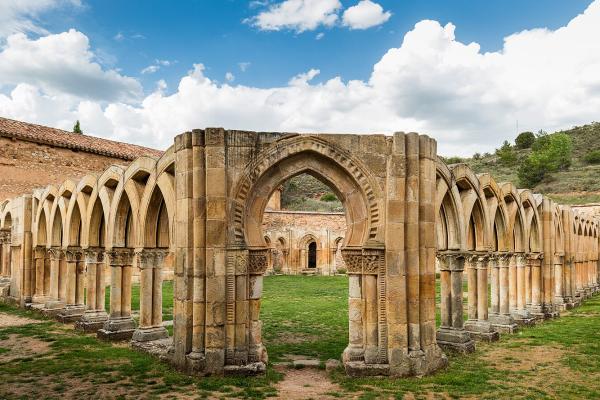
The cloister is the main attraction. It is an irregular quadrilateral, with arcades along each side, and it is now roofless, since the vaults and the upper parts were lost over the centuries, so what is left is a skeleton of arches in warm stone open to the sky. Instead of repeating a single design, the arcades combine arches in different shapes: rounded, pointed and interlaced. Some arches cross one another to form intersecting patterns, others rest on paired columns, and the carved capitals show scenes, animals and plants. This variety gives the cloister a fascinating rhythm, and it shows influences from the Romanesque tradition and from Islamic art, a blend that scholars link to the Mudéjar craft and to Oriental models, described as Sicilian Arabic in style, which some compare to the art of Sicily, where Norman and Arab traditions mixed. The result is unique among Spanish cloisters, and photographers love the way the light falls through the arches.
The church beside the cloister is a Romanesque building of the twelfth century, with a single nave and an apse. Its most unusual feature is a pair of small stone structures, called edicules, built inside, on either side of the sanctuary, which imitate small shrines or chapels, with carved decoration and arched openings. They were possibly used for liturgical ceremonies of the order, and they recall buildings in the Holy Land. The chapels and the capitals carry figures that show the quality of the sculptors.
Today the monastery belongs to the Numantine Museum of Soria, as part of its Medieval Section, and the interior displays a collection of objects, sculpture and information about the history of the site and of the Order of Saint John. It is one of the most visited cultural sights in the province, and its opening hours and ticket arrangements change with the season, so check locally.
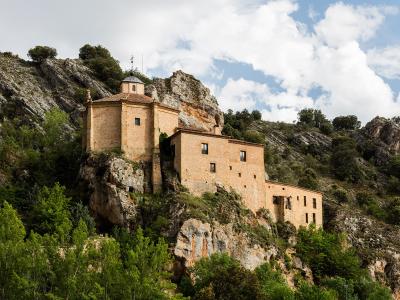
The setting has a literary dimension. Soria’s landscape and the banks of the Duero inspired the poet Antonio Machado, who lived and taught in the town, and the Romantic writer Gustavo Adolfo Bécquer, whose legends are set in the surrounding hills. A path along the river leads from the monastery to the Hermitage of San Saturio, built into a cliff, and the walk makes a pleasant outing of an hour or two. A visit to the monastery itself takes about forty minutes.
Categories
More photos coming soon
Nearby Attractions
Other places to visit in Soria
Questions people ask
Quick Facts
Best Time to Visit
June through September offers warm, pleasant weather ideal for exploring.