







- Where
- Mérida, Extremadura
- Directions
- Directions
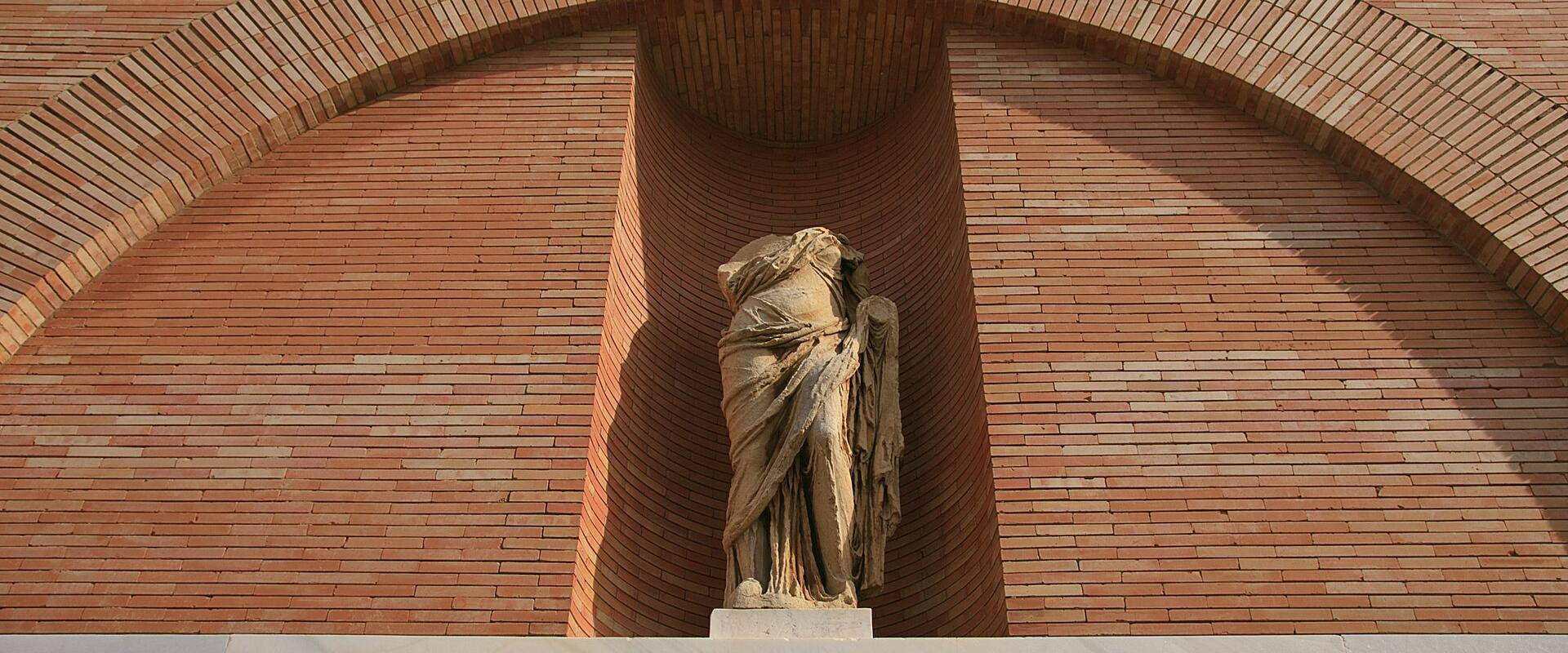
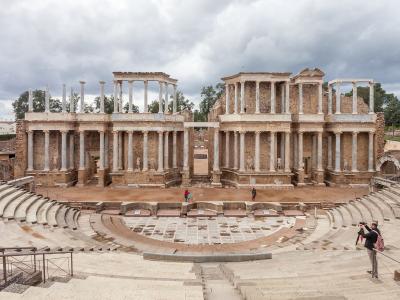
The National Museum of Roman Art in Mérida is one of the finest museums in Spain devoted to the Roman world, and its building is as much a work of art as the objects inside. It stands in the middle of the town, next to the Roman Theater (Theatre) and close to the amphitheatre, in a city that was founded in 25 BC as Emerita Augusta, the capital of the Roman province of Lusitania. Mérida preserves more Roman remains than any other town in Spain, and the monuments of Mérida’s ancient city were inscribed on the UNESCO World Heritage List in 1993. The museum was designed to bring together the finds from this long history, and to display them near the places where they were discovered.
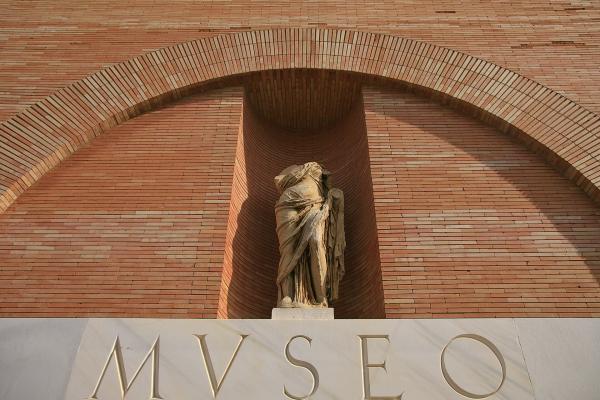
The architect Rafael Moneo designed the building, and it opened in 1986. Moneo, who later won the Pritzker Prize, chose to build in brick, using high, rounded arches that echo the structures of Roman architecture, in particular the great vaulted buildings of Rome, and the design has been much admired as a modern work that respects its ancient setting. The nave is a tall hall, crossed by a series of huge arches in brick that rise one behind another, and light enters from above, so that the visitor has a sense of passing through a Roman building rather than a conventional gallery. A bridge-like walkway crosses at the upper level, and visitors can look down at the displays and at the mosaics set in the floor.
The collection covers life and art in Roman Hispania, as the province was known, and Roman Spain. It includes marble sculpture, among them portraits of emperors and local notables, statues of gods and the large relief panels, as well as inscribed tombstones, pottery, glass, bronzes, jewellery and coins. Mosaics are one of the most important sections, with large floor pictures from villas and houses in and around Mérida, in vivid colours and geometric and mythological designs. Wall paintings and everyday items show the character of daily life, and many of the pieces were found during excavations in the city.
The lower level of the museum is an archaeological site in its own right. When the building was constructed, workers uncovered parts of the Roman city, among them streets, houses with courtyards, and remains of an early Christian church, and the architect designed the museum so that these ruins could be preserved beneath it. Visitors can walk through the excavated area and see the foundations of buildings, a Roman road, and a section of the aqueduct’s supply system. This underground part gives a vivid sense of the layers of history beneath the modern city.
The museum is open most days, with hours that vary by season, and admission is charged at a modest price, so check the official website. A visit takes about two hours. A combined ticket may cover the other Roman monuments of Mérida, and the Roman Theatre and the amphitheatre are a short walk away. The city also has a Roman bridge over the Guadiana, a temple and an aqueduct, and a full day gives time for several.
Categories
More photos coming soon
Nearby Attractions
Other places to visit in Mérida
Questions people ask
Quick Facts
Best Time to Visit
March through May and September through October offer pleasant weather for visiting.