







- Where
- Mérida, Extremadura
- Directions
- Directions
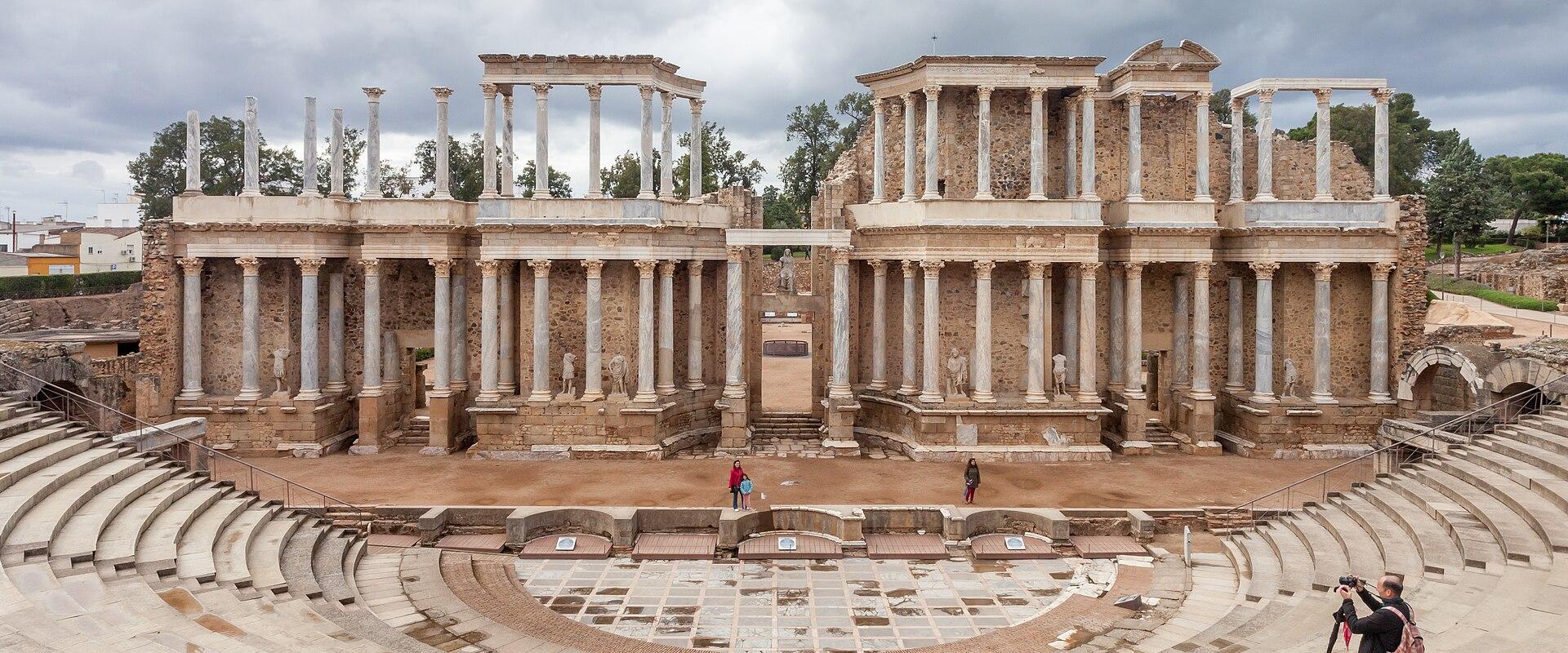
The Roman Theatre of Mérida is one of the most impressive ancient buildings in Spain and the centrepiece of the city's Roman heritage, which UNESCO recognised in 1993 as the Archaeological Ensemble of Mérida. The city was founded in 25 BC as Emerita Augusta, a colony for veteran soldiers of the emperor Augustus' legions, and it became the capital of the province of Lusitania, one of the richest and most important cities in the west of the empire. The theatre was built between 16 and 15 BC, under the patronage of the statesman Marcus Vipsanius Agrippa, the friend and son-in-law of Augustus, and it was designed to hold around six thousand spectators.
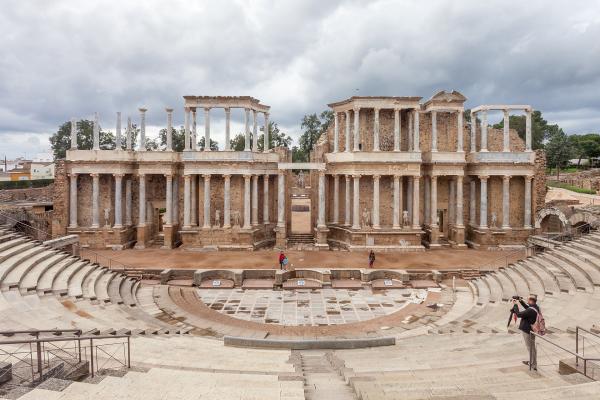
The building follows the classic design of a Roman theatre. The semicircular seating area, the cavea, was built against a hillside, which reduced the amount of stone needed and also helped with the acoustics, and it is divided into tiers for different classes of spectators, with the lower rows reserved for the elite. At the bottom is the orchestra, a semicircle that was used by magistrates and important guests, and beyond it the stage, backed by the scaenae frons, a lofty architectural façade with columns, niches and statues, which was the main decoration. The theatre could be entered by a series of vaulted passages, the vomitoria, that allowed the crowd to flow in and out quickly.
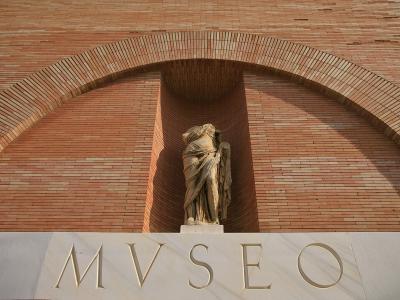
The scenic wall is the most remarkable feature. Its two levels of marble columns, in the Corinthian order, were rebuilt in the twentieth century from the original pieces, giving visitors an idea of the splendour of the original, and between the columns stood statues, among them Ceres, Proserpina and Pluto, as well as members of the imperial family. Many of the sculptures found during excavations are now in the National Museum of Roman Art, a few steps away, designed by the architect Rafael Moneo. Excavations began in the early twentieth century, when only the upper rows of seats were visible above ground, and over the decades, archaeologists cleared the rest.
The theatre is still in use. Each summer, in July and August, it hosts the Mérida International Classical Theatre Festival, one of the oldest and most prestigious in Spain, with productions of Greek and Roman plays staged in the same space where they were first performed two thousand years ago, and attending an evening performance beneath the stars is a memorable experience. Next to the theatre stands the Roman amphitheatre, built a few years later, where gladiator fights were held, and the two form part of a single ticket.
The site is at Plaza Margarita Xirgu, within walking distance of the Roman bridge, the temple of Diana and other monuments. It suits history lovers, families and theatre fans, and the visit takes about an hour. Hours and prices change by season, and the summer midday heat is strong, so go early or late.
Categories
More photos coming soon
Nearby Attractions
Other places to visit in Mérida
Questions people ask
Quick Facts
Best Time to Visit
March through May and September through October offer pleasant weather for visiting.