







Parque de María Luisa
- Admission
- Free admission
- Hours
- Daily 8:00 to 22:00
- Where
- Seville, Andalusia
- Directions
- Directions
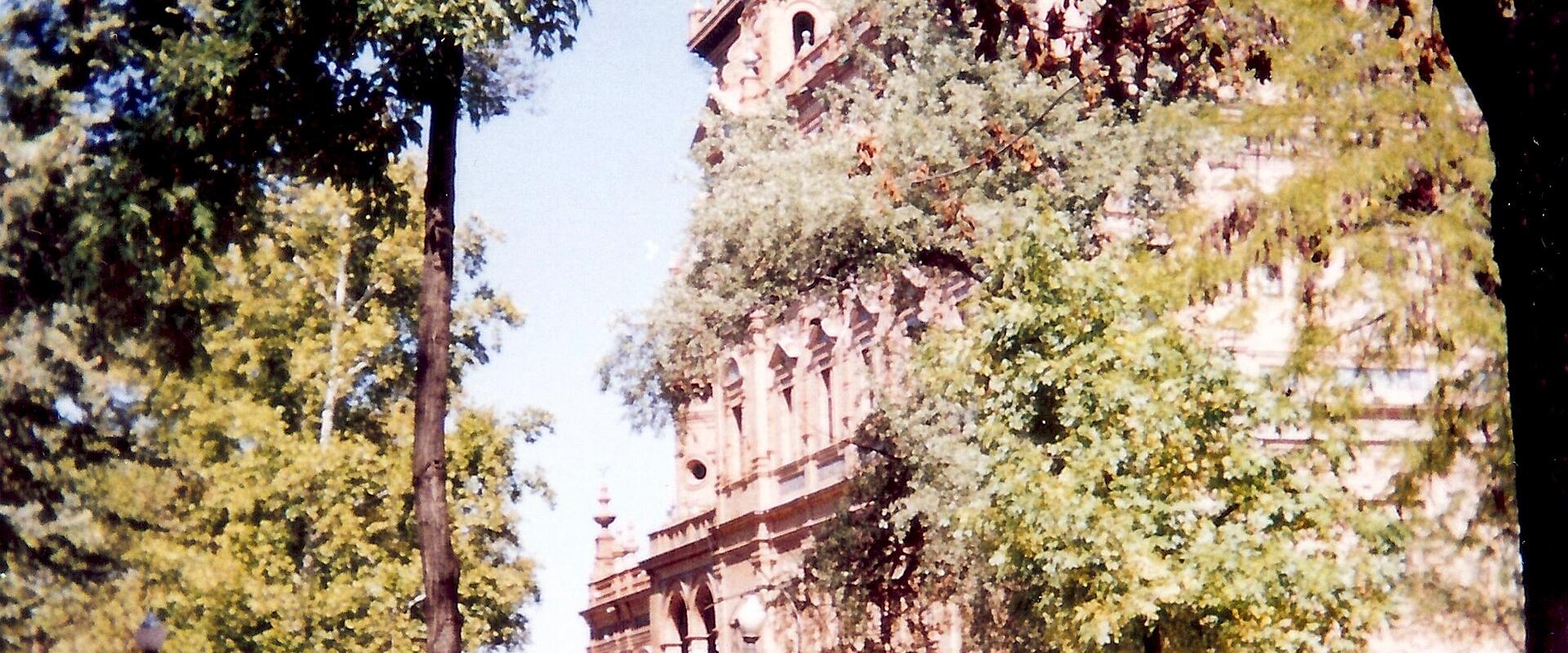
The Parque de María Luisa is the great green space of Seville, a shaded retreat on the south side of the old city, stretching along the Guadalquivir river. It began as the private gardens of the Palacio de San Telmo, the palace of the Dukes of Montpensier. In 1893 the Infanta María Luisa Fernanda de Borbón, the Duchess of Montpensier, donated part of the grounds to the city for public use, and the park takes her name. It was redesigned in the early twentieth century by the French landscape architect Jean-Claude Nicolas Forestier, who prepared it for the Ibero-American Exposition of 1929 and gave it its present character, with a blend of formal and romantic features.
Forestier combined Mediterranean and Andalusian traditions. The park is laid out with tree-lined avenues, cypress and palm groves, flower beds, ponds and many small corners with benches, ceramic tiles and fountains. It covers about thirty-four hectares, and it is shady, which is welcome in a city where summer temperatures are high. The effect is of a garden with several moods: grand in some parts, intimate and secretive in others. Orange trees, jacarandas and plane trees provide colour in different seasons.
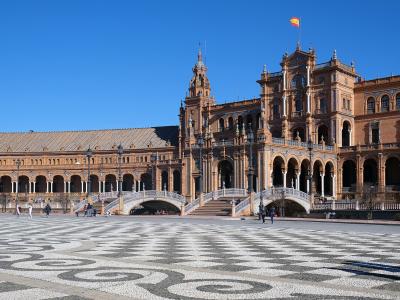
The 1929 exhibition left a legacy of buildings. The Plaza de España, the semicircular building with canals and tiled alcoves beside the park, is the most famous, and the Plaza de América, in the southern part, is a square with three pavilions in Mudéjar revival style. Two of them house museums: the Archaeological Museum of Seville, which has Roman and prehistoric collections, including the Carambolo treasure, and a museum of popular arts and customs with displays of crafts, costumes and everyday objects. Many pigeons gather in this square, and visitors often buy seed to feed them.
Minor attractions are scattered through the park. The Isla de los Patos, the Duck Island, is a pond with an island and a pavilion, and the Fuente de las Ranas, the Frog Fountain, is a small ornamental basin. The Glorieta de Bécquer, a monument to the Seville-born poet Gustavo Adolfo Bécquer, shows figures of women representing love at different stages, and the Glorieta de los Lotos has a pond with lotus flowers. The Teatro Lope de Vega, built for the exposition, now hosts performances.
It suits everyone: walkers, cyclists, families with children, and anyone looking for shade. Horse-drawn carriages and bicycles can be rented. The park is free and open daily, and the Prado de San Sebastián metro stop and the Plaza de España are the easiest points of access.
Categories
More photos coming soon
Hours & Fees
- Open
- Daily 8:00 to 22:00
- Admission
- Free admission
Hours and prices change, especially out of season. Check with the venue before you go.
Questions people ask
Quick Facts
Best Time to Visit
April to June and September to October offer mild, pleasant weather ideal for sightseeing.