







Plaza de Toros de Ronda
- Admission
- €9 (€10.50 with audio guide)
- Where
- Ronda, Andalusia
- Directions
- Directions
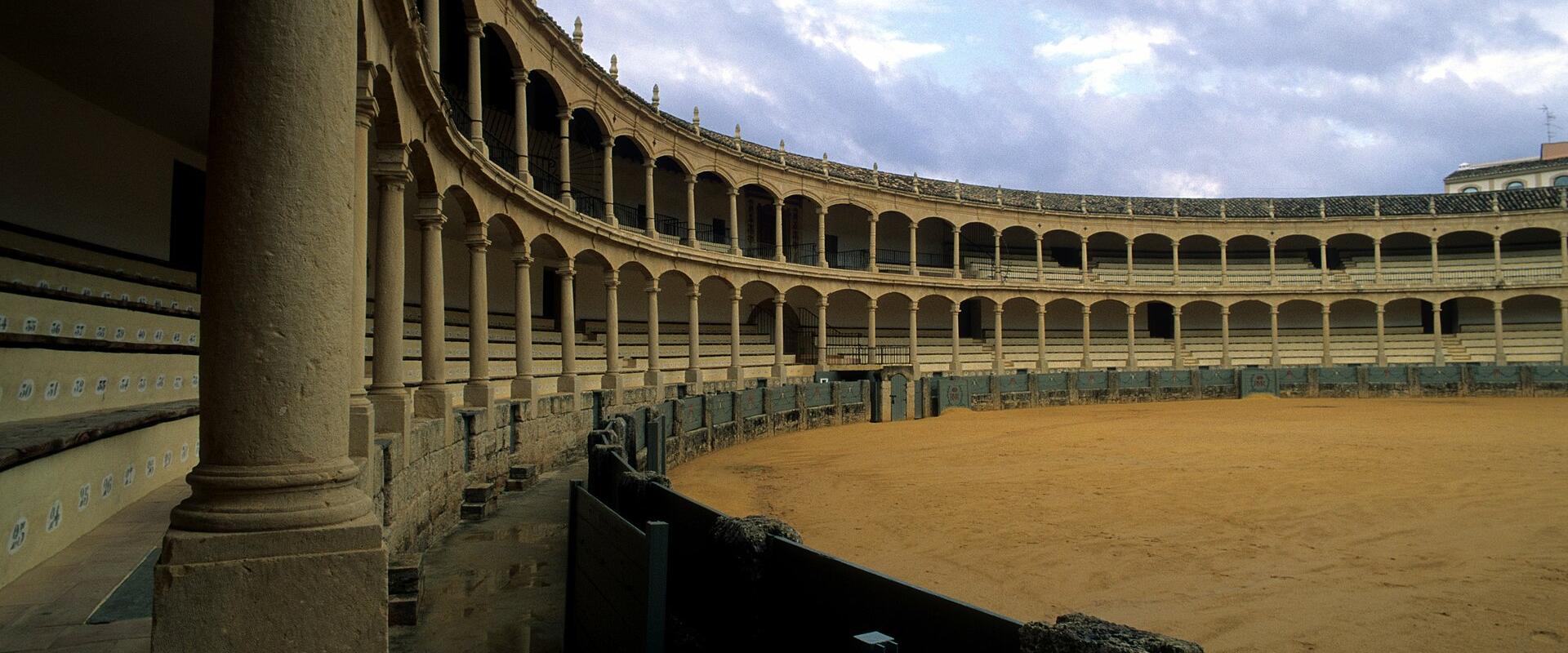
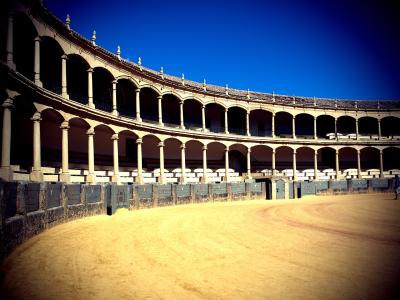
The Plaza de Toros de Ronda is one of the oldest and most admired bullrings in Spain, and it is closely tied to the story of the art of bullfighting in its modern form. It was built in the late eighteenth century, with work between 1779 and 1785, to a design by José Martín de Aldehuela, the same architect who built the Puente Nuevo, the great bridge over the gorge of El Tajo. The patron was the Real Maestranza de Caballería de Ronda, a noble cavalry order that still owns and manages the ring. The sand arena, about sixty-six metres across, is among the largest in Spain, and the building has a neoclassical elegance that sets it apart from many later rings.
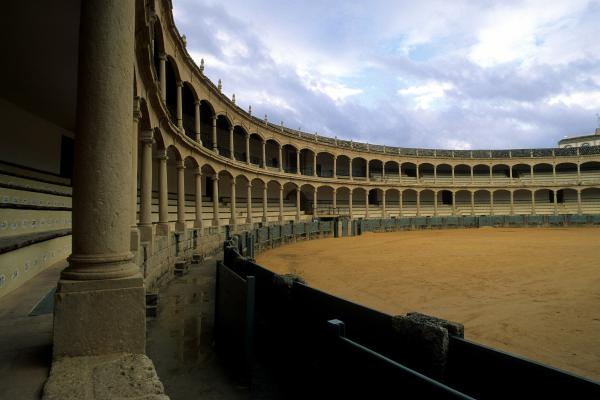
The architecture is the first thing most visitors notice. A double arcade of stone columns, in the Tuscan style, runs around the ring on two levels, and the arches are topped with a gallery in warm-coloured stone. The seating is divided into tiers, and the Royal Box has a special place in the structure. The elegant, harmonious proportions give the arena a feeling more like a classical theatre than a sports ground, and the proportions are one reason it has been so widely copied and admired.
Ronda’s bullring is linked to the Romero dynasty. Francisco Romero, born in the town, is traditionally credited with introducing the muleta and giving bullfighting its early rules, and his grandson Pedro Romero, who lived from 1754 to 1839, became the greatest matador of his time and a symbol of the Ronda style, which emphasised classic, dignified technique. In the twentieth century, Antonio Ordóñez, also from Ronda, carried on the tradition, and he was a friend of the writers Ernest Hemingway and the film-maker Orson Welles, both of whom loved the town. Each September the ring hosts the Corrida Goyesca, a bullfight in which participants wear costumes inspired by the paintings of Goya, a spectacular local festival.
A visit includes the arena, the stands and a museum, which displays the costumes of famous matadors, weapons, posters, photographs and mementoes linked to the Romero and Ordóñez families. There is an audio guide, and the Royal Box and the stables can be seen. Many people visit even if they have no interest in bullfighting, because the building is a beautiful piece of architecture and has an important place in the history of Spain’s culture. The subject of bullfighting is controversial, and views on it differ widely, so visitors should go with their own judgement.
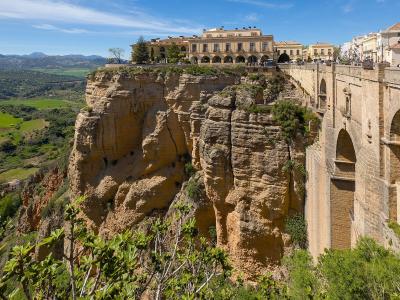
The ring is on the west edge of Ronda, a few blocks from the Puente Nuevo, the Casa del Rey Moro and the Museo de Ronda, so it is easily included in a day of walking. Opening hours vary with the season.
Categories
More photos coming soon
Admission Fees
- Admission
- €9 (€10.50 with audio guide)
Hours and prices change, especially out of season. Check with the venue before you go.
Questions people ask
Quick Facts
Best Time to Visit
April to June and September to October offer pleasant weather for exploring.