







Plaza de Toros Old Bullring
- Where
- Ronda, Andalusia
- Directions
- Directions
The bullring of Ronda is one of the oldest and most famous in Spain, and it is closely tied to the history of bullfighting as it developed in the eighteenth century. It stands on the edge of the old town, a short walk from the Puente Nuevo and the lip of the El Tajo gorge. Building began in 1779 and ended in 1785, to a design by José Martín de Aldehuela, the architect who also completed the new bridge, and it was commissioned by the Real Maestranza de Caballería de Ronda, a noble brotherhood of horsemen that still owns and runs the ring. It was among the first stone bullrings built in Spain, and it has been in use ever since, with only small changes.
Ronda is regarded as the cradle of modern bullfighting. In the eighteenth century, a local man, Francisco Romero, is credited with introducing the use of the muleta, the red cloth, and the practice of fighting on foot, and his grandson Pedro Romero, born in Ronda, became one of the most celebrated matadors in history, with a long career in which he is said never to have been wounded. The Ronda style of fighting, which is sober and classical, takes its name from this tradition. Many of the traditions and rules of the art were formulated here, which gives the ring a place in the history of the form.
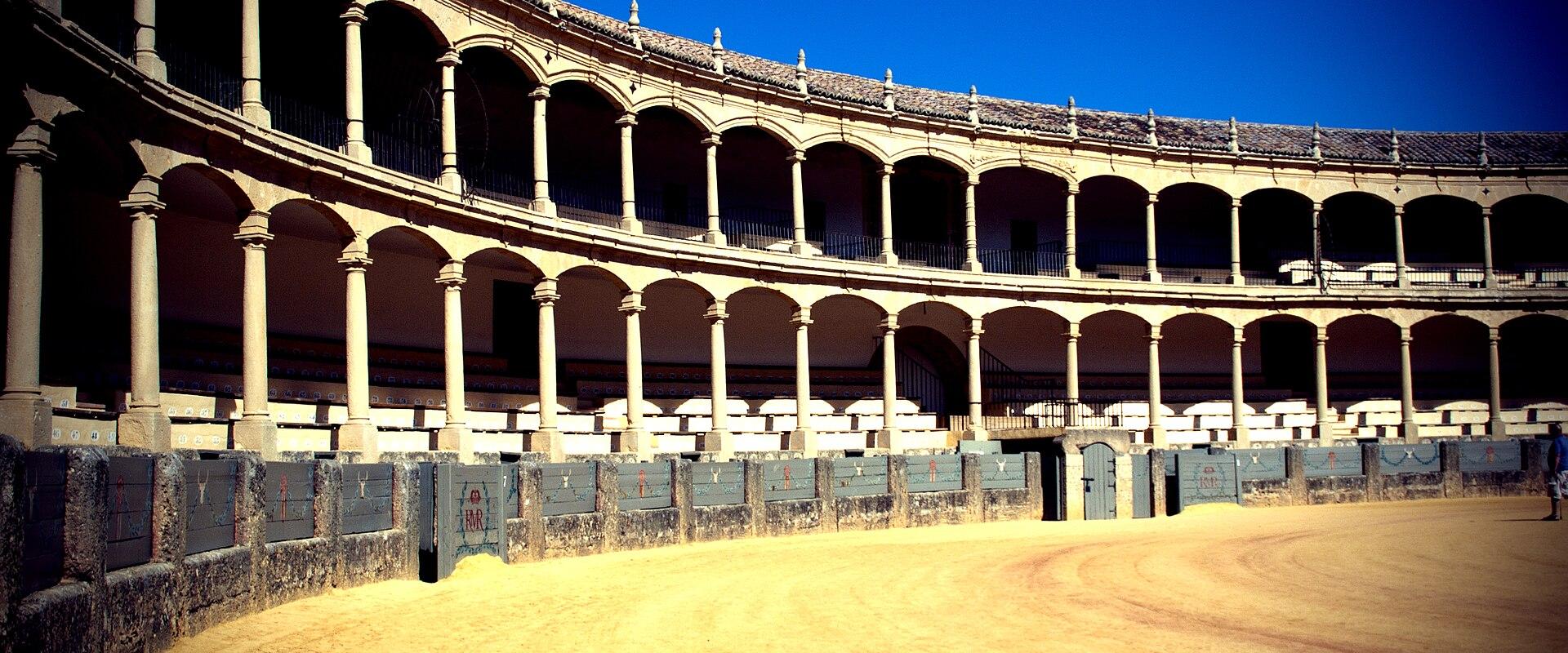
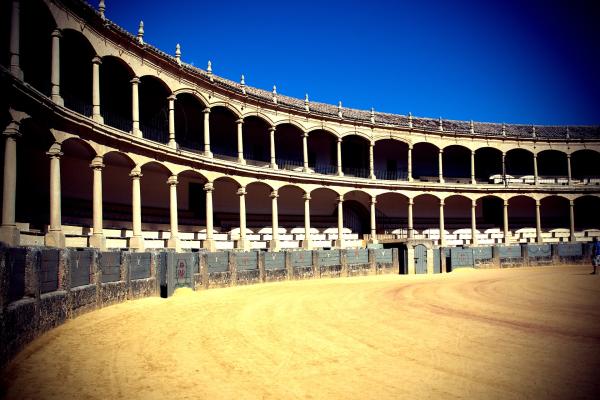
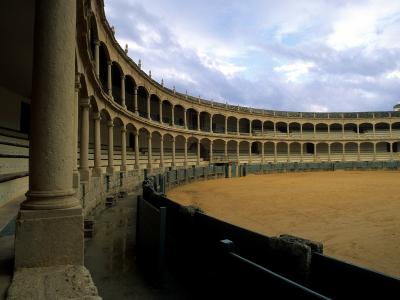
The building is elegant and unusual. The arena is wide, about sixty-six metres across, one of the largest in Spain, and it is surrounded by two tiers of stone galleries with arches supported by a series of columns. The galleries are covered, protecting spectators from the sun, and the stone of the rows creates a harmonious, neoclassical effect. The warm colour of the sand against the pale stone is striking. A small number of bullfights are held every year, the most famous being the Corrida Goyesca in early September, in which the bullfighters wear costumes in the style of the paintings of Goya, in honour of Pedro Romero.
Visitors can walk into the ring, stand in the toreros' gate and look at the galleries. A museum inside tells the story of the sport, with costumes, posters, photographs and weapons, along with items connected with the Romero family and later matadors. The old stables, with horses and carriages, can also be visited. Writers such as Ernest Hemingway and Orson Welles, who loved Ronda, are connected with the ring.
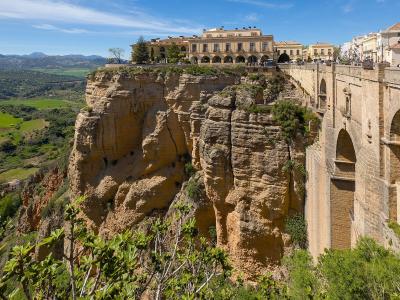
The ring suits those interested in history, architecture and the traditions of Spain, whatever their view on bullfighting itself. It is close to the Puente Nuevo, the Museo de Ronda and the Casa del Rey Moro. Check opening times and tickets before going.
Categories
More photos coming soon
Questions people ask
Quick Facts
Best Time to Visit
April to June and September to October offer pleasant weather for exploring.