







- Admission
- Free entry
- Audio guide approx. €7
- Where
- Cartagena, Murcia
- Directions
- Directions
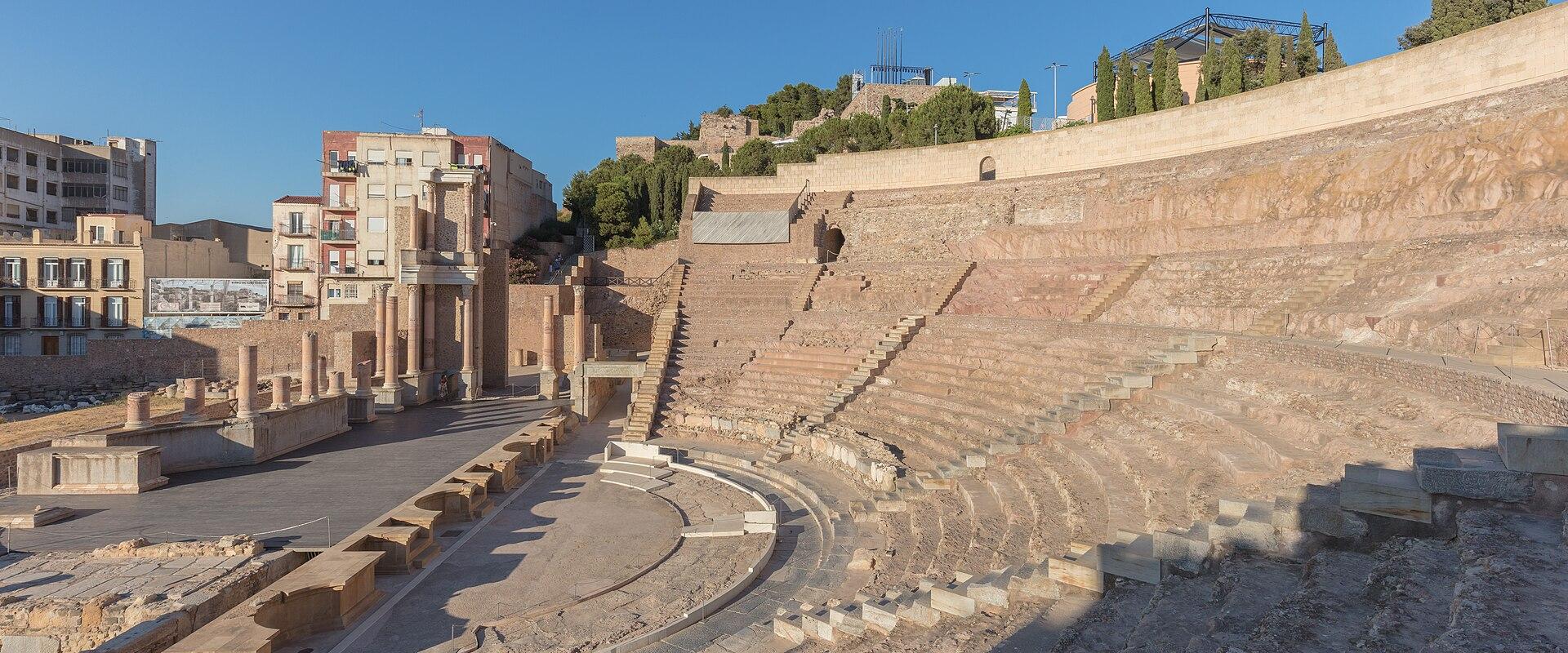
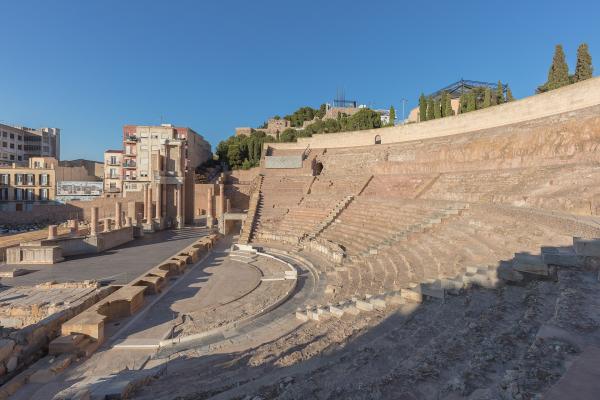
The Roman Theatre of Cartagena, the Teatro Romano, is one of the great Roman monuments of Spain, and its story is almost as remarkable as the building. It was built in the time of Emperor Augustus, between about 5 and 1 BCE (BC), in the Roman city of Carthago Nova, and an inscription found on the site shows that it was dedicated to Gaius and Lucius Caesar, the grandsons of Augustus and his intended heirs, who both died young. The theatre was built against the slope of the Concepción hill, so that the seating could rest on the natural rock, and it faced north, away from the hot sun, with a view of the harbour. It could hold several thousand spectators, and it was one of the largest theatres in Roman Spain, with a diameter of about eighty-seven metres, which gives an idea of the importance of Cartagena’s Roman city, and it is among the best preserved on the Iberian Peninsula, facing the Mediterranean.
After the end of the Roman Empire, the theatre was abandoned and slowly buried. Stones were taken for other buildings, and the hollow of the stage was filled with earth, and over the centuries houses, a church and a bullring were built over the ruins. For hundreds of years, its existence was almost forgotten. In 1988, during construction work in the old quarter, workers found parts of the structure beneath the houses, and archaeologists began a long excavation that revealed the seating, the stage and the surrounding galleries. This excavation, which continued in stages through the following decades, is one of the major archaeological projects of recent years in Spain.
The visit is arranged in a distinctive way. The architect Rafael Moneo, who also designed the National Museum of Roman Art in Mérida, designed a museum that opened in 2008 and leads visitors toward the theatre through a sequence of spaces. The route begins in the Palacio Pascual de Riquelme, a nineteenth-century building that holds the first galleries, passes through an underground tunnel and emerges, via the ruins of the old cathedral of Santa María la Vieja, which stood on top of the theatre, into the tiered seating. The route gives a dramatic reveal, and it combines Roman, medieval and modern layers in one experience. Finds from the excavation, such as sculpture, inscriptions and everyday objects, are displayed in the museum.
The seating, or cavea, is built partly of stone and partly cut into the hill, and visitors can climb the steps, which are in good condition, and look down at the semicircular orchestra and the stage wall. The stands rise to a height of about fourteen metres. The orientation of the theatre, which is said to be aligned with the winter solstice sunrise, is among the features that have attracted study. Free entry has been offered to the theatre area, with audio guides available for a fee, but arrangements for the museum and the theatre differ, so check the official site.
The theatre is in the middle of Cartagena, near the port, and it is a short walk from the Castillo de la Concepción and the other Roman remains of the city. A visit takes about an hour and a half. Cartagena is also known for its naval history.
More photos coming soon
Admission Fees
- Admission
- Free entry; audio guide approx. €7
Hours and prices change, especially out of season. Check with the venue before you go.
Nearby Attractions
Other places to visit in Cartagena
Questions people ask
Quick Facts
Best Time to Visit
May through September offers warm, dry weather ideal for exploring the historic center.