







- Hours
- School and group visits organized at specific times of the year by the Instituto de Astrof...
- Where
- La Palma, Canary Islands
- Directions
- Directions
The Roque de los Muchachos is the highest point of La Palma, at about 2,426 metres, and it is also the site of one of the leading astronomical observatories in the world. It stands on the northern rim of the Caldera de Taburiente, in the municipality of Garafía, and a long, winding road climbs to it from the lower slopes through pine forest, emerging above the clouds. On many days, the clouds that the trade winds push against the island form a sea of white far below, while the summit is in clear sunshine, and the view from the top is one of the most dramatic in the Canary Islands. The name means Rock of the Boys, after a rock outcrop on the ridge.
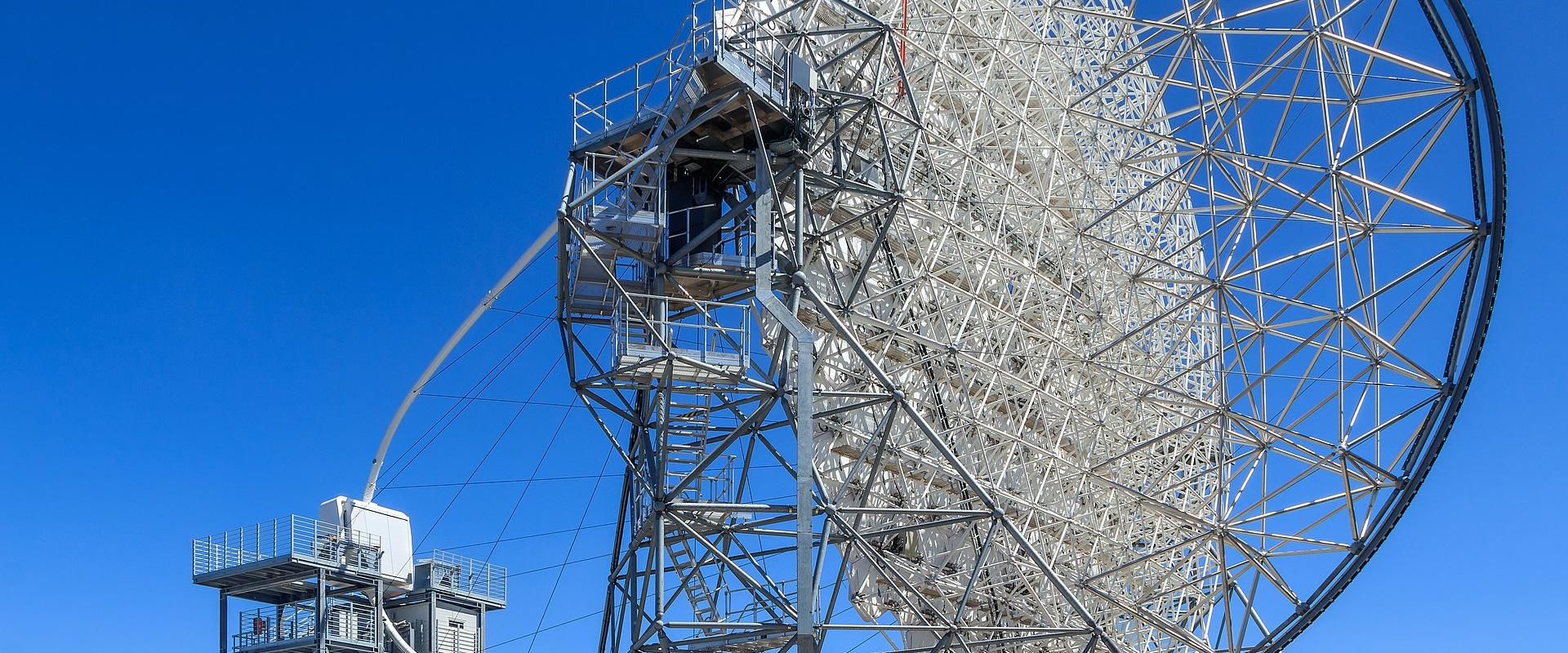
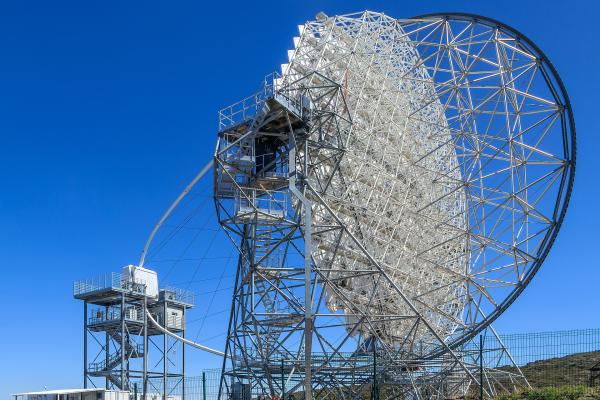
The clear air, the dark skies and the stable atmosphere make the summit ideal for observing the stars, and in the 1980s an international observatory was built on the ridge, the Observatorio del Roque de los Muchachos, which was inaugurated in 1985 and is operated by the Instituto de Astrofísica de Canarias. It hosts a group of large telescopes from several countries, among them the Gran Telescopio Canarias, a reflector with a mirror about ten metres across that is one of the largest optical telescopes in the world, the William Herschel Telescope, the Swedish Solar Telescope and the MAGIC telescopes, which detect high-energy gamma rays. Their white domes, spread along the rim against the deep blue sky, form a striking sight.
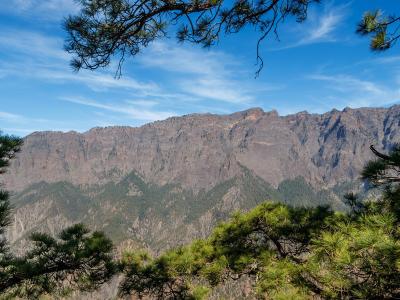
The viewpoint beside the car park offers a panorama into the caldera, a vast bowl whose bottom lies about a kilometre and a half below, ringed by cliffs and forested slopes. On clear days, you can see the neighbouring islands of Tenerife with the cone of Mount Teide, La Gomera and El Hierro, floating on the horizon. A section of the long-distance trail GR-131 follows the rim, and short walks lead to rock formations and viewpoints, but the altitude means that the air is thin, the wind can be fierce and the temperature may be near freezing even in summer, so warm clothing, sun protection, water and sturdy footwear are essential. Weather can change fast and the road may be closed in snow or fog.
The observatory itself is a research site and is generally not open for casual visits, though guided visits to the telescopes are organised by the astrophysics institute for groups at set times, and must be booked in advance. La Palma is also certified as a Starlight Reserve for its dark skies, and many visitors come to observe the night sky, with guided stargazing excursions available.
The summit is part of the surroundings of the Caldera de Taburiente National Park. It suits walkers, photographers and anyone who loves big views, and a drive from the coast takes over an hour. Go in the morning for the clearest air, and check conditions beforehand.
Categories
More photos coming soon
Opening Hours
- Open
- School and group visits organized at specific times of the year by the Instituto de Astrofísica de;
Hours and prices change, especially out of season. Check with the venue before you go.
Nearby Attractions
Other places to visit in La Palma
Questions people ask
Quick Facts
Best Time to Visit
June through September offers warm, dry weather ideal for hiking and stargazing.