







Tower of Hercules
- Where
- A Coruna, Galicia
- Directions
- Directions
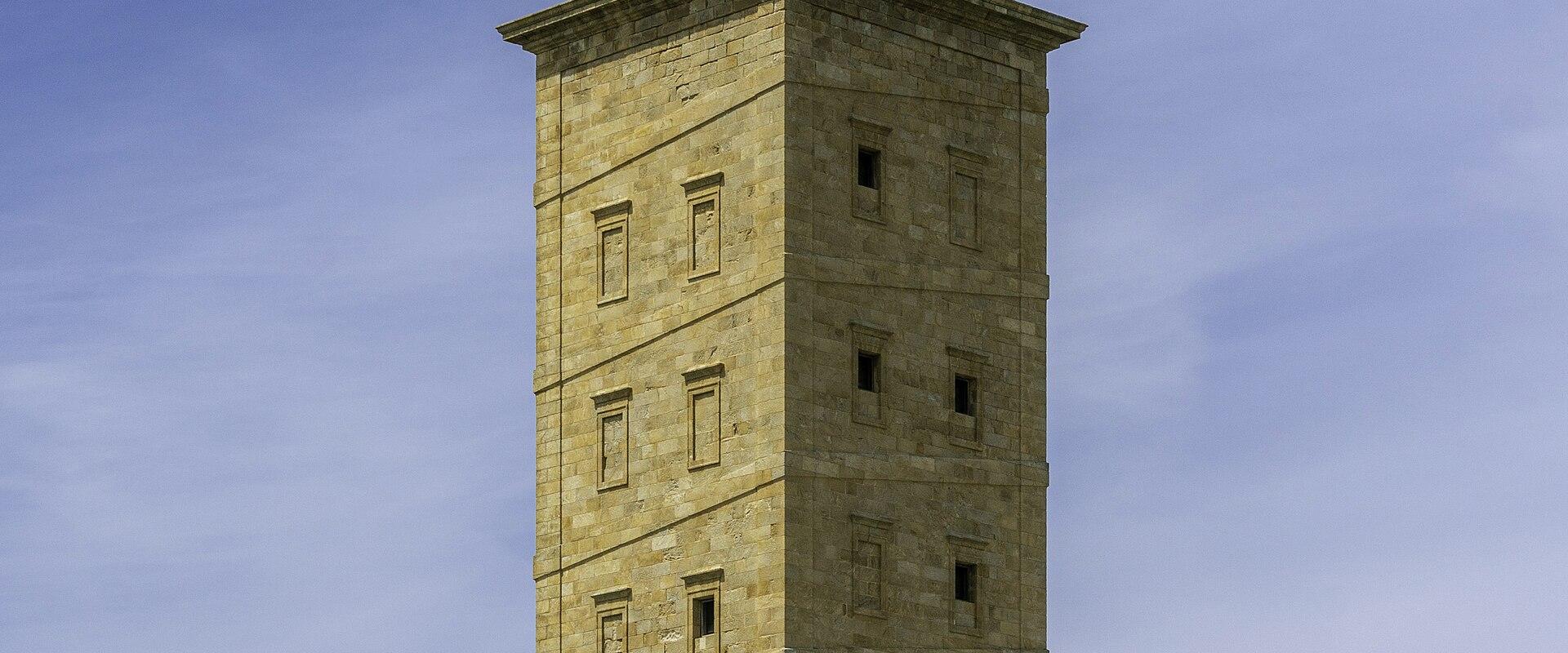
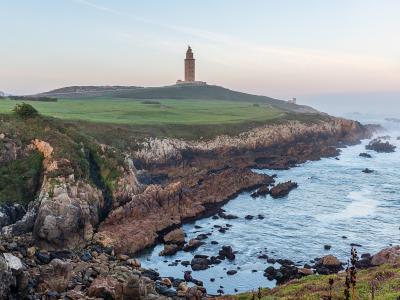
The Tower of Hercules, on a rocky headland at the north-western edge of A Coruña in Galicia, is the oldest Roman lighthouse still in use anywhere. It dates from around the first or second century AD, in the period of Emperor Trajan according to some scholars, and an inscription at its base names the architect as Gaius Sevius Lupus from Aeminium, now the Portuguese city of Coimbra. The Romans used the sea route along the Atlantic coast to link the northern provinces with the rest of the empire, and the tower was a beacon for ships bringing tin, metals and other goods from Britain and Gaul. UNESCO named it a World Heritage Site in 2009, and it lies in Spain’s north-west.
The structure has changed over the centuries. In the late eighteenth century it was restored under the architect Eustaquio Giannini, who encased the damaged Roman core in a neoclassical outer layer, raising it to its present height of about fifty-five metres. The Roman masonry remains inside, and a small display at the base of the tower shows the remains of the original wall. Galician tradition tells a different origin story: Hercules killed the giant Geryon here, buried his head and built the tower over it, and the city’s coat of arms still shows the tower above a skull.
Visitors can climb inside the tower, and the stairs lead to the top for views of the Atlantic coast, the city and the rugged shoreline. The top of the tower was used as a lighthouse into modern times, and it continues to act as a navigation signal. Around the base there is a sculpture park with large modern works, and the surrounding headland has walking paths along the cliffs. The site is looked after by public heritage bodies of the Spanish state and the region, and a visitor centre provides background on the history of the tower and maritime navigation.
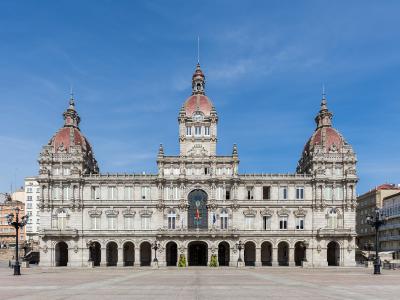
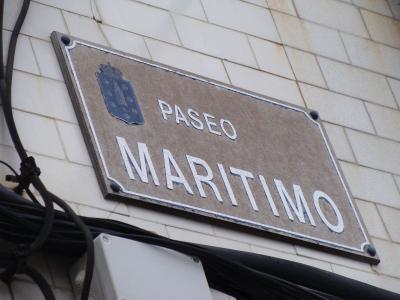
The tower is about two and a half kilometres from the city centre, and the long Paseo Marítimo, the seafront promenade, runs from the old town around the peninsula towards it, so many visitors walk or cycle there. Along the way are beaches and viewpoints, and the Parque de María Pita and the central streets of the old town are a short ride back. The Castro de Elviña, an Iron Age hill settlement, is another heritage site within the city area.
The weather in Galicia can change quickly, and the headland is exposed to wind, so bring a jacket even in summer. Check the official site for opening hours and ticket details, which vary through the year.
Categories
More photos coming soon
Nearby Attractions
Other places to visit in A Coruna
Questions people ask
Quick Facts
Best Time to Visit
June through September offers warm, dry weather ideal for exploring the coastal city.