







- Where
- Avila, Castile and León
- Directions
- Directions
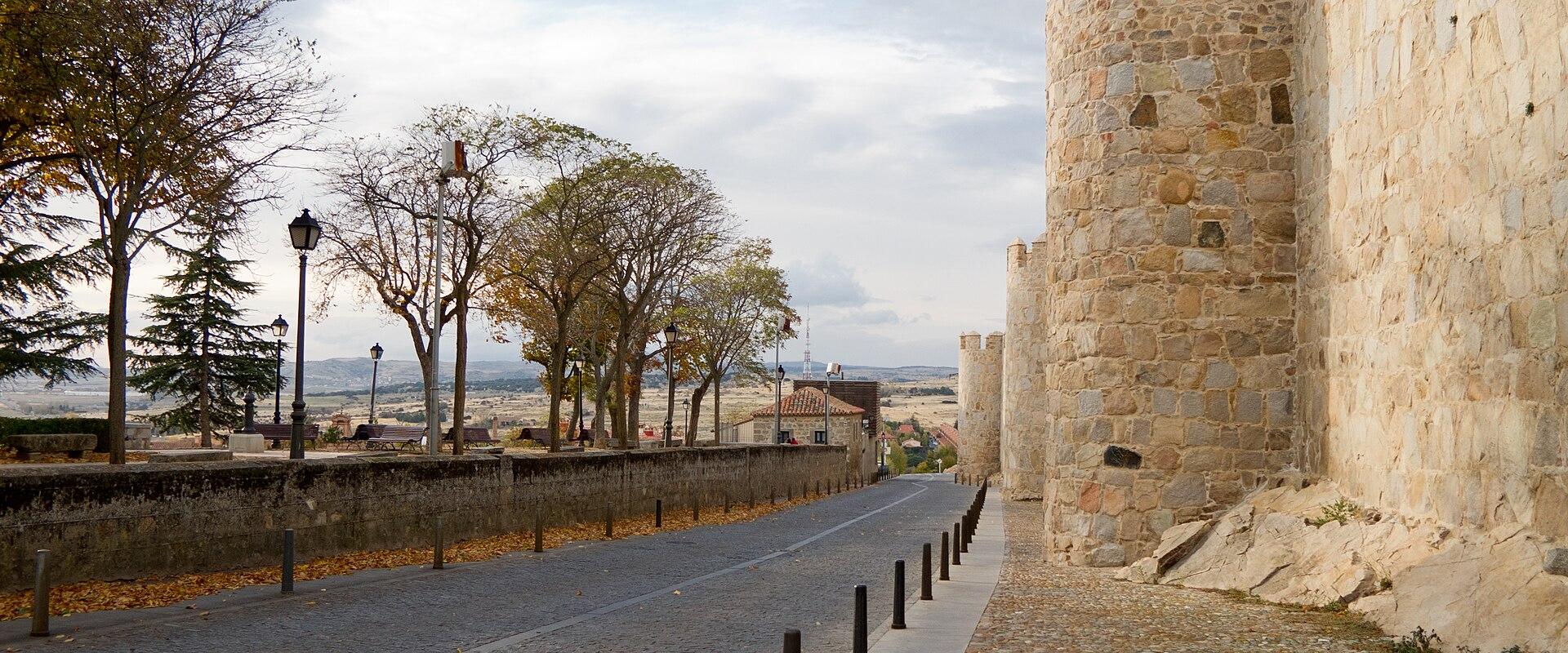
The walls of Ávila are among the finest medieval fortifications in Europe, a granite ring that wraps the whole old city and has survived almost intact for nearly a thousand years. They were begun in 1090, soon after the Christian king Alfonso VI took the area from the Muslims and repopulated it, and they were built over the following decades, in the twelfth century, with additions later. The circuit is about two and a half kilometres long, up to twelve metres high and about three metres thick, with eighty-eight towers, nine gates and thousands of battlements, and it is so regular in form that it looks almost like a model of a fortress. UNESCO included Ávila's old town and its churches outside the walls in the World Heritage list in 1985.
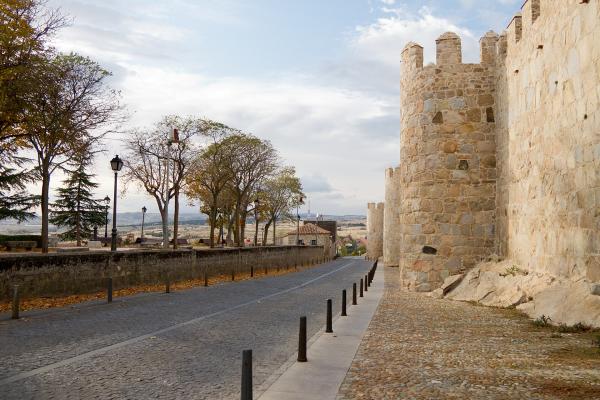
The walls are built of local granite, and their colour changes with the light, from pale grey in the morning to warm gold at sunset. The towers are semicircular and project from the wall at regular intervals, and the gates, flanked by massive towers, show the engineering of their time. The Puerta del Alcázar and the Puerta de San Vicente are among the grandest. The eastern stretch, which faced the most open and vulnerable ground, is strengthened by taller towers, and the apse of the cathedral, a huge round tower known as the Cimorro, is built into the walls and doubles as part of the defences. The Cathedral of El Salvador, which is considered one of the earliest Gothic cathedrals in Spain, thus combines the roles of a church and a fortress.
A large part of the wall can be walked on the top. Staircases at certain gates lead up to the wall walk, and a path of a little over a kilometre and a half runs along the ramparts, giving excellent views over the roofs and towers of the old town, the plain beyond and the mountains of the Sierra de Gredos on the horizon. The walk is narrow in places and exposed to the wind, and some stretches have low parapets, so care is needed with children. The walls can also be admired from outside, especially from the Cuatro Postes viewpoint across the Adaja river, which gives the best panorama, particularly at dusk when the walls are lit.
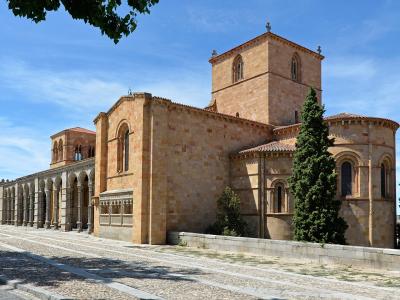
Ávila is also known as the home of Saint Teresa, the sixteenth-century mystic and reformer who was born here, and the town has convents and churches linked with her life, and the Basilica of San Vicente stands just outside the walls. The city is the highest provincial capital in Spain, at around eleven hundred metres, so winters are cold and summers are fresh.
The walk takes about an hour and a half. Opening hours and tickets for the wall walk vary by season, so check before you go, and note that some gates give access at different times. The walls suit everyone who enjoys history and views, and they make a good day trip from Madrid.
Categories
More photos coming soon
Nearby Attractions
Other places to visit in Avila
Questions people ask
Quick Facts
Best Time to Visit
May through September offers warm, dry weather ideal for exploring the historic center.