Why winter works for museums
Barcelona's mild winters, with daytime temperatures that are usually comfortable for walking, make the months from November to March a good time for indoor sightseeing. Queues at the major collections are generally shorter than in summer, and short days push you toward museums anyway. The main things to plan around are shorter opening hours, Monday closures and public holidays.
Plan by neighbourhood
The city's museums fall into a few clusters, and grouping your visits by area saves a lot of time.
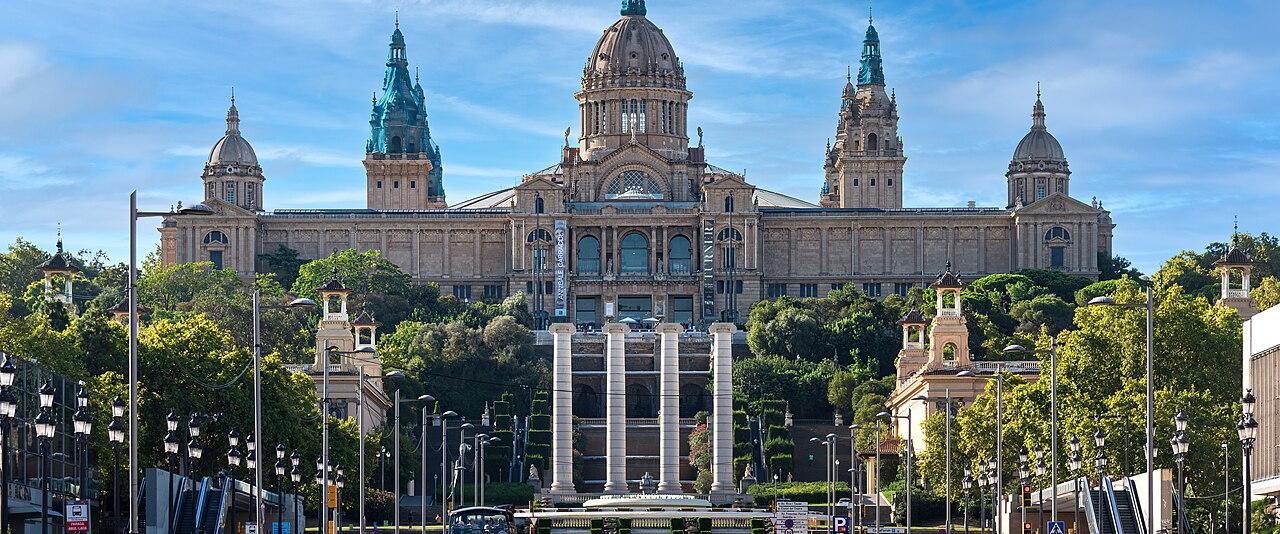
Montjuïc. The Museu Nacional d'Art de Catalunya (MNAC) occupies the Palau Nacional above Plaça d'Espanya. Its Romanesque collection, built around church murals removed from Pyrenean villages, is the main reason to go. The Fundació Joan Miró and CaixaForum Barcelona are on the same hill. Allow a full day if you want to see more than one.
El Born and La Ribera. The Museu Picasso occupies a row of medieval palaces on Carrer de Montcada and concentrates on the artist's early years, including his time in Barcelona. The El Born Centre de Cultura i Memòria, in the former market hall, has excavated streets from 1714 under its roof.
Barri Gòtic. The Museu d'Història de Barcelona (MUHBA) at Plaça del Rei takes you underground through the remains of the Roman city. It is a good choice on a wet day because most of the visit is indoors and below ground.
El Raval. The Museu d'Art Contemporani de Barcelona (MACBA) and the Centre de Cultura Contemporània de Barcelona (CCCB) sit next to each other, the first for contemporary art and the second for changing exhibitions on cities, culture and ideas.
Waterfront. The Museu Marítim de Barcelona is housed in the medieval royal shipyards, the Drassanes, at the bottom of La Rambla.
Opening hours and closures
Opening hours are shorter in winter at some museums. MNAC, for example, runs a winter timetable from October to April, opening Tuesday to Saturday from 10am to 6pm and on Sundays and holidays from 10am to 3pm. Like many museums in the city, it closes on Mondays (except public holidays) and on 1 January and 25 December.
Plan carefully around the holiday period. Besides Christmas Day and New Year's Day, 26 December (Sant Esteve) and 6 January (Epiphany) are public holidays in Catalonia, and some museums close or reduce hours. Always check each museum's own website for the dates you are in town.
Free entry and passes
Many Barcelona museums are free on the first Sunday of each month, and several also offer regular free slots. MNAC is free every Saturday from 3pm as well as on the first Sunday. The Museu Picasso also has free slots, including the first Sunday. In most cases you still need to reserve a timed ticket online, and free slots fill quickly.
If you plan to see several of the large art museums, compare the price of individual tickets against the Articket BCN pass, which covers a set of the city's main art centres. It only pays off if you will use most of the included venues. Some tickets also cover more than one day: MNAC's general ticket, currently €12, is valid for two days within a month of purchase, which lets you split a long visit.
Booking and timing
- Book timed tickets online for the Museu Picasso and any blockbuster temporary exhibition, even in winter.
- Go early on weekdays. Late mornings on weekends are the busiest time.
- Leave Monday for outdoor sightseeing, markets or architecture, since many museums are closed.
- Check whether bags need to be left in lockers; some museums don't allow large backpacks in the galleries.
A sample three-day plan
Day one: Montjuïc. MNAC in the morning, lunch nearby, then the Fundació Miró in the afternoon. If it is clear, the terrace in front of the Palau Nacional has wide views over the city.
Day two: old town. MUHBA at Plaça del Rei, a walk through the Gothic Quarter, then the Museu Picasso in the afternoon with a booked slot.
Day three: Raval and the port. MACBA or the CCCB, depending on what is showing, then the Museu Marítim on the way to the waterfront.
Rainy-day tips
Winter rain in Barcelona tends to come in short spells rather than all day. Keep the long indoor visits, such as MNAC or MUHBA, for the wettest hours and save walks through the Gothic Quarter and El Born for drier spells. The metro connects all of these areas, and a short ride is often quicker than walking in heavy rain.