Where Rioja Alavesa Is
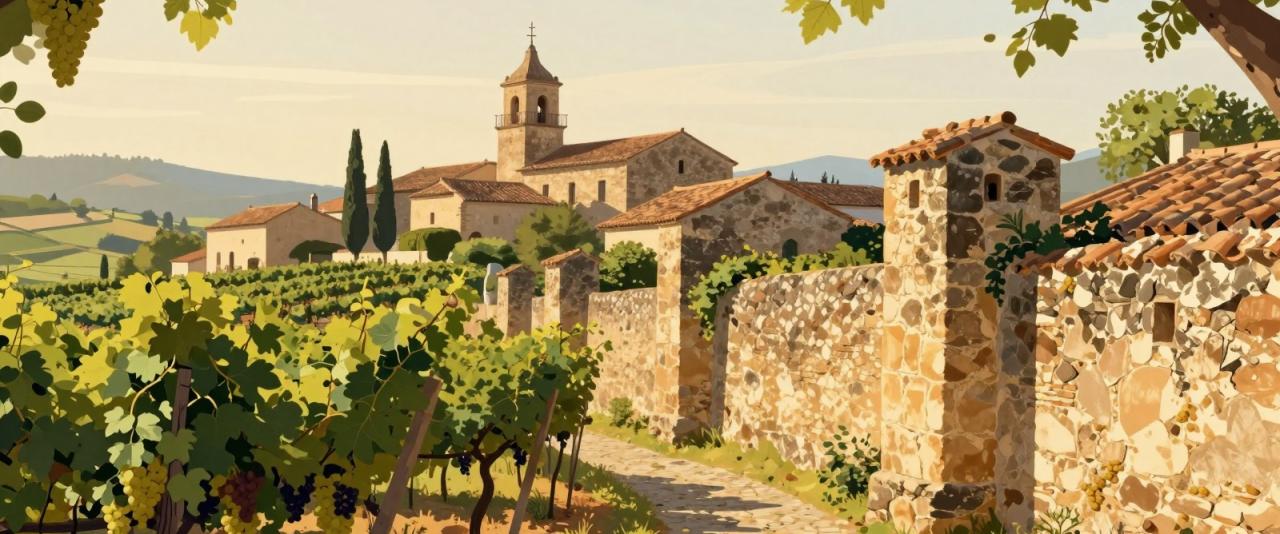
Rioja Alavesa is the southern tip of the Basque province of Álava, a strip of land of about 316 square kilometres between the Sierra de Cantabria to the north and the Ebro River to the south, where it borders the region of La Rioja. Administratively it is Basque; for wine it is part of the Rioja Qualified Designation of Origin (DOCa Rioja), alongside Rioja Alta and Rioja Oriental. Its capital is Laguardia, and the area has around 11,500 hectares of vineyards. The mountains shelter the vines from cold northern winds, and the soils are largely chalky clay.
The wines are mostly red and mostly Tempranillo. Rioja Alavesa reds are often described as fuller-bodied and fresher in acidity than those of other parts of Rioja. The area also has a tradition of young reds made by carbonic maceration (whole-bunch fermentation), sold locally as "vino de cosechero".
Laguardia
Laguardia is a hilltop town of about 1,500 people enclosed by medieval walls that were ordered by Sancho VII of Navarre; the area belonged to the Kingdom of Navarre until it passed to Castile in the 15th century. Several gates survive, and cars are kept outside the old town, so it is pleasant to walk.
Its main sight is the Church of Santa María de los Reyes, whose Gothic portico was carved in the late 14th century and painted in the 17th, and is one of the few polychrome porticos still preserved in Spain. Visits to the portico are by guided tour arranged through the local tourist office. The Church of San Juan, begun in the Romanesque style and finished in Gothic, has a bell tower that was once part of the walls.
Beneath the old town the ground is honeycombed with caves once used as wine cellars, and some wineries and shops in town show visitors their underground spaces. Just outside the walls, the lagoons of El Prao de la Paul and the Carralogroño, Carravalseca and Musco lakes form a protected biotope with a short walking path and bird-watching.
Wineries and Architecture
Rioja Alavesa is known for combining old family cellars with contemporary architecture:
- Bodegas Ysios, near Laguardia, designed by Santiago Calatrava, with a long undulating roof that mirrors the mountain ridge behind it.
- Marqués de Riscal in Elciego, one of the region's historic wineries, whose hotel building by Frank Gehry, with ribbons of coloured titanium, opened in 2006.
- Smaller family wineries in villages such as Labastida, Samaniego, Lanciego and Elvillar, many of which offer tours and tastings.
Almost all wineries require advance booking, especially at weekends, and many close or reduce visits on Sundays and Mondays. The local wine route association (Ruta del Vino de Rioja Alavesa) lists wineries that accept visitors.
Dolmens and Other Sights
The area has a cluster of prehistoric burial monuments. The best-known is the dolmen known as La Chabola de la Hechicera ("the witch's hut") near Elvillar, and there are others around Laguardia, including San Martín and El Sotillo. Labastida, at the western end of the region and separated from the rest by a strip of La Rioja, has a fine old quarter and the hermitage of Santo Cristo on a hill above the town. The Villa Lucía wine centre on the edge of Laguardia has displays on winemaking and the area's wine culture.
When to Go
Late September and October, during and just after the harvest (vendimia), is the most atmospheric time, with grapes being picked and the vines turning colour, but wineries are busy and some limit visits. Each year in September a Rioja Alavesa harvest festival is held in a different village. Spring is quieter and green. Summers are hot by day, and winter can be cold and foggy, though most wineries stay open with reduced hours.
Getting There and Around
Laguardia is about 64 km by road from Vitoria-Gasteiz, the capital of Álava, and much closer to Logroño across the Ebro, which has the nearest train station with long-distance connections. Bilbao airport is roughly a 90-minute drive away. Public transport between the villages is limited, so most visitors drive or join an organised winery tour. If you plan to taste, consider staying overnight in Laguardia or Elciego, or book a driver: Spanish drink-driving limits are strict and checks are common on wine routes.