


Greetings
Spaniards greet people readily, including strangers in small shops, lifts and waiting rooms. A simple hola or buenos días (until lunchtime), buenas tardes (afternoon and early evening) or buenas noches (late evening) when you walk in, and adiós or hasta luego when you leave, is expected and noticed. Even in a shop where you just browse, saying hello is polite.
Among friends and in informal introductions, people often greet with two light kisses on the cheeks, starting with the right cheek. Men usually shake hands with each other, though close male friends and relatives may hug. In business settings, a handshake is the norm. If you are unsure, follow the other person's lead.
People in Spain often speak loudly and interrupt each other in conversation. This is usually a sign of engagement, not rudeness.
Meal times
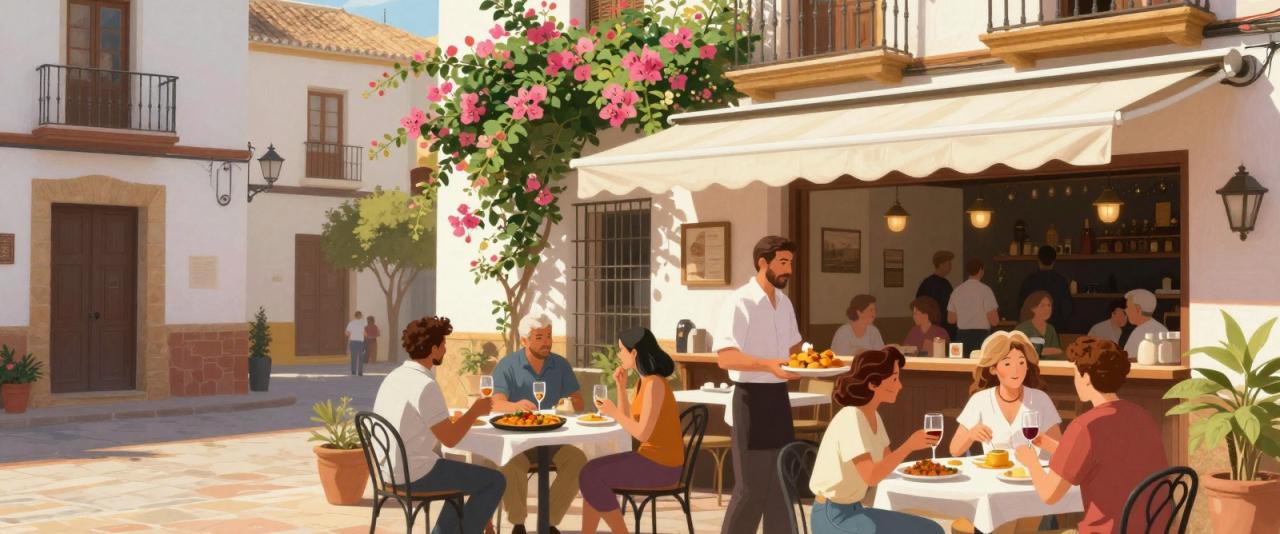
The biggest adjustment for many visitors is the clock:
- Breakfast is light, often coffee with toast or a pastry, sometimes followed by a mid-morning snack.
- Lunch is the main meal, typically between 2pm and 4pm. Many restaurants offer a menú del día, a fixed-price set lunch on weekdays, which is often good value.
- Dinner usually starts after 9pm, and later in summer and in the south. Restaurants that open at 7pm are often aimed at visitors.
Between meals, tapas or a snack fill the gap. Kitchens may close in the late afternoon, so plan around that.
After a meal, people often linger for coffee and conversation, a custom called the sobremesa. Waiters won't usually bring the bill until you ask for it with la cuenta, por favor, so don't take a long wait as poor service.
Tipping and paying
Service is not usually added to bills, and tipping is modest compared with North America. In bars, people often round up or leave a few coins. In restaurants, leaving a little extra for good service is appreciated but not required. Taxi drivers don't expect tips, though rounding up is common.
Cards are widely accepted, but carrying some cash is still useful in small bars, markets and rural areas. When friends eat out, the bill is often paid by one person or split evenly rather than item by item.
The siesta and opening hours
The traditional long midday break still shapes opening hours in many towns, especially in the south and in smaller places. Independent shops may close from about 2pm to 5pm and reopen into the evening. Large chains, department stores and shops in big city centres usually stay open all day. Many shops close on Sundays, though rules differ by region and tourist area.
Few people actually nap every day, but the rhythm of a slow afternoon and a late evening is real, especially in the summer heat.
Dress and behaviour
- Churches expect modest dress. Cover shoulders and avoid very short shorts or skirts, and keep quiet during services.
- Beachwear belongs at the beach. Some coastal towns, including Barcelona, have local rules against walking around town in swimwear or shirtless, and fines are possible.
- Smoking is banned inside bars and restaurants, but is common on terraces.
- Noise rules apply at night in residential areas, so keep voices down when returning to your accommodation late.
Languages
Spanish (Castilian) is spoken everywhere, but several regions have their own co-official languages: Catalan in Catalonia and the Balearic Islands, Valencian in the Valencia region, Galician in Galicia and Basque in the Basque Country and parts of Navarre. Signs and menus may appear in the regional language first, and place names on road signs and maps sometimes differ from the Spanish forms you know, such as Girona for Gerona or A Coruña for La Coruña.
Using a few words of the local language, such as bon dia in Catalan or kaixo in Basque, is appreciated. Avoid describing these languages as dialects of Spanish, and be aware that questions of regional identity and independence can be sensitive.
Useful phrases
- Por favor and gracias: please and thank you.
- Perdón or disculpe: excuse me.
- ¿Me pone...?: a common way to order at a bar ("Could I have...?").
- Vale: OK, heard constantly in conversation.
- La cuenta, por favor: the bill, please.
A polite tone and a willingness to try a few words go further than perfect grammar.