What the City of Arts and Sciences Is
The Ciutat de les Arts i les Ciències is a complex of cultural and leisure buildings at the south-eastern end of the old Turia riverbed in Valencia. After a catastrophic flood in 1957 the river was diverted south of the city, and its dry bed was turned into a long park, the Jardí del Túria. The City of Arts and Sciences was built at the end of that park from the late 1990s onward, mostly to designs by the Valencian architect Santiago Calatrava, with the Oceanogràfic designed by Félix Candela.
The buildings sit along shallow pools, and much of the outdoor area can be walked around for free. You only pay to go inside the main attractions.
The Buildings, in the Order They Opened
L'Hemisfèric (1998). The first building completed, shaped like a giant eye with a moving "eyelid" over a pool. Inside is a large domed screen used for IMAX-style films and planetarium shows.
Museu de les Ciències Príncipe Felipe (2000). An interactive science museum with around 26,000 square metres of exhibition space under a long skeletal roof. Exhibits are hands-on, which makes it a good choice for families and for rainy days.
L'Umbracle (2001). A landscaped walkway about 320 metres long, covered by open white arches, planted with species native to Valencia and lined with outdoor sculptures. It is free to walk through and gives good views over the rest of the complex. Car parking for the complex is underneath.
L'Oceanogràfic (opened 2002–2003). An open-air aquarium park by Félix Candela, covering about 110,000 square metres and holding roughly 42 million litres of water. Different zones represent the world's main marine environments, including the Mediterranean, wetlands, temperate and tropical seas, the oceans, the Antarctic and the Arctic. It is often described as the largest aquarium in Europe, and it is the most time-consuming attraction in the complex.
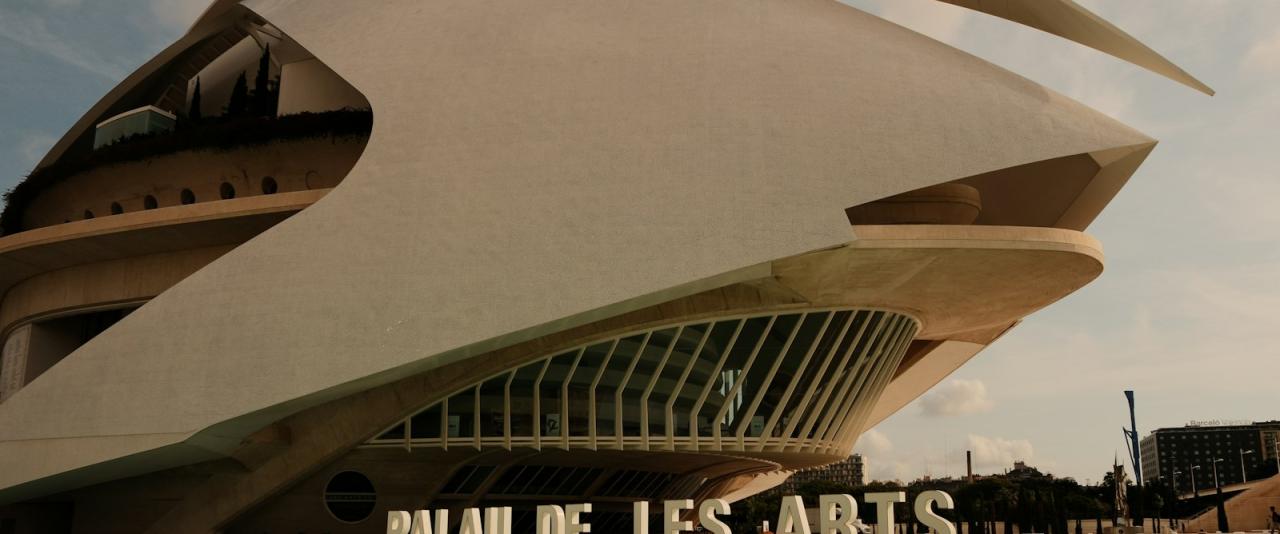
Palau de les Arts Reina Sofía (2005). An opera house and performing arts centre about 230 metres long and 70 metres high. You can see it from outside at any time; to go in, book a performance or check the website for guided tours.
L'Àgora (2009). A covered plaza originally built for concerts and sporting events. It now houses CaixaForum Valencia, a cultural centre with temporary exhibitions.
Nearby, the Assut de l'Or Bridge, a cable-stayed bridge with a 125-metre pylon, crosses the riverbed and is one of the most recognisable elements of the skyline.
What to Pay For
If you have limited time, choose by interest:
- With children or for marine life: the Oceanogràfic. Allow at least half a day.
- For interactive science: the Museu de les Ciències. Allow two to three hours.
- For a shorter visit: a film or planetarium show at the Hemisfèric.
Combined tickets for two or three of the attractions are sold through the official website and usually cost less than separate entries. Prices and opening hours change by season, so check the official site before you go rather than relying on figures from older guides.
Getting There
The complex is about a 30-minute walk from the old centre through the Turia gardens, one of the most pleasant routes in the city. Cycling the riverbed is another option, as the park has dedicated paths. City buses also stop around the complex, and there is underground parking below the Umbracle.
Planning Your Day
A practical plan for a full day:
- Morning: the Oceanogràfic, arriving at opening to see the busiest areas before the crowds build.
- Lunch: in or around the complex, or a picnic in the Turia gardens.
- Afternoon: the Museu de les Ciències, or a show at the Hemisfèric.
- Evening: walk the Umbracle and the pools at sunset, when the white buildings and their reflections are at their best for photographs.
Practical Tips
- Bring sun protection. The complex is open and paved, and the white surfaces reflect a lot of light. Shade is limited between the buildings in summer.
- Expect walking. The site is long and the distances between buildings add up, especially with the Oceanogràfic at the far end.
- Book shows in advance at busy times. Hemisfèric sessions run at fixed times and can fill on weekends and holidays.
- Combine with the beach. The Malvarrosa and Las Arenas beaches are a short bus or taxi ride away for an afternoon by the sea.