







Casa de los Picos
- Where
- Segovia, Castile and León
- Directions
- Directions
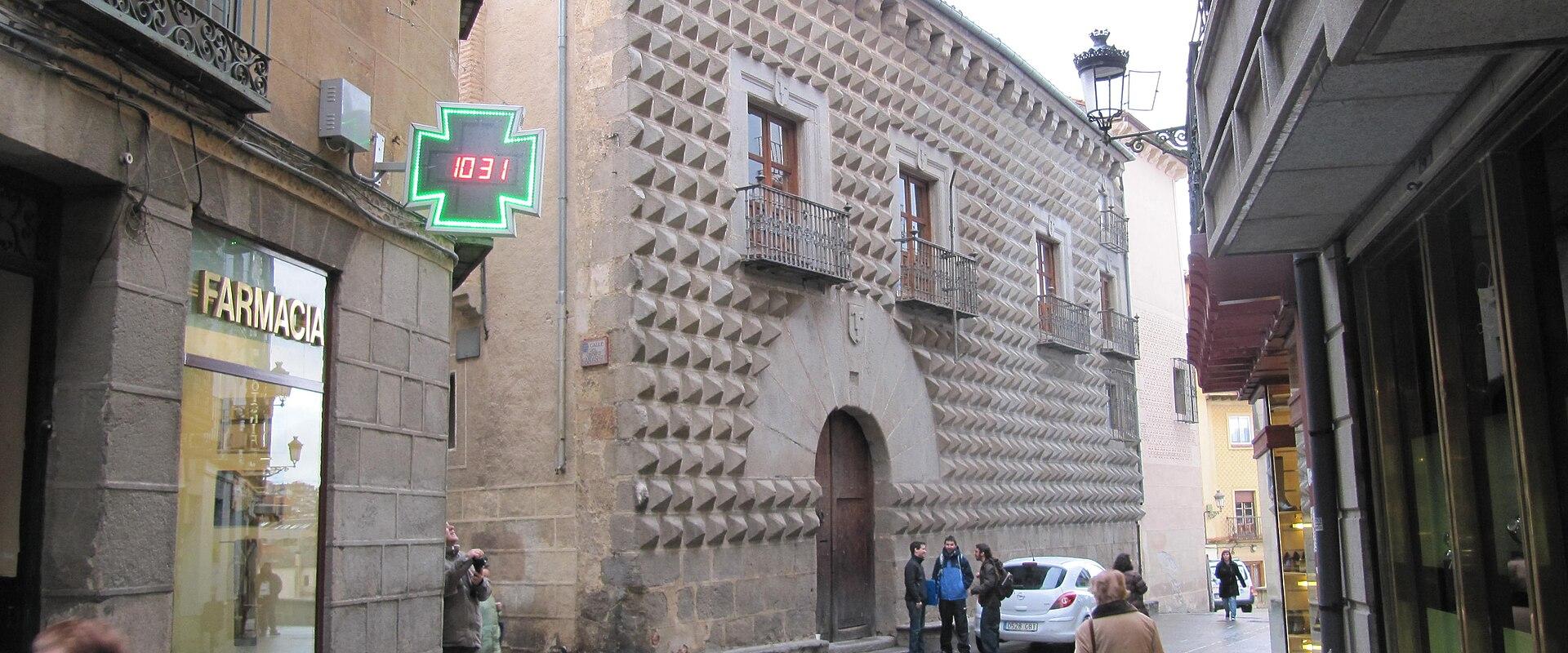
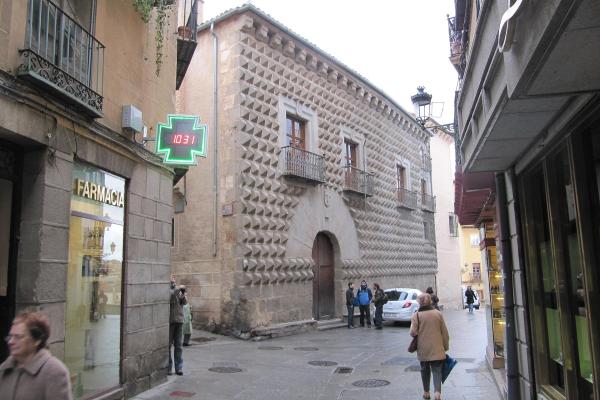
The Casa de los Picos is one of the most photographed houses in Segovia, and the reason is obvious as soon as you see the façade: it is covered with hundreds of pointed granite blocks, shaped like small pyramids, set in tight rows across the whole front. The effect is a wall that seems to bristle, and it changes with the light as the points cast tiny shadows. The count is often given as more than six hundred, and the style is known in architecture as diamond-point rustication, which appeared in Italian palaces in the Renaissance and became fashionable in parts of Spain.
The house dates from the fifteenth century and belonged to a noble family of Segovia. Its builder is a subject of uncertainty, and the name sometimes given in tourist material is not reliable, so it is safer to say that it was a family residence built in the later Middle Ages. Beyond the façade, the building mixes Gothic and Mudéjar features, such as the arched doorway and the decorated windows, with elements added at the Renaissance, and much of the structure has been restored over the centuries. Contrary to a popular story, the points are not defensive; they are decoration meant to impress, in the same spirit as the diamond-patterned palaces of Italy and Aragon.
One of the more unusual things about the building is how it is used today. The house is now a school of art and design, the Escuela de Arte y Superior de Diseño, and its interior courtyard and exhibition space host student work and temporary displays. The interior has changed repeatedly across the centuries, so the draw is mainly from the street, but when the exhibition space is open it gives a chance to see the courtyard.
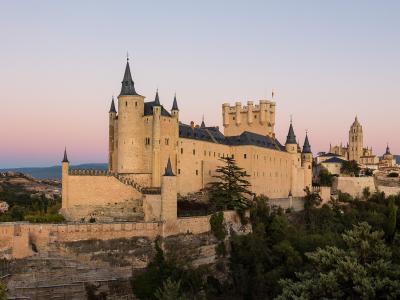
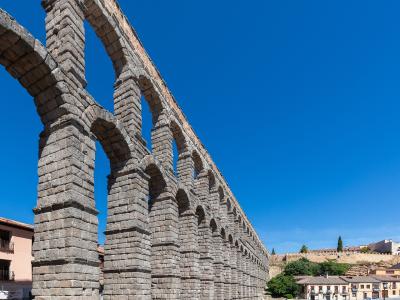
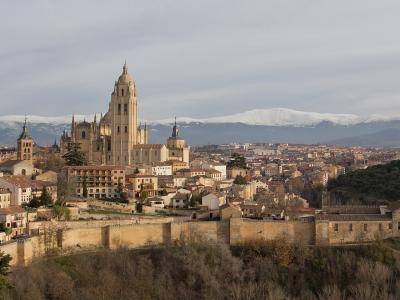
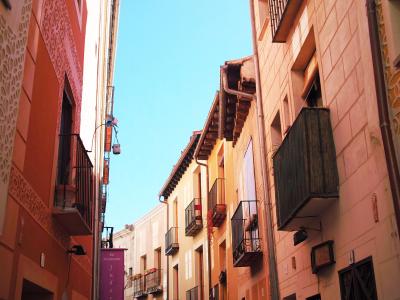
The house stands in Segovia, a UNESCO World Heritage city, in the old town, a short walk from Calle Real, the main street, and from the Plaza Mayor, with the Segovia Cathedral nearby. The Jewish Quarter, or Judería, lies close by, with narrow lanes and old synagogues. Many visitors walk this way on the route between the Aqueduct and the Alcázar, so the house often appears as a stop on the way. The Museo de Segovia and the Parque del Río Eresma give other options.
The façade can be seen at any time and entry to the street is free. Since Segovia is also known for its roast suckling pig, cochinillo asado, a meal in one of the nearby restaurants is a natural way to round off the visit.
Categories
More photos coming soon
Questions people ask
Quick Facts
Best Time to Visit
May through September offers warm, sunny weather ideal for exploring the historic center.