







Centro de Interpretación del Campo de Criptana
- Where
- Ciudad Real, Castile-La Mancha
- Directions
- Directions
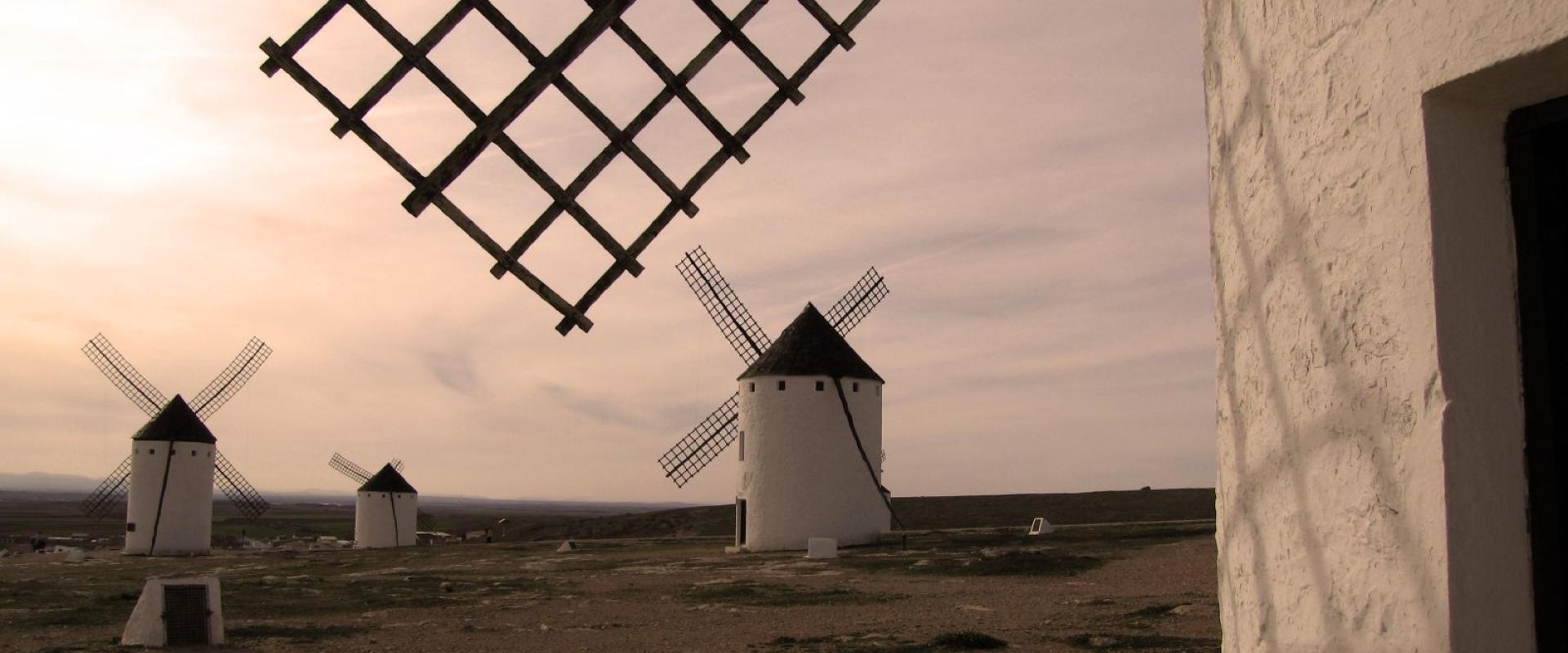
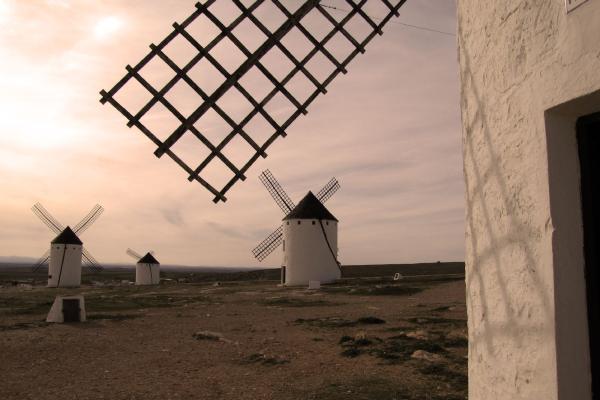
The Centro de Interpretación del Campo de Criptana, the Interpretation Center, also called the Museo de los Molinos de Viento (Windmill Museum), is in the town of Campo de Criptana, in the province of Ciudad Real, Spain, about eighty kilometres east of the city of Ciudad Real. It sits on the Sierra de los Molinos, the ridge above the town where a row of white windmills with conical roofs and long wooden sails stands against the sky, and it is the best place to learn how those windmills worked and why they are linked to the most famous novel in the Spanish language, whose author Cervantes’ name is attached to the whole region of La Mancha, home of the Manchegan windmills. The ridge is an iconic view of La Mancha, with the flat plain stretching away to the horizon.
The link with literature is Don Quixote, by Miguel de Cervantes, published in 1605 and 1615. In one of the best-known scenes, the knight Don Quixote mistakes windmills for giants and charges at them with his lance, and Campo de Criptana is one of the places traditionally associated with the episode. Whether or not Cervantes had this exact ridge in mind, the setting fits his description of the plain and the windmills, and the town has embraced the connection. It forms part of the Route of Don Quixote, a tourist itinerary through La Mancha.
The windmills themselves were built from the sixteenth century to grind grain into flour, which was the main activity of the region, and the wind of the plain was well suited to the task. A number of the mills, around ten, have been preserved on the ridge, though they once numbered many more, and some are open to visitors. The interpretation centre explains the technology: how the sails turned, how the gearing transmitted power to the millstones, how the miller adjusted the sails to the strength of the wind, and how flour was produced and traded. Displays also describe the life of millers and the economic importance of cereals in the region, and the exhibits are designed to engage families and children.
With one ticket, visitors can see the centre and two further museum spaces, a Carriage Room and a small museum devoted to a local figure. The site is accessible for wheelchair users, which is not always the case on a hilltop, and it has good reviews for its clear presentation. Hours differ between summer and winter, and the site is closed on a few holidays, so check the current schedule. Tickets are inexpensive, with reductions for certain groups and free entry for small children.
The town of Campo de Criptana is also known as the birthplace of the actress Sara Montiel, and it has a historic quarter with white houses and cave dwellings on the hillside. Because of its distance from Ciudad Real, the visit usually requires a car and a half-day. Evening light on the windmills is particularly beautiful.
Categories
More photos coming soon
Nearby Attractions
Other places to visit in Ciudad Real
Questions people ask
Quick Facts
Best Time to Visit
May through October offers pleasant weather, ideal for exploring the region's cultural sites.