

Maspalomas Dunes (Dunas de Maspalomas)
400-hectare nature reserve in Gran Canaria
- Admission
- Free
- Hours
- Open all day
- Where
- Gran Canaria, Canary Islands
- Directions
- Directions
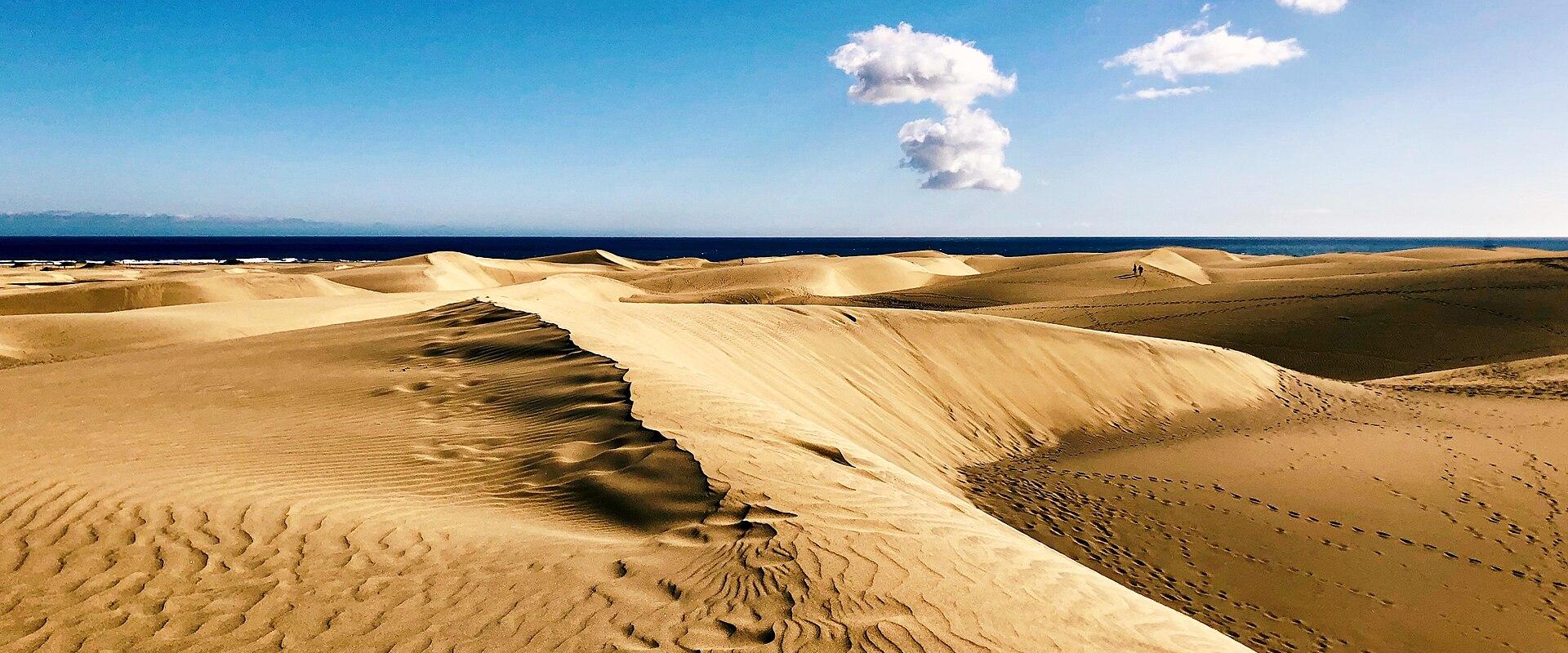
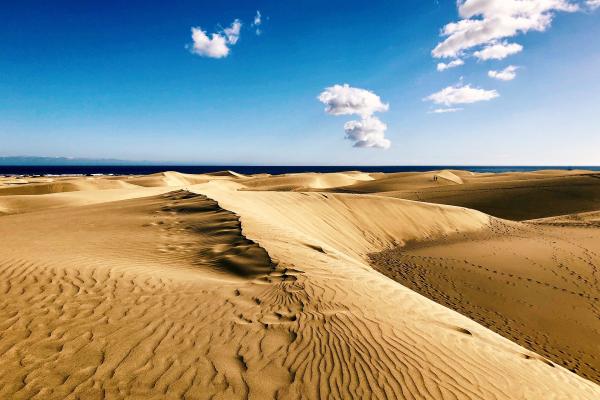
The Maspalomas Dunes are a field of golden sand on the southern tip of Gran Canaria, and they are the island's most unusual landscape, a small desert beside the sea, with palm trees and a lagoon. The area is protected as a special nature reserve, covers about four hundred hectares, and it lies between the resorts of Playa del Inglés and Meloneras, in a place where the flat southern coast meets the Atlantic. Visitors who walk into the dunes soon leave the hotels and the beach umbrellas behind and find themselves among rippling slopes of sand in which only the wind and the occasional footprint leave marks.
The sand has a marine origin. It is made of tiny fragments of shells and marine organisms, together with eroded volcanic material, that were carried here by currents and then blown inland by the trade winds, which also shape the dunes into constantly shifting crests and hollows. This means the landscape is always changing, and the dunes move gradually across the land. The area has three connected ecosystems: the dunes themselves, the Charca de Maspalomas, a brackish lagoon that is a refuge for birds, and a palm grove, the Oasis de Maspalomas, which gives the place its look of a desert oasis. The long beach on the seaward side completes the picture.
The reserve is a quiet place to walk, and paths through the sand allow people to explore without damaging the vegetation. Specialised plants, such as salt-tolerant shrubs and grasses, hold the sand in place, and animals including lizards, small mammals and a variety of birds live here, especially around the lagoon, where herons, egrets and migratory waders can be seen. Walkers should stay on the marked routes, as the sand is fragile and trampling it harms the plants. Camel rides offered on the edge of the dunes are a traditional tourist activity. Parts of the beach are used by naturists.
At the western end of the beach stands the Faro de Maspalomas, a tall lighthouse completed in the late nineteenth century, which is a landmark of the resort, and the promenade around it has restaurants, shops and an entertainment area. Sunrise and sunset give the dunes an extraordinary light, with long shadows and golden tones, and photographers often come at these times. In the middle of the day, the sun is fierce and there is little shade, so a hat, sunscreen and water are essential.
Access is free, and the reserve is open every day. A walk of one to three hours is typical. It suits walkers, photographers, families and nature lovers, and the wind can be strong, so protect cameras from sand.
Categories
More photos coming soon
Hours & Fees
- Open
- Open all day
- Admission
- Free
Hours and prices change, especially out of season. Check with the venue before you go.
Nearby Attractions
Other places to visit in Gran Canaria
Questions people ask
Quick Facts
Best Time to Visit
April to October offers warm, pleasant weather ideal for beach activities and outdoor exploration.