







Es Caló des Puig
- Where
- Formentera, Balearic Islands
- Directions
- Directions
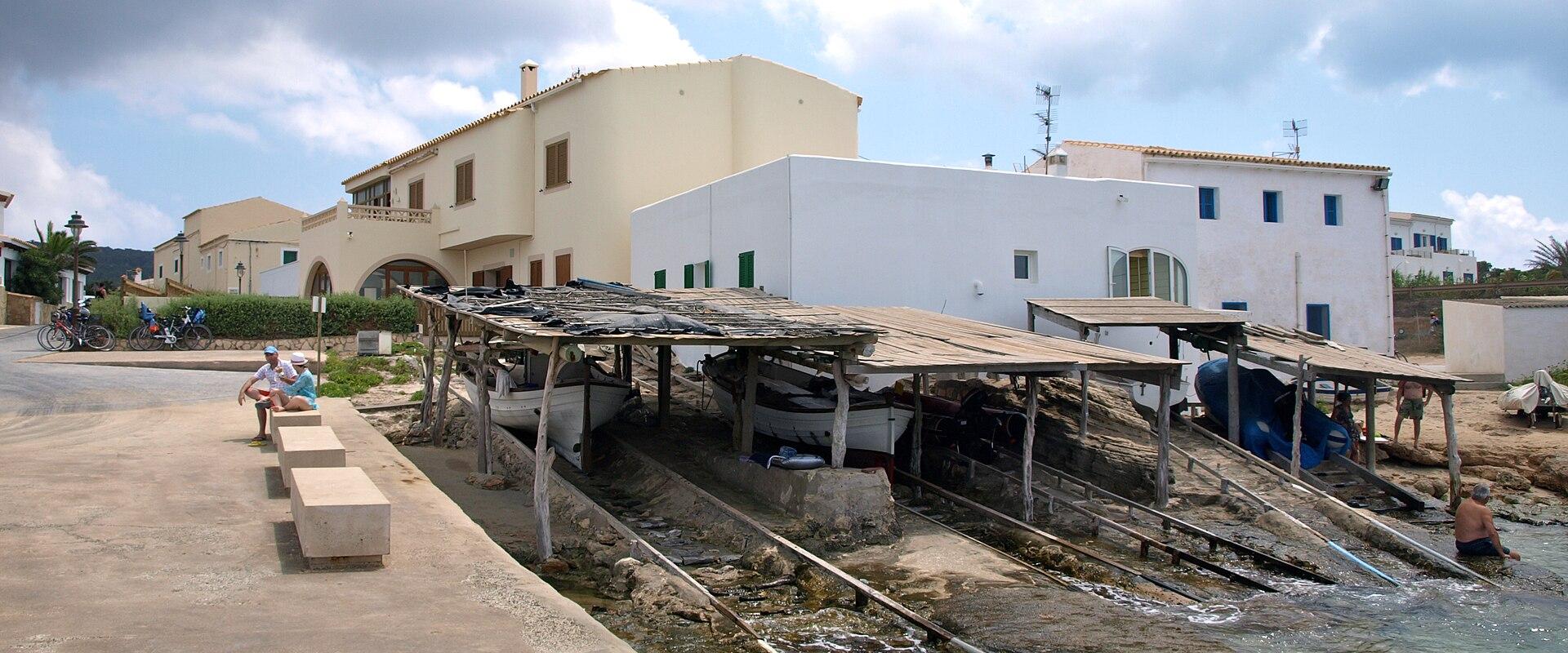
Es Caló de Sant Agustí, which this guide lists as Es Caló des Puig, is a small fishing village on the north coast of Formentera, at the foot of the high plateau of La Mola. It is quieter than the resort of Es Pujols to the west, and it keeps the feel of a working harbour from the days when the island lived by fishing and salt. Its coast is rocky rather than sandy, with a rocky seabed that produces patches of deep turquoise and dark blue water, and the setting is more rugged than that of the beaches of the west.
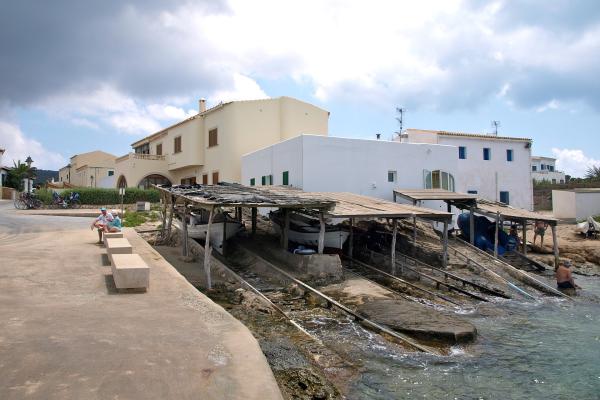
Formentera’s old harbours are few, and the centre of the village is the small harbour, where wooden fishing boats are drawn up on a slipway beside traditional boathouses called escars. For much of the twentieth century Es Caló was the island’s port for the east, a place where boats were built, repaired and launched, and where goods were landed, and a few of the old buildings remain. The sea is a cool and clear blue, and the little coves around the village are used by swimmers and snorkellers, entering the water from rocks and ledges rather than from a long sandy beach. Some of the local restaurants serve fresh fish and seafood, and they are among the pleasures of a visit.
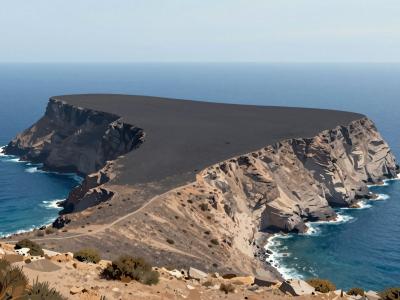
A historic path starts at the village and climbs the steep face of La Mola to El Pilar de la Mola, the village at the top. This is the Camí de sa Pujada, sometimes described as the Camino Romano or Roman road, though its exact origins are uncertain, and it was used for centuries as the main route between the harbour and the settlements on the plateau. It is a steep, rocky walk of about half an hour with fine views of the coast as it rises, and it is a popular route for walkers, though it needs good footwear and care in hot weather. At the top, the village of El Pilar de la Mola has a lighthouse, the Faro de la Mola, with a monument that recalls the writer Jules Verne, who mentioned it in one of his novels, and a popular market on certain days.
The village is active mostly in the tourist season. Restaurants, shops and small businesses open in spring and close at the end of summer, and in winter it becomes quiet, with few services, so a visit in the shoulder seasons should be planned with that in mind. Parking is limited near the harbour, and access is by road from Es Pujols and La Savina or by bicycle on the island’s paths.
It is best visited as part of a day touring the eastern end of the island, along with La Mola and the beaches of the north coast. Take sun protection and water, and wear shoes with a good grip.
Categories
More photos coming soon
Nearby Attractions
Other places to visit in Formentera
Questions people ask
Quick Facts
Best Time to Visit
May through September offers warm, sunny weather ideal for beach activities.