







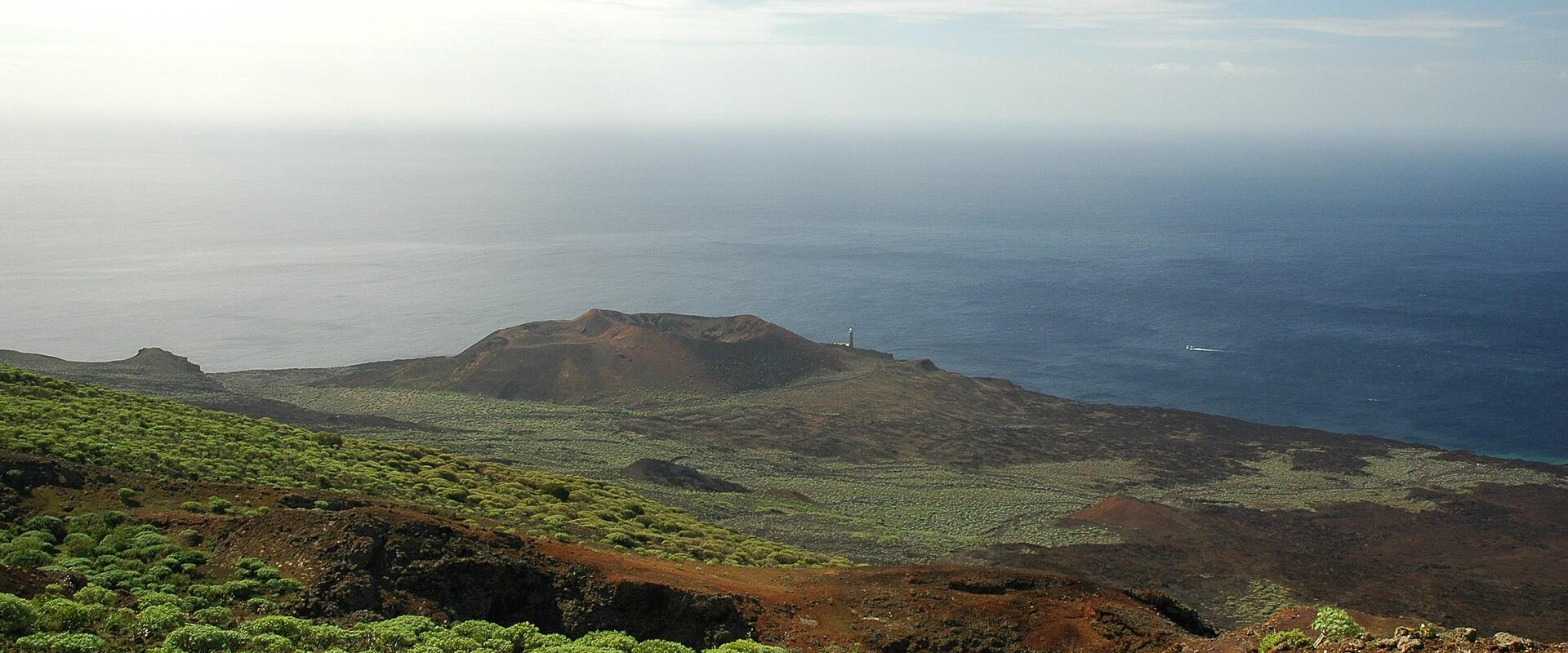
Lighthouse of El Hierro (Faro de El Hierro)
- Where
- El Hierro, Canary Islands
- Directions
- Directions
The Faro de Orchilla stands at the far western tip of El Hierro, on a bleak headland of black lava, and it is one of the most remote lighthouses in the Canary Islands. It is the Lighthouse of El Hierro (Faro de El Hierro) in this guide, and it lies at Punta de la Orchilla, in the municipality of El Pinar, at a height of around a hundred and thirty metres above the Atlantic. The tower was built in the late nineteenth century, in 1892, to guide ships on the busy sea routes between Europe, the Atlantic islands and the Americas. A track leads to it across the lava, and the sense of arriving at the edge of the known world is part of the attraction.
The place has a unique role in the history of geography. In ancient times, the Greek geographer Ptolemy placed the zero meridian, the line from which longitude was measured, on the western edge of the known world, and El Hierro, called Ferro in old maps, was the island chosen. For many centuries, European cartographers and navigators used the Meridian of Ferro as their reference, and Orchilla was the point marked. Only in 1884, at an international conference in Washington, was Greenwich adopted as the world’s prime meridian. A small monument near the lighthouse recalls that older tradition, and it appeals to people interested in maps and navigation.
The landscape around the lighthouse is stark. Flows of lava from old eruptions run down to the cliffs, and the coastline is rocky, with waves breaking on black rock. Juniper trees, bent into twisted forms by the wind, grow in the surrounding area, and they are among the oldest and most characteristic plants of the island. The sky is vast, and because the island has very little light pollution, the viewing of stars at night is exceptional, with the Milky Way visible on clear nights. The site is part of the island’s Biosphere Reserve and is looked after accordingly.
Sunsets are the best-known feature of the viewpoint. The sun goes down over an open horizon with nothing between you and the Atlantic, and the colours on the rock and sea can be spectacular. Many people come in the late afternoon and stay until dusk, and a camera and a warm layer are useful, since the wind can be strong.
Getting there is easy by car along the road from El Pinar, with a final stretch on an unpaved track, and there is parking near the lighthouse. Visitors are asked to respect the environment: do not pick plants, take stones, feed animals or leave rubbish. The lighthouse is a working navigation aid, so the tower itself is not generally open to the public. Allow about an hour for a visit.
Categories
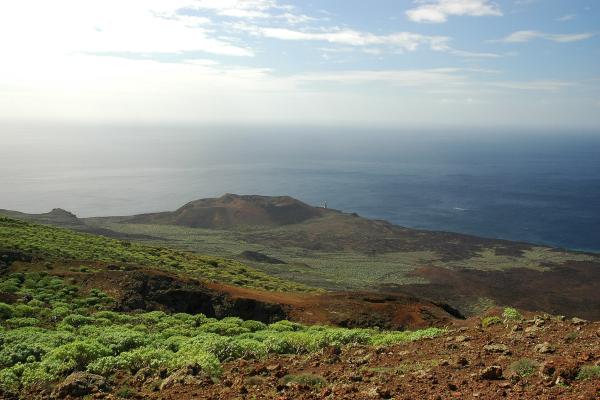
More photos coming soon
Questions people ask
Quick Facts
Best Time to Visit
May through October offers warm, dry weather with minimal rainfall for optimal exploration.