







Mudejar Architecture of Teruel
- Admission
- €3.00 normal, €2.50 reduced
- Hours
- Mornings 11:00 to 14:00; Afternoons 16:30 to 20:30
- Where
- Teruel, Aragon
- Directions
- Directions
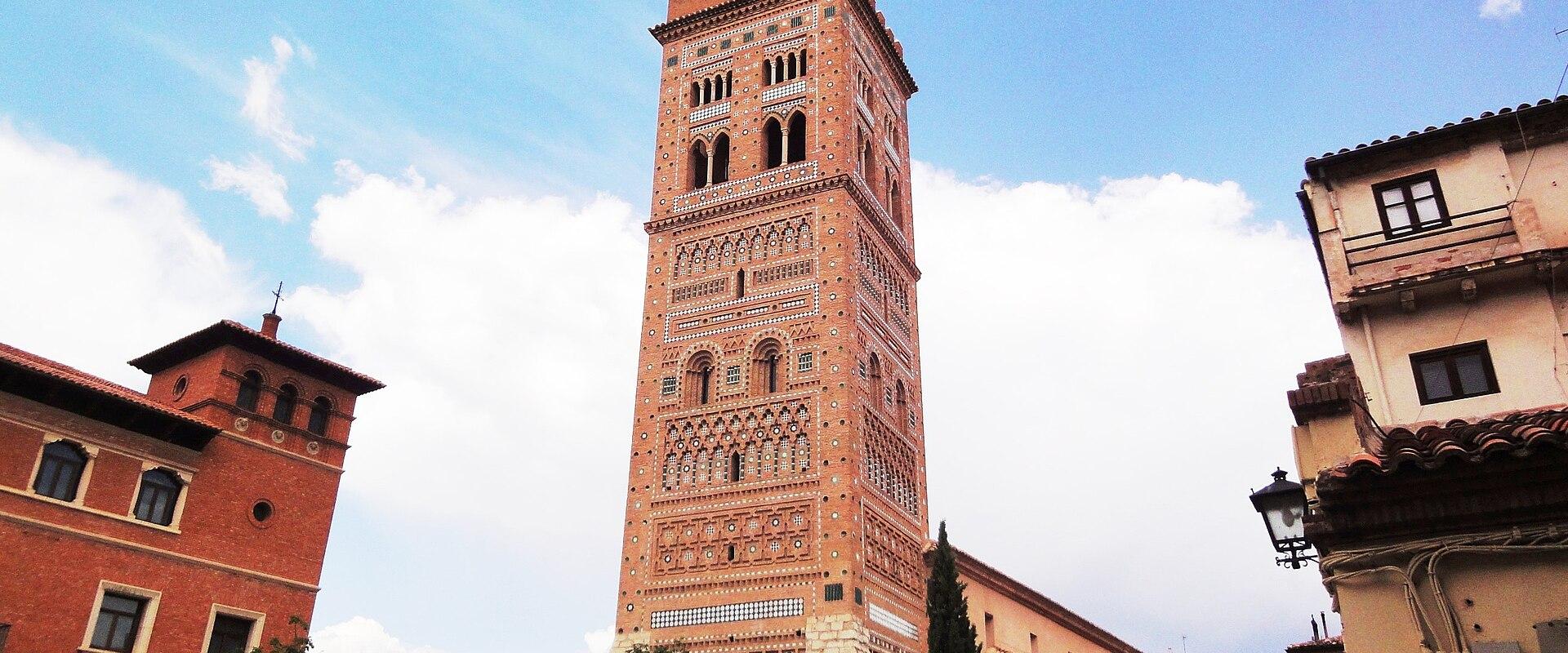
The Mudéjar buildings of Teruel are what make the city famous in architectural circles, and they are part of the UNESCO World Heritage Site Mudéjar Architecture of Aragon. Mudéjar is the name given to the style created by Muslim craftsmen who stayed in Christian territory after the Reconquista and worked for Christian patrons, combining Islamic decoration with Christian building types. In Teruel, the style flourished in the thirteenth and fourteenth centuries and carried on into the sixteenth, and its main materials are brick, plaster and glazed ceramic, which were cheap and easy to use in a region short of good building stone.
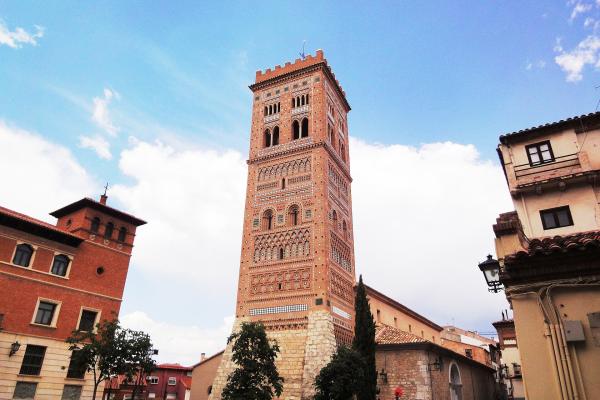
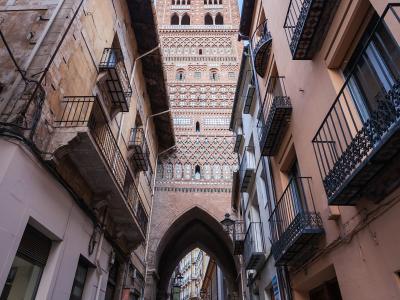
Four monuments in the city belong to the World Heritage Site. The first is the cathedral of Santa María de Mediavilla, noted for its tower and for its painted wooden ceiling. The second is the Torre de San Martín, a tall tower built in the early fourteenth century, with an arched passage at its base through which a street still runs. The third is the Torre del Salvador, a similar tower of the same period, and the fourth is the Church of San Pedro, with its Mudéjar Tower of San Pedro and nearby mausoleum of the Lovers of Teruel. Each tower rises in a square shape with bands of brick patterns and panels of green and white glazed tile, a form that echoes the minarets of the Islamic world, such as the Giralda in Seville.
A popular legend explains the two towers of San Martín and El Salvador. According to the story, two Muslim master builders competed to win the hand of a woman, each constructing a tower, and the town’s two best-known towers are the result. The tale is folklore rather than history, but it shows how the towers captured local imagination.
One of the towers, the Torre del Salvador, has been converted into an interpretation centre. Visitors climb inside to see the construction of the tower, with exhibitions that explain the building techniques, the structure of the stairs, the use of ceramics and how the decoration was made. At the top, views extend over the roofs of the old town and the surrounding hills. The visit takes around forty-five minutes, and tickets are inexpensive, with reduced prices for certain groups. The climb is by narrow stairs, so it may not suit everyone.
The monuments are all within a short walk of each other in the old town, close to the Plaza del Torico, so they are easy to see in one morning. The Iglesia de San Martín and the cathedral are among the stops, and the Museo de Teruel and the Casco Histórico, the old town, fill in the rest of a day. A walk at sunset, when the brick glows, is the best time for photographs.
More photos coming soon
Hours & Fees
- Open
- Mornings 11:00 to 14:00; Afternoons 16:30 to 20:30
- Admission
- €3.00 normal, €2.50 reduced
Hours and prices change, especially out of season. Check with the venue before you go.
Nearby Attractions
Other places to visit in Teruel

Questions people ask
Quick Facts
Best Time to Visit
June through September offers warm, dry weather ideal for exploring the historic center.