







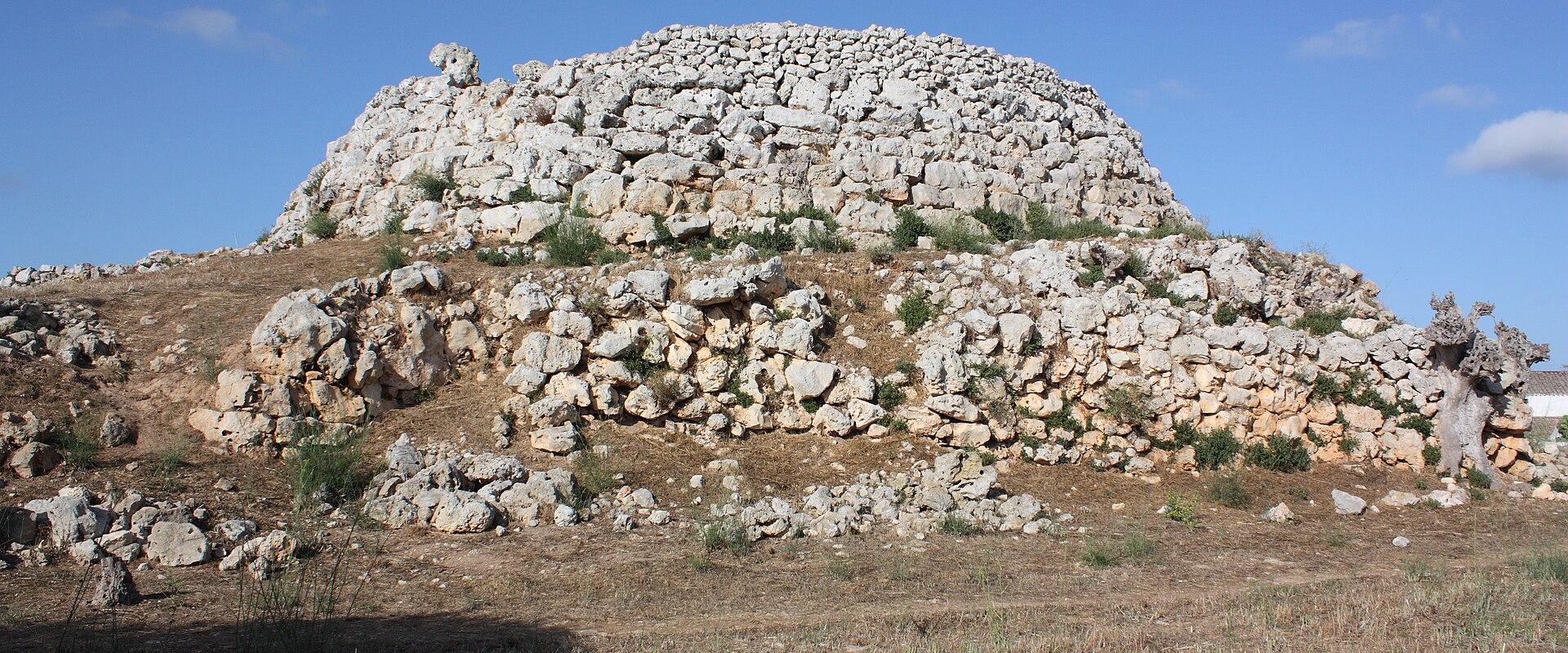
Talaiot de Trebalúger
- Admission
- No specific admission fees provided in the source.
- Where
- Menorca, Balearic Islands
- Directions
- Directions
The Talaiot de Trebalúger is one of the many prehistoric sites that give Menorca its distinct character, and to understand it you need to look at the culture it belongs to. From about 1000 BC until the Roman conquest in 123 BC, the islanders of Menorca built monuments of huge, roughly shaped stones without mortar, a style called cyclopean. The people are known as the Talaiotic culture, after the talaiots, which are round or square towers of stone, with a solid or hollow interior, that stand at the centre of most settlements. Nobody is certain what the towers were used for, and the proposals include watchtowers, meeting places, storerooms and symbols of the power of a community.
Besides talaiots, the island is famous for two other types of monument. The taulas, a name meaning tables in Catalan, are T-shaped structures made of an upright monolith topped with a horizontal slab, often set inside a horseshoe-shaped enclosure, and they are thought to have been sacred or ceremonial. The navetas are tombs shaped like upturned boats, built of stone. Menorca has over a thousand prehistoric monuments, a remarkable density for such a small island, and in 2023 UNESCO added the Talayotic Menorca landscape to the World Heritage list. The World Heritage designation recognises the way villages, tombs, sanctuaries and the surrounding agricultural landscape together show the life of an island society.
A visit to a site like Trebalúger is quite different from a visit to a museum. The remains lie in open countryside, among dry stone walls, olive trees and fields, and you walk among them on foot. A talaiot is a pile of carefully fitted stones, with a ruined top and a doorway, and nearby you can see foundations of houses, enclosures and cisterns, which hint at the layout of a village. The scale is modest, but the stonework is impressive, and there is a strong sense of age and silence. The sun and wind give the place a distinct atmosphere, especially in the evening.
The terrain can be uneven, so sturdy shoes are helpful, and shade is limited, so bring water and sun protection. Many Talaiotic sites are in private farmland or are managed by local authorities with variable opening, so it is wise to ask at a tourist office about access, and respect any signs, closing gates behind you. The Museu de Menorca in Maó explains the culture and displays finds from sites across the island, so a visit there beforehand gives helpful context.
It suits history and archaeology lovers, walkers and photographers. Combine it with a trip to other Talaiotic villages, or with the beaches and towns of the island.
Categories
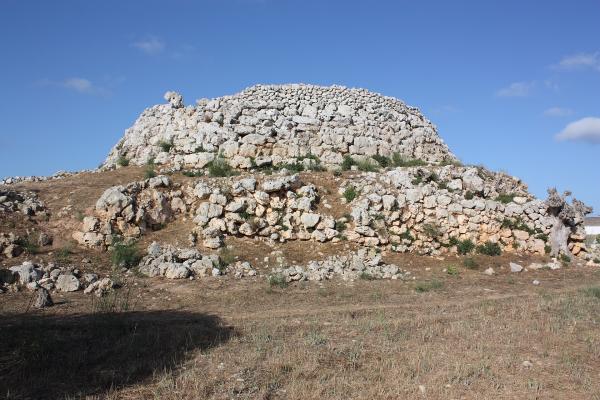
More photos coming soon
Admission Fees
- Admission
- No specific admission fees provided in the source.
Hours and prices change, especially out of season. Check with the venue before you go.
Questions people ask
Quick Facts
No specific admission fees provided in the source.
Best Time to Visit
May through September offers warm, dry weather ideal for swimming and beach activities.