
The Custom
Granada is one of the few places in Spain where a tapa still comes automatically with every drink you order at the bar. Order a beer, a glass of wine or a soft drink and a small plate of food arrives with it at no extra charge. Order a second round and a second, often different, tapa follows. Many people in Granada eat an entire evening meal this way, moving between two or three bars.
The free tapa is a custom, not a law. Bars are not obliged to serve one, but competition between them keeps the tradition going, and the quality and size of the tapa is one of the main ways bars attract regulars. A few bars in the most touristed spots have dropped or reduced the custom, and some restaurants that serve food at tables work differently, but in ordinary bars across the city it remains the norm.
How It Works in Practice
- The tapa comes with the drink. You pay only for drinks. Prices vary by bar and area, so check the board or ask if unsure.
- You usually don't choose the first one. In many bars the kitchen decides, and each round brings the next dish in a sequence. In others, especially newer bars, you are offered a short list to pick from.
- Each round brings a new tapa. If you stay for a second or third drink, you will usually get something different each time.
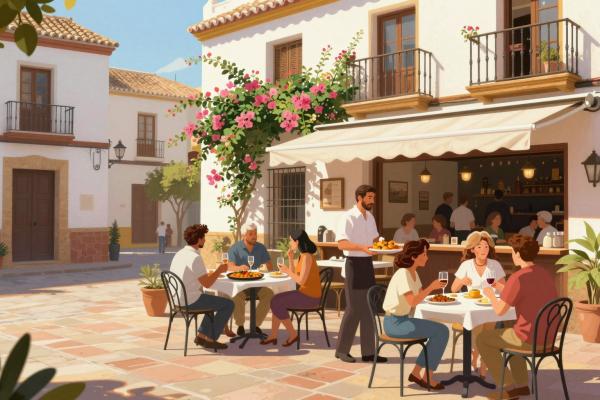
- Standing at the bar is the classic way. Tables, and especially terrace tables, are sometimes treated differently, and some bars only serve the free tapa at the bar.
- Raciones are not free. If you want a larger plate to share, order a ración or media ración from the menu. These are charged as normal dishes.
Typical tapas range from simple items, such as a slice of tortilla, cured ham on bread or a small portion of stew, to fried fish, croquettes or migas. In some bars the tapa is generous enough to count as a light meal.
Where to Go
Granada's bars are spread through the city, but some areas have a particularly high concentration:
- Calle Navas and around Plaza del Carmen. A short street near the town hall packed with traditional bars. It is central and busy, and an easy place to start.
- Calle Elvira and Plaza Nueva. At the foot of the Alhambra hill and the Albaicín. The area is busy with visitors, so standards vary more; look for bars full of locals.
- The Realejo. The former Jewish quarter on the slopes below the Alhambra, with plenty of neighbourhood bars around Campo del Príncipe.
- The Albaicín. The hillside Moorish quarter has bars near its viewpoints and squares, though the walk up is steep and the bars are more spread out.
- Pedro Antonio de Alarcón and the university area. Popular with students, with large tapas in many bars.
When to Go
Spaniards eat late, and Granada follows the same rhythm. Lunchtime tapas start around 13:00 to 14:00 and the evening session from around 20:00 or later, running late into the night, especially at weekends. Arriving slightly early gives you a better chance of space at the bar. Some bars close in the afternoon between the two sessions, and many close one day a week.
Etiquette and Tips
- Order at the bar. Catch the bartender's eye and order clearly. In busy bars, patience works better than waving.
- Move on after a round or two. Part of the custom is hopping between bars, and it lets you try more kitchens.
- Vegetarian or with allergies? Ask when you order your drink. Many bars can offer an alternative tapa if you explain, but the default sequence often includes meat or fish.
- Water and soft drinks count too. In most bars, a non-alcoholic drink brings a tapa just as a beer would.
- Tipping is modest. Rounding up or leaving small change is normal.
- Don't expect it everywhere. Restaurants, cafés and places aimed mainly at tourists may not follow the custom. If a bar charges for tapas, it will usually say so on the menu.
A Simple Evening Plan
Start on Calle Navas for one or two rounds, walk to the Realejo for the next bar, and finish near Plaza Nueva or along the Carrera del Darro, where you can see the Alhambra lit above the river. Three bars with two rounds each is a full dinner for most people.