What the Feria Is
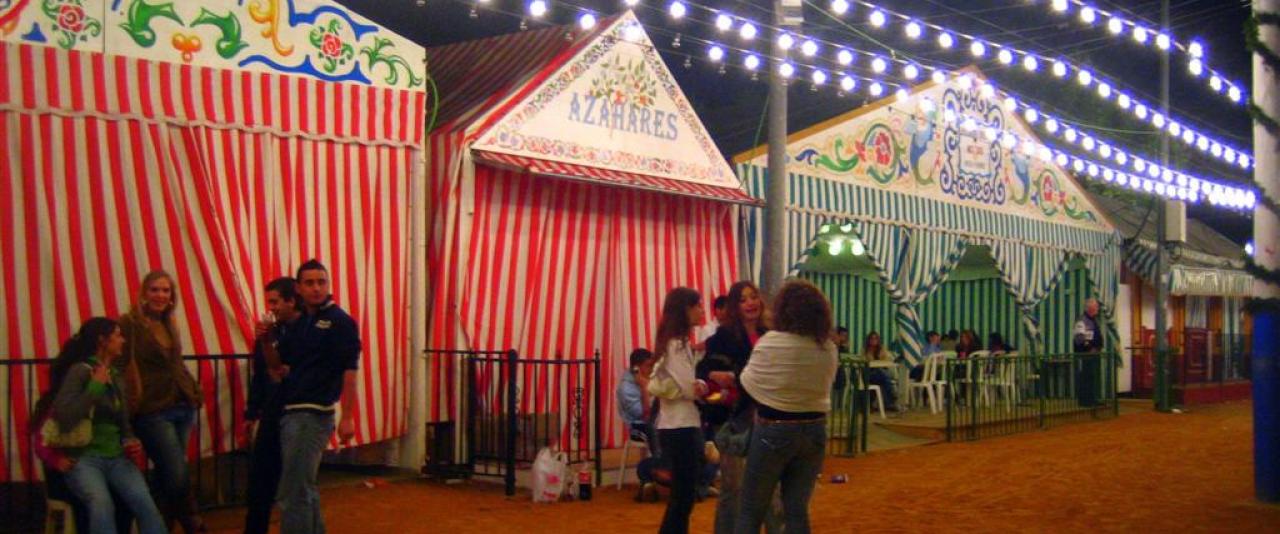
The Feria de Abril is Seville's biggest annual festival, a week of eating, drinking, dancing sevillanas and showing off horses and carriages. It began in 1847 as a livestock fair and became a social event. Since 1973 it has been held on the Real de la Feria, a purpose-built fairground in the Los Remedios district on the west bank of the Guadalquivir, which today holds more than a thousand casetas (marquee tents). It is a local celebration first, and visitors who understand how it works enjoy it far more.
How the Dates Are Set
The Feria has no fixed date. A municipal rule places it roughly two weeks after Holy Week, and if that would push it entirely into May, it moves a week earlier. From 2025 the city returned to a Monday-to-Sunday format: it begins on Monday night with the "pescaíto" dinner of fried fish, followed at midnight by the alumbrado, when the gateway (portada) and thousands of lanterns are switched on. It closes the following Sunday at midnight with fireworks over the river.
Because Easter 2027 falls on 28 March, the 2027 Feria is expected in mid-April, with several calendars pointing to the week of 12 to 18 April. The city council confirms the official dates, so check with Seville's tourism office or the Ayuntamiento before booking. Hotels fill early and prices rise sharply that week, so book as soon as dates are confirmed.
Casetas: Private and Public
This is the most important thing for visitors to know: the vast majority of casetas are private, belonging to families, clubs, companies and associations, and entry is by invitation. Only a small number are open to everyone. In 2026 only around 16 of more than 1,000 casetas were public, a ratio that has been criticised locally. Public casetas are typically run by the city districts, political parties and some associations, and they get crowded, especially at night.
If you know someone in Seville, an invitation to a private caseta is the best way to experience the fair. Otherwise, go to a public caseta for food and drink, and enjoy the street life between the tents, which is open to all.
A Day at the Fair
The Feria has two rhythms. From about midday into the early evening, riders in traditional dress and horse-drawn carriages parade along the fairground's streets. Carriages run on a set route from noon to 8 pm and are not allowed at night. After dark, the casetas fill with people dancing sevillanas to live music or recordings, and many keep going until the early hours.
The typical drink is rebujito, fino or manzanilla sherry mixed with lemon-lime soda and served in jugs for sharing. Fried fish, tortilla, jamón and other tapas are standard caseta food.
Next to the Real is the Calle del Infierno, a large temporary funfair with rides and stalls, which is the busiest part of the fair for families.
What to Wear
Many women wear the traje de flamenca, the ruffled flamenco dress, with a flower in the hair, a shawl and earrings; it is the only time of year many Sevillanas wear one. Men often wear a suit and tie in the evening, and riders wear the traje corto, a short jacket with high-waisted trousers and a wide-brimmed hat. Visitors are not expected to dress up, but smart clothes fit in better than beachwear. Wear comfortable shoes: the fairground is surfaced with albero, a yellow compacted sand that is dusty and hard on smart footwear.
Getting There and Practical Tips
- Transport. The Real is in Los Remedios, south-west of the historic centre. Seville metro line 1 has stops within walking distance, and the city usually runs extra shuttle buses during Feria week. Taxis are in heavy demand at night.
- Pace yourself. The fair runs late every night; locals often go for one or two days rather than all week.
- Cash and cards. Carry some cash, as card payment is not universal in casetas.
- Heat and sun. Late April afternoons in Seville can be hot; bring water and sun protection.
- Don't combine with Semana Santa expecting the same city. Holy Week processions come two weeks before and are a very different, solemn event.