







- Admission
- Free
- Hours
- Open 24/7
- Where
- Córdoba, Andalusia
- Directions
- Directions
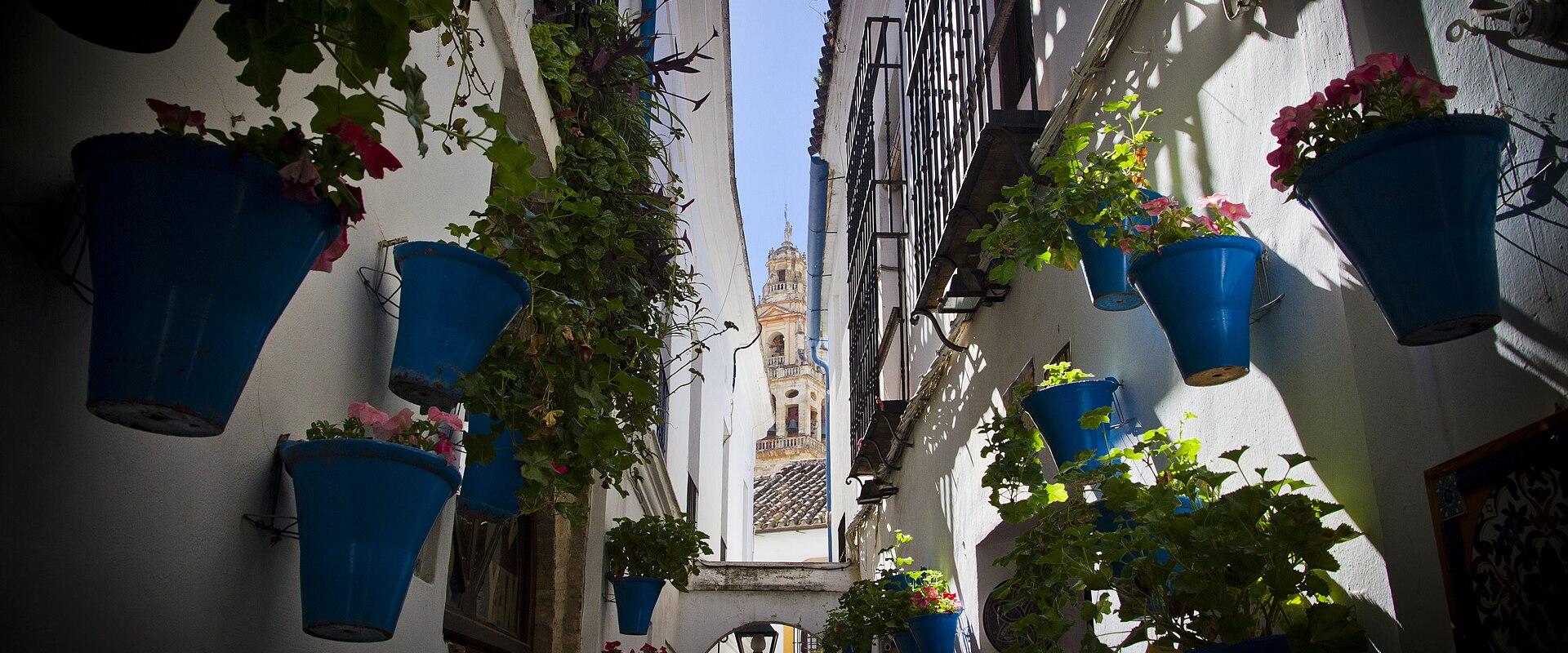
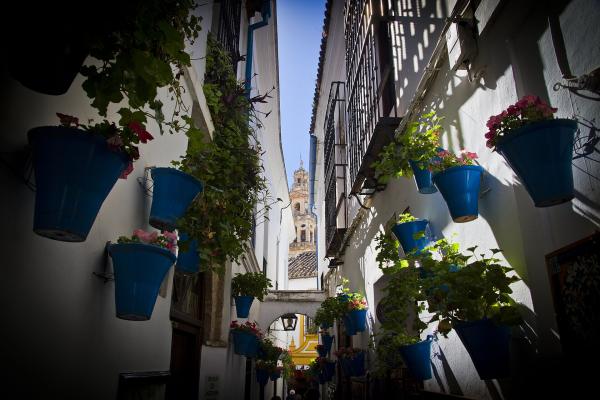
The Calleja de las Flores, the Alley of the Flowers, is a very short, narrow lane in the old Jewish Quarter of Córdoba, and it is one of the best-known photographic scenes in southern Spain. It is no more than a few metres wide, with whitewashed Andalusian walls on both sides that are hung with flower pots, in blue and red and green, and in the spring and summer the geraniums, jasmine and bougainvillea almost cover the walls. A hush falls on the lane, and the scent of flowers adds to the effect. It runs for a short distance from a nearby street and ends in a tiny square, a small dead end where a fountain stands.
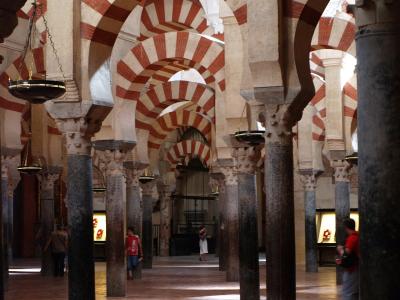
The lane is famous above all for what you see at the far end. Looking back along the narrow passage framed by flowers, you glimpse the bell tower of the Mosque-Cathedral, the Mezquita-Catedral, rising above the roofs, an image that has appeared on countless postcards. The tower is a Baroque belfry built over the old minaret of the mosque, and the contrast between the intimate lane and the great monument gives the view its charm. The square at the end has a small fountain, which stands on an ancient column or capital, a remnant of the Roman and later periods in the city, and the plaza is a good place to pause.
Córdoba’s Judería, the Jewish Quarter, is where the lane lies, the area where the Jewish community lived in the Middle Ages, and the district, with its network of narrow lanes, small squares, whitewashed houses and hidden patios, has kept much of its old character. Córdoba is known for its patios, the interior courtyards filled with plants, and the festival of the Patios, held in May, was recognised by UNESCO as part of the intangible cultural heritage of humanity. The Calleja de las Flores gives a free taste of the same tradition, with flowers as the main ornament, and the best time to see it is in late spring.
There is nothing to pay and no closing time, and the lane is open all year round. A visit takes about fifteen to thirty minutes, and it is best to go early in the morning or in the evening, when the light is soft and there are fewer people. At peak times, many visitors queue to take photographs, and the lane is very narrow, so patience is needed. Residents live in the houses along the alley, and visitors are asked to be quiet and respectful.
The lane is in the old town close to the Mosque-Cathedral, which should be a main stop on any visit, and the Alcázar of the Christian Kings, the Roman bridge and the Alley of the Arquillos are within walking distance. A stroll through the surrounding streets, with their craft shops and small cafes, is the natural way to see more of the quarter. Wear comfortable shoes, since the paving is uneven. Summer afternoons are very hot in Córdoba, so plan the walk for the cooler hours.
Categories
More photos coming soon
Hours & Fees
- Open
- Open 24/7
- Admission
- Free
Hours and prices change, especially out of season. Check with the venue before you go.
Nearby Attractions
Other places to visit in Córdoba

Mercado Victoria
Architectural Heritage · Historic Districts
Alcázar Of The Christian Kings
Medieval fortress and palace in Córdoba
Architectural Heritage · Castles
Alley Of The Arquillos (Callejón De Los Arquillos)
Non-walkable medieval alley with seven arches
Historic Heritage · Urban Exploration
Mezquita-Catedral
UNESCO site blending Islamic and Christian architecture
Historic Heritage · Museums & Culture
Questions people ask
Quick Facts
Best Time to Visit
May through June and September offer mild weather, ideal for exploring the city.